
Mayoral Candidate Profile: Kay Klymko
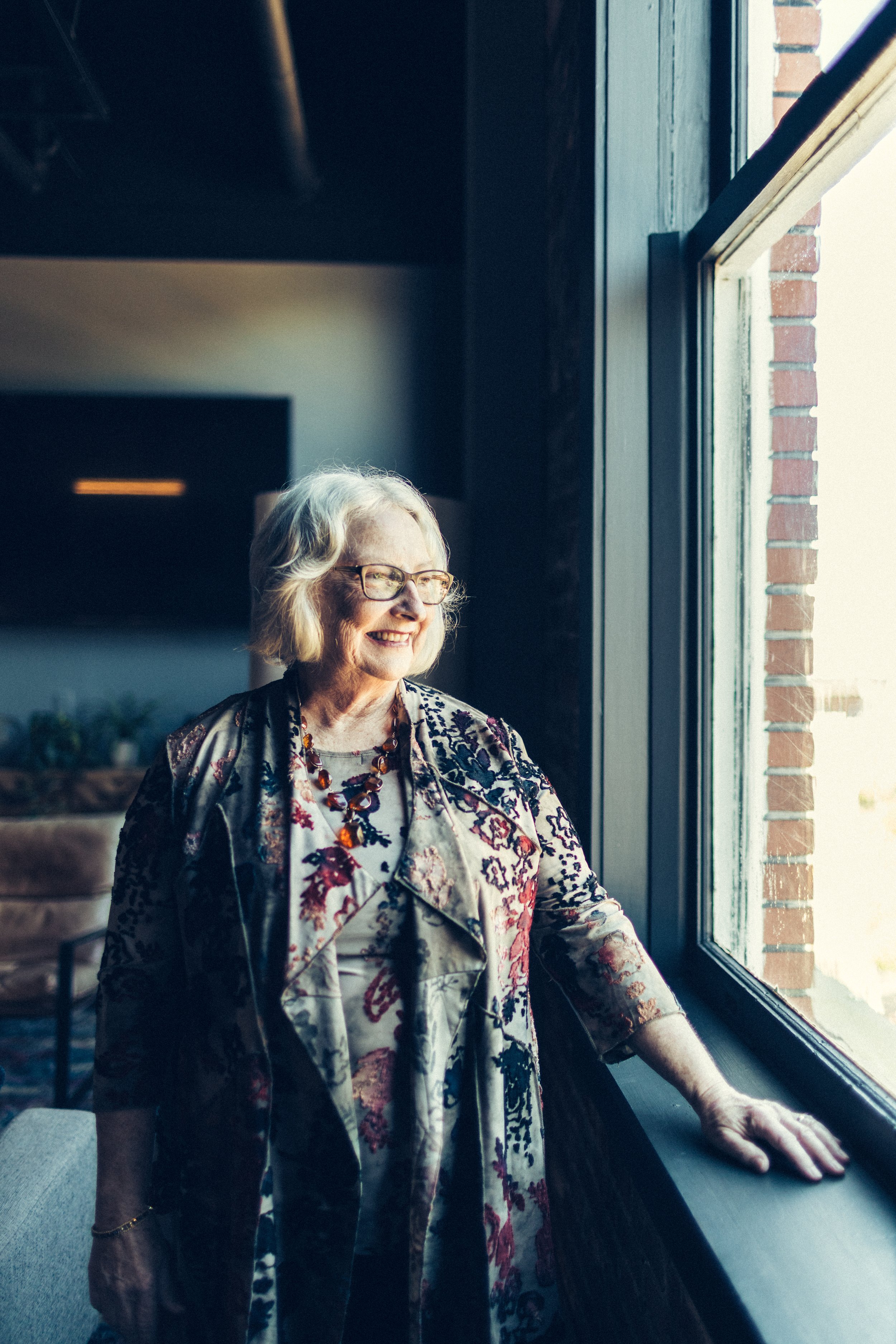
Age: 75
Profession: Retired professor and family nurse practitioner
Political affiliation: Democratic Party
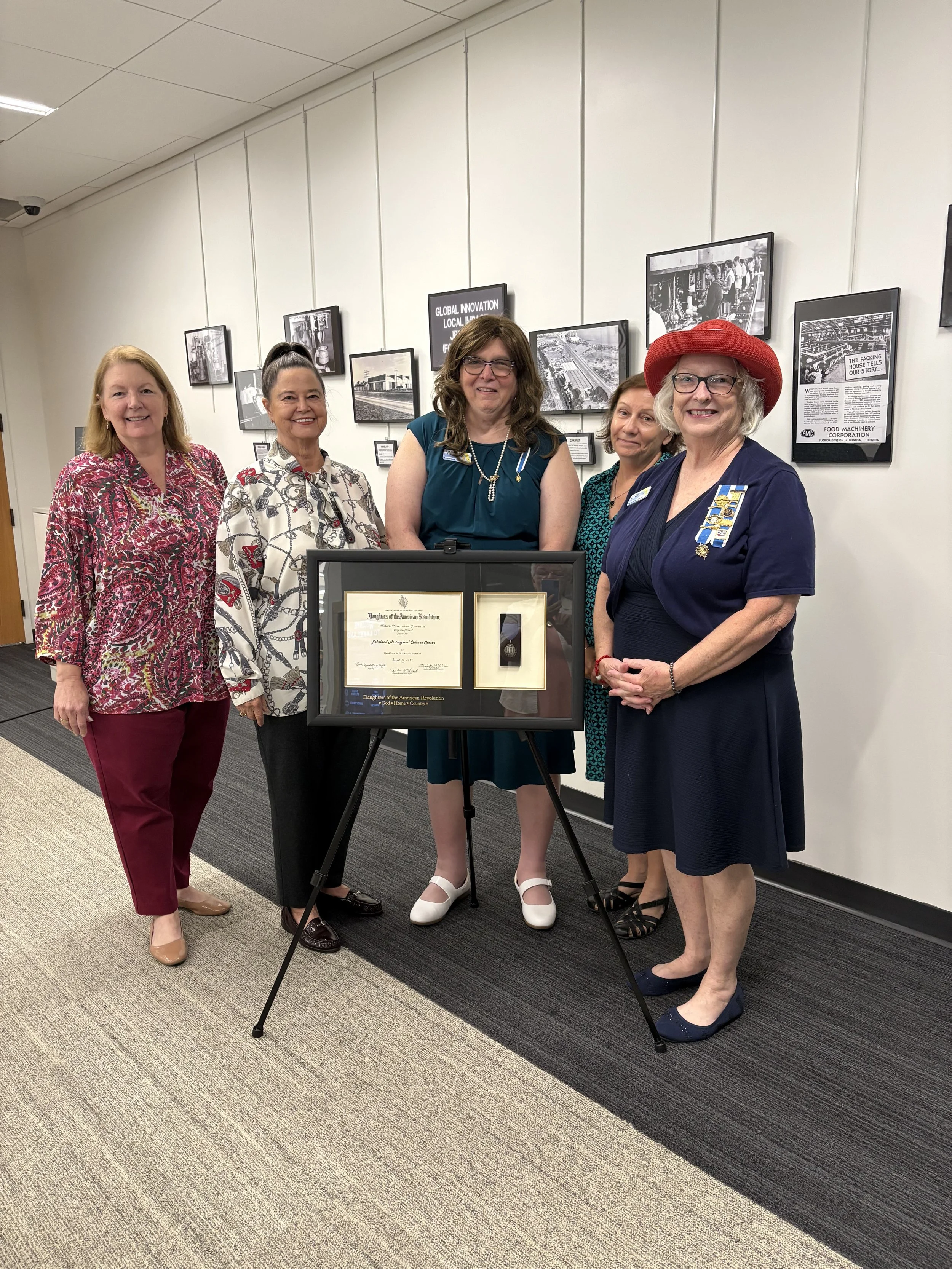
Civic involvement: Active in a variety of women’s groups at First United Methodist Church, Polk Ecumenical Action Council for Empowerment (PEACE), Lakeland NAACP, board member of Democratic Women’s Club of Lakeland, board member and historian for the Lakeland chapter of Daughters of the American Revolution and many other involvements.
Family: Married to Dennis, mother to one daughter and grandmother of two children.
The conversation has been edited for length and clarity.
The Lakelander
You have run for city commission and county commission seats in the past, and now you have stepped up to run for mayor. You mentioned to me earlier that you want to see the city commission go in a different direction, so talk to me about why you are running for mayor and what that different direction looks like.
Kay Klymko
[This is a] lifelong trajectory that has led to me running, and the focus of my running is not just a sudden focus on certain areas, this is built on a lot of evidence...[from years] of me working [in] indigent care as a nurse practitioner running a clinic in a very poor neighborhood for a number of years, and also it has to do with 15 years of intense doctoral research with older adults [learning about] what their needs were. [I found] out that what really helped them the most was the social support, the network, even when they were cognitively impaired.
That kind of led me to look at what we in Lakeland have done for our youth populations that are in trouble—they need services—and what we have done for our older adults…and our unhoused people. In those three areas I see a huge gap, and I don’t see the commission really making a commitment or moving at all in those last three years to address those problems. I do feel I have expertise in that area, and that’s why I’m jumping in now, and why I jumped into the last two races as well.
When I moved to Lakeland I became involved—I don’t want to say overly involved—but I’m on like 17 groups, and it may not be an advisory board in downtown Lakeland, but I’ve been a member of the First United Methodist Church, and I’m on like five or six groups there, and active with women’s clubs…helping with KidsPack, part of the book club, smaller circles, United Women of Faith [and] a Sunday School class called ‘Searchers.’ And my faith to me is so important. [Last year] I found out my name ‘Kay’ [means] rejoice and joy, and that’s me. I love, I am a joyful, optimistic, energetic, and motivated person.
The Lakelander
In a piece published earlier this year by LkldNow you did a great job of articulating three projects you see as keystones that you would push for conversation about and try to get approved to benefit [underserved] groups. All of that takes funding, either through redistribution of funding or more funding. City leaders are going to have to start making tough decisions to either increase our tax base or cut some of the existing services to maintain a balanced budget. Let’s talk through that.
Kay
Or [we can] redistribute funds. There is a pendulum that swings back from so much economic growth to our people and some of their needs and the projects that I feel that have been neglected.
The Lakelander
Yes, that’s a great option that’s available as well. How do you go to a city staff of our size who obviously have upgrades or maintenance or repairs they would love to see in their departments and help them understand how we could redistribute funding?
Kay
I understand the treasurer presented in January at the commission meeting…that we have a very large fund in reserves, and the interest that was earned the year before [was] $35 million plus, so there are funds that…should have liquidity…and be used for operations. Do you put the money back in there so it grows more and more or do you allocate within what the ordinances and the contract allows and divert fund to these other programs? Again, it’s the priority of what’s important. Is it building the wealth or is it taking care of some of the real important needs of our community?
I would first push for evaluating that and what is possible, because it seems I saw in the budget—I mean the budget was hundreds of pages—and the comprehensive plan too, which I read as much of that as I could as well, with the focus on preventing suburban sprawl and focusing on infill building on plats that are vacant that are less than half an acre. The fact we’re gonna run out of water in 15 years—that’s scary. We’re supposed to conserve [and] I bet most people don’t even know how much water they are using.
But back to the budget. There was some money and it just said very briefly, trust redistribution, and it had, I don’t know, maybe $2 million, to ‘parks’. Ok, so is it the [Parks and Recreation Department] that’s going to get it, is that the building of that huge park in [Southwest Lakeland] so more growth and development can occur down there? Or [can it be] redistributed to the senior center, the PAL (Police Athletic League), needed areas, the homeless?
There are pockets of groups that are doing [good] for the homeless, everybody has their own way, their own niche of what they’re doing. Are we filling the need for the individuals who don’t meet the criteria of those people? [Those] who are drunk, they’re high, they need an acute overnight stay in a facility somewhere?
The Lakelander
In your perspective, when you look at servicing and meeting the needs of people who clearly need someone to come alongside them and show them the opportunities for a better life, how do you balance that with the economic revitalization of let’s say Memorial Blvd.?
Kay
You do have to balance it. That’s the whole key. It can’t be too much one-sided. You can’t stop economic growth, you don’t want to not revitalize, but you need to have balance, and that’s where I say it’s gone too far on one side.
The Lakelander
Do you have any other thoughts on when it comes specifically to either looking at the millage rate or considering reduction of some services that maybe are not considered as essential as they once were?
Kay
I am a person that is open to anything. I’m not going to have absolute opinions until I see the evidence of where the city’s at, where the people are at, take it all in, take a step back. Wisdom has taught me when you’re young, you think you know everything.
So I’m a person who listens, but I will actively go out and problem solve. It’s out there that people perceive me as energetic; people also perceive me as pushy. I’m not gonna be this person that’s just gonna sit back and [ask] ‘What do you want?’ I’m gonna see the problem and I’m going to creatively go out and find the people that I know have answers and bring it all together, bring it up to the table.
The Lakelander
It’s helpful to say, ‘I want everyone at the table,’ and ‘I want to hear all people’ so we can make good decisions. As the mayor, how would you help make decisions that at the very least take into consideration the many different diverse voices?
Kay
I think one of the problems—I’ll give you the example of [Lake] Bonnie. When I went out there [to visit residents whose homes had flooded due to a hurricane], because of course they asked me...what can I do, you know as a candidate. I said, well, because I’m a believer in chain of command and communications and systems are set up to respect those…that’s the first thing you have to do is go through those channels. Now, the Lake Bonnie people have developed their own informal system—group supports, group social media and that kind of thing. They do not have their neighborhood association…and that is their formalized mechanism that the city has created, and they have not used it, they have not developed it. So that was the first thing I said.
You need to apply to be your own neighborhood association and have all of your people join that. And your sister ones that are also having problems that are next to you—you should be working together. As a group, that’s your vehicle, you follow those chains of command and then the commissioners can come and help support. There is a coordinator there with the commission for the neighborhood associations so you’ve got to do your part. You have got to go through the channels that are developed for you to give feedback, you just can’t be out on your own.
The Lakelander
Young people sit and talk with me and they say, ‘I fell in love with Lakeland when I came here or I grew up here and I actually decided I want to stay here. I don't know how I can make it though, because of what the local job market is and the cost of living.’ How can the City Commission and staff help them feel like there's some hope for them to be able to stay here and be part of the community?
Kay
I met with the Chamber [recently] because I was interested in the current status of the Chamber. They have like 1,200 [member] businesses…and of course all the businesses are concerned about what you just said. They got back three major priorities that people were concerned about. One was the economic sustainability and ability to survive. If you can't make money, you can't stay in business. They were [also] interested in the connections with all the colleges for their businesses. And they [were interested in] the upskilling. They have employees..and it might be the use of computerization or the use of AI.
In recent years and with [Florida] Polytechnic here now, we've educated people that are coming out and who are expecting these high, high wage jobs. They think they deserve it—they think entry level should be that.
But we’ve also got a huge amount of these ALICE (Asset Limited, Income Constrained, Employed) people that are less wage earners…the pendulum's got to swing to focus on some of these people and upskill them and retrain them. In healthcare, the hospitals, they're gonna be needing a lot of employees.
The Lakelander
When you think about what the future looks like for the mayor and the commission for the next five to 10 years, what comes to mind in terms of the greatest threats to the way of life in Lakeland? And how do you help navigate that and try to help prevent that?
Kay
In the [city’s] comprehensive plan that goes to 2030 they’re saying we don’t want to do urban sprawl, we want to fill in the infields…and I can understand because if there’s urban sprawl, then utilities have to go out there, and that’s a costly thing. So the more that we can keep the growth in the area where we can manage it, which is difficult enough, we want to promote that. But I think that’s shortsighted. In five to 10 years—and I’ve talked with experts in our community that are looking 50 to a hundred years out and 50 to a hundred years out there is no room for what they’re talking about unless you’re going to build skyscrapers in Lakeland. I don’t think people are going to go for that.
So in the long term, I think we are going to have to look south of Bartow in some of those areas and east, and I worry about the Lakeland Ridge area, I worry about the water—the recharge of the aquifers especially. And trying to build the deep wells and how we assure the quality and hearing that our water’s going to run out in 15 years. People don’t even know what the comprehensive plan is. They haven’t read it, they don’t know about it.
I did a program for our party, taking all of the pieces and the data, synthesizing the comprehensive plan, and showing where we’re at. I carry it around in my little black folder, the blue little card that has all the categories of the comprehensive plan in it.
The comprehensive plan and the budget are a moral plan. Follow the money, [and] the budget tells what our priorities are. The input from the three surveys that they did to build the comprehensive plan— although a very small amount of data [with unspecified criteria of data collection and questions that may or may not have been close-ended questions]...fed into what the plan became. The item on the housing was ‘we want a variety of housings across all areas.’ Again, we have that balance and yeah there are people that are highly skilled [and] wealthier who are going to want better housing developments, [and] we’ve got to meet the moderate [income population], we’ve got to meet the ALICE population, which is huge, 33% [of our population.] Amazon just raised [wages] to $23 per hour, so some of those people, that may push them above getting support they were getting before if they’re a single income. It’s always that balance of priorities and that value system.
The Lakelander
What is something that we haven't talked about that is important to you and that you believe people need to know about your campaign for mayor?
Kay
People think that as a ‘newbie’ that's not had a commissioner position…[I’m] going to spend all this time trying to figure out the system and not be feet on the ground ready to go.
I would [tell them] I have the experience in how systems work—you know, systems are systems, and they're very comparable across the board. I've been in systems, I've managed systems. I understand where or how to go to get the information that's needed for the problem that needs to be solved and with accurate information. So I don't see myself needing to go in there and spend two or three years learning how to be a commissioner—that's not going to happen.
I'm going to go in there and I'm going to say, ‘OK, what do you think the problems are right now? What are the major problems that you're having right now and what are the road blocks?’ I'm gonna help you work on it, I've got your back and I'm gonna find out where the blocks are.”