
Cultivating Curiosity
How a Local Pioneer of Montessori Education Helped Reshape Learning
PHOTOS BY JORDAN RANDALL
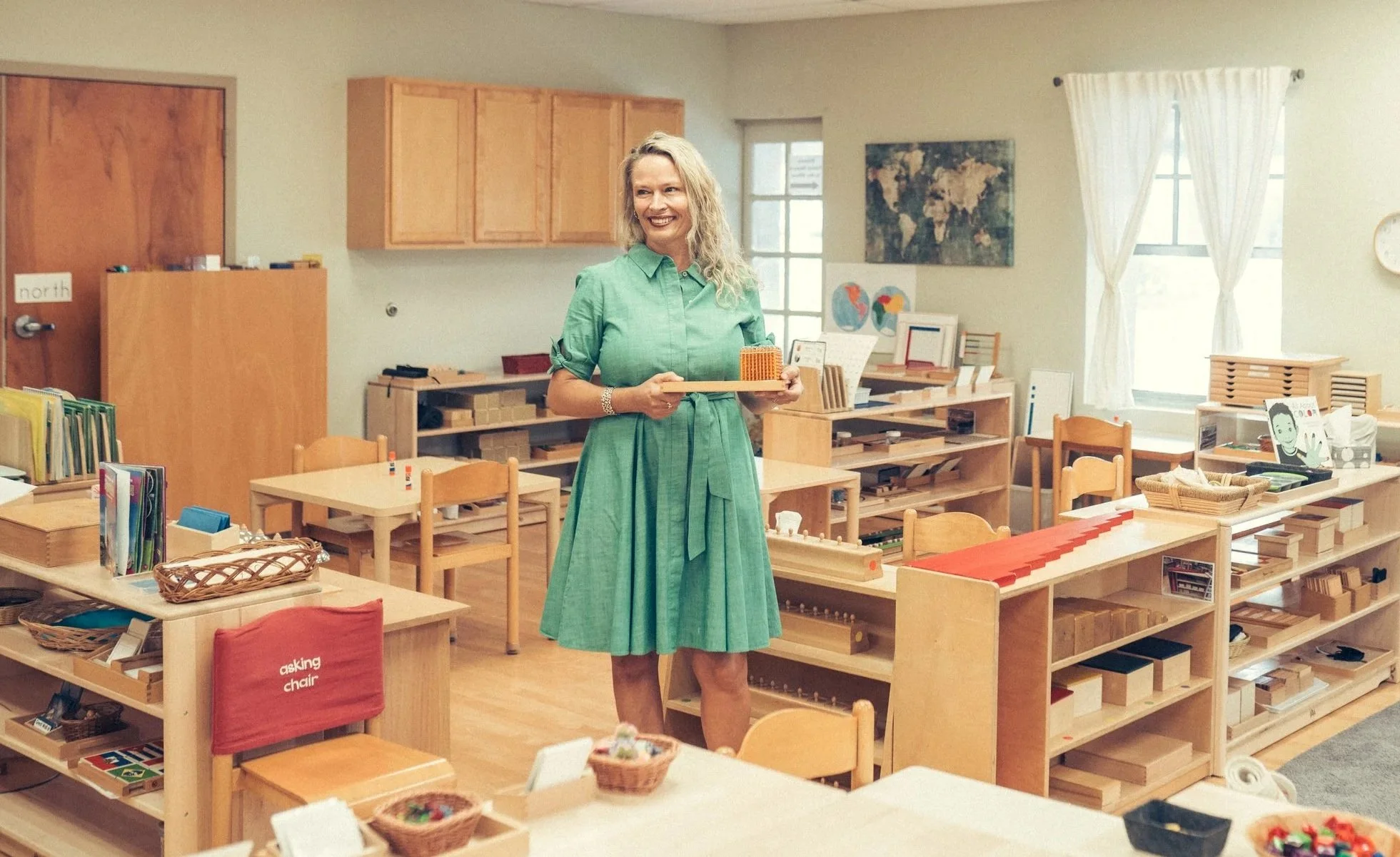
Josie Hill, the founder and now-CFO of Lakeland Montessori School, holds counting beads—a tactile way for students to learn math—in the school she helped open in 2004.
Josie Hill’s eyes light up and her smile widens telling the story of a lifelong love of school and education, something she has appreciated, cultivated and ultimately now shared with hundreds of Polk County families since founding Lakeland Montessori School in 2004.
“I really liked to learn about everything,’’ Hill, 53, recalled of her days growing up in a small town on the Illinois-Wisconsin border. “School was really my happy place. It created who I am. I loved my teachers. I loved everything about it.
“You know how they say, ‘I walked two miles in the snow uphill,’’ Hill said of the epic—often-exaggerated—phrase told to young students.
“There were days when I would wake up in a blizzard and I would actually walk the two miles to school in the snow. And school would be closed and I would be like, ‘oh no, I want to go to school.’”
The story says a lot about Hill, truly one of Polk County’s educational pioneers. Years later, after moving with her young family to Lakeland, Hill took that proverbial tough walk again—this time in sunshine—to help spread the Montessori educational concept, ultimately establishing a public Montessori School where Polk County students have now thrived for more than two decades.
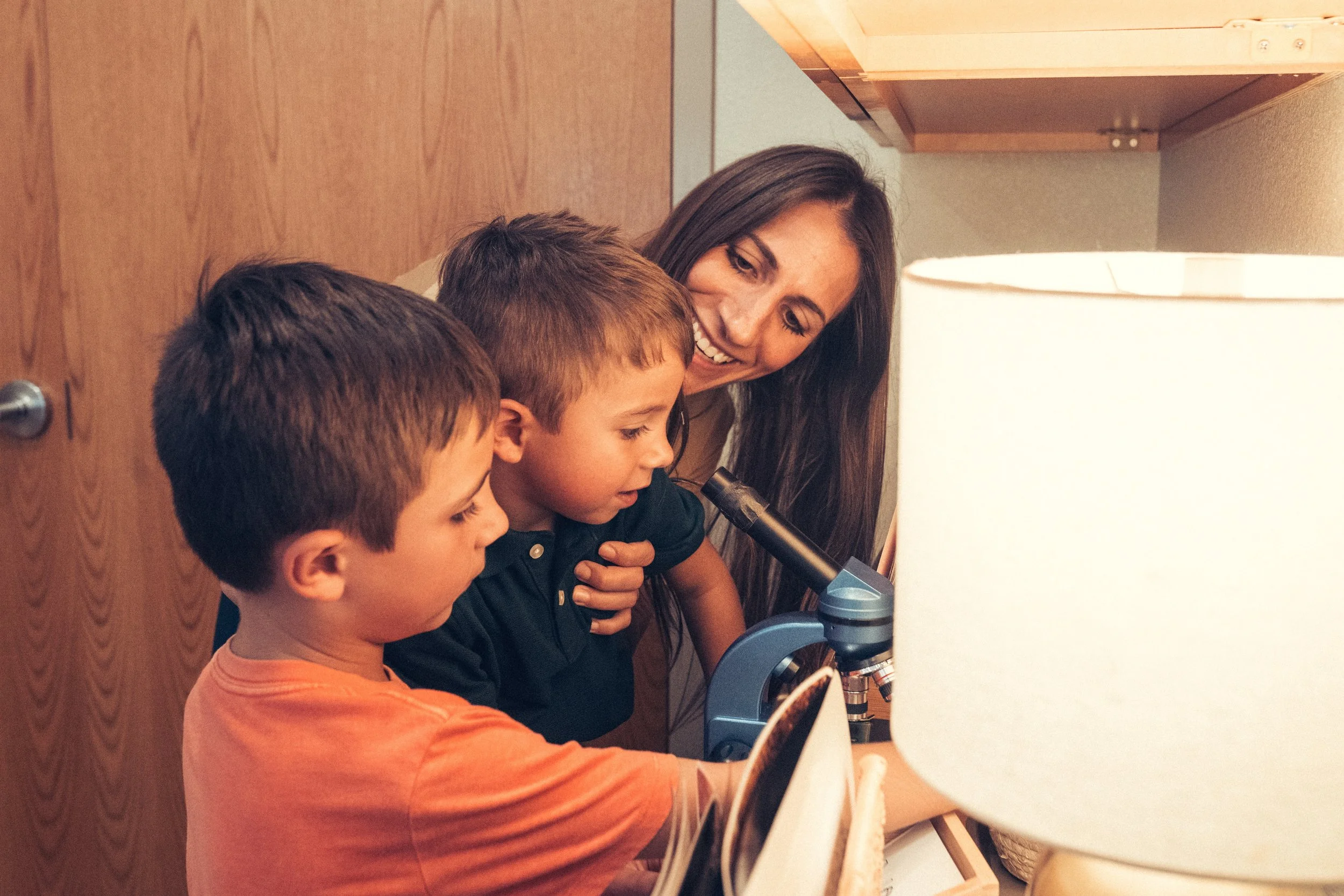
Students at Montessori schools enjoy classrooms with more open spaces and learning centers than many traditional classrooms.
“After our family moved to Florida, there was this side of me searching and asking, how can I contribute? What will my life’s work be?” Hill said. “I heard about charter schools and I had heard of Montessori and it just kind of clicked. This is it. I want to start a school and I want it to be Montessori and I want it to be public.
She did extensive research, including in-person visits to a variety of charter and Montessori schools throughout Florida, and a strong majority consensus from school leaders was “you’ll never be able to have an authentic Montessori program in a public school setting.”
“I’m the kind of person where just because you say ‘no’ to me, I say ‘let’s see, let’s explore more,’ … and I said, ‘I’m going to do it.’”
And she did. That’s not to say it was an easy process, however. It took a lot of work, from Hill and the increasingly large pool of parents and community members who supported the idea of bringing Montessori’s non-traditional education methods to Lakeland.
Lakeland resident Nancy Moses recalled seeing a flyer about a meeting Hill organized at the Lakeland Public Library in the early 2000s. About 40 local families showed up to listen to Hill explain the concept of Montessori that evening and many— enough—left convinced they wanted to help bring it to fruition.
“Obviously, she made it happen and without her, none of this would be,’’ said Moses, whose daughter Emma and son John attended Lakeland Montessori from pre-school through eighth grade. Emma—who was part of the inaugural 3-year old class at the school—is now a law student at George Washington University in Washington D.C. and John is a physics major at the University of Central Florida.
“I think at the beginning it was incredible that Josie decided she wanted this for her own girls and so she just took a leap [of faith] and made it happen and then obviously invited all the rest of us around for the ride,’’ Moses continued. “The fact she did it as a public charter school I think is such a big part of the story. More typically, Montessori is expensive and not available to everyone so that was a big deal that it was truly for everyone.”
“I’m the kind of person where just because you say ‘no’ to me, I say ‘let’s see, let’s explore more,’ … and I said, ‘I’m going to do it.’”
That core Montessori curriculum is based on the concept of “Five Great Lessons” which are integrated into all studies in age-appropriate ways that not only create the foundation for academic success but for broader life lessons. They range from the “Coming of the Universe” to the “History of Language” and “History of Numbers” and the proof of concept comes from self-led learning, not traditional report cards.
For the very youngest students, math, for example, is understanding addition through blocks, lots of hands-on and sensorial opportunities. As they get older, students take turns being the class “zoologist” to care for the various classroom pets. The older students have electronic tablets for use and eventually each middle schooler has access to a laptop, but the electronics stay at school.
Not only did Moses support Hill’s work with Montessori, she joined in the foundation, helping write a separate charter for the middle school (grades six through eight). And today the Lakeland Montessori School, which Hill founded in 2003, serves students from 3years old through eighth grade.
Beyond that, Hill, who now serves as the school’s (CFO) Chief Financial Officer, got the Lakeland Montessori approved through the Polk County School Board as a charter school – meaning there is no tuition (from kindergarten through eighth-grade). In fact, Lakeland Montessori was the first American Montessori Society-school in the state to receive that “charter school” designation. It was also the first AMS school in the country to be designated public.
And her work and passion are recognized not just locally—where three additional public Montessori schools are now established in Polk County—but also at a state and national level.
“Incredible determination and focus to reach a goal and commitment to do it and do it well,’’ Kitty Bravo emphatically says of Hill.
And that’s a big accolade coming from Bravo, who has been involved in Montessori education for nearly 50 years and is currently the Director of Education for the Center for Guided Montessori Studies, a global Montessori teacher education and certification program.
“Not only is it [Lakeland Montessori] a success because it’s a solid, well-respected school that is full [of students], but it’s the quality of it. It is exceptional and I’m proud to have been able to help her create that but that is due to her work and the work of those that have worked with her through the years.”
A visit to the Lakeland Montessori School, tucked away a couple blocks off the shores of Lake Parker, provides vivid testimony – and appreciation - of the concept. Former Polk County Public Schools teacher Chelsea Waldron is the current principal and her pride in the facility and purpose is unmistakable.
“We truly believe that our hope for peace can be found in the smallest of those we educate,’’ Waldron said. “Josie has made a significant impact not just on the students at Lakeland Montessori, but around the world with the partnerships she has created with other Montessori educators.’’

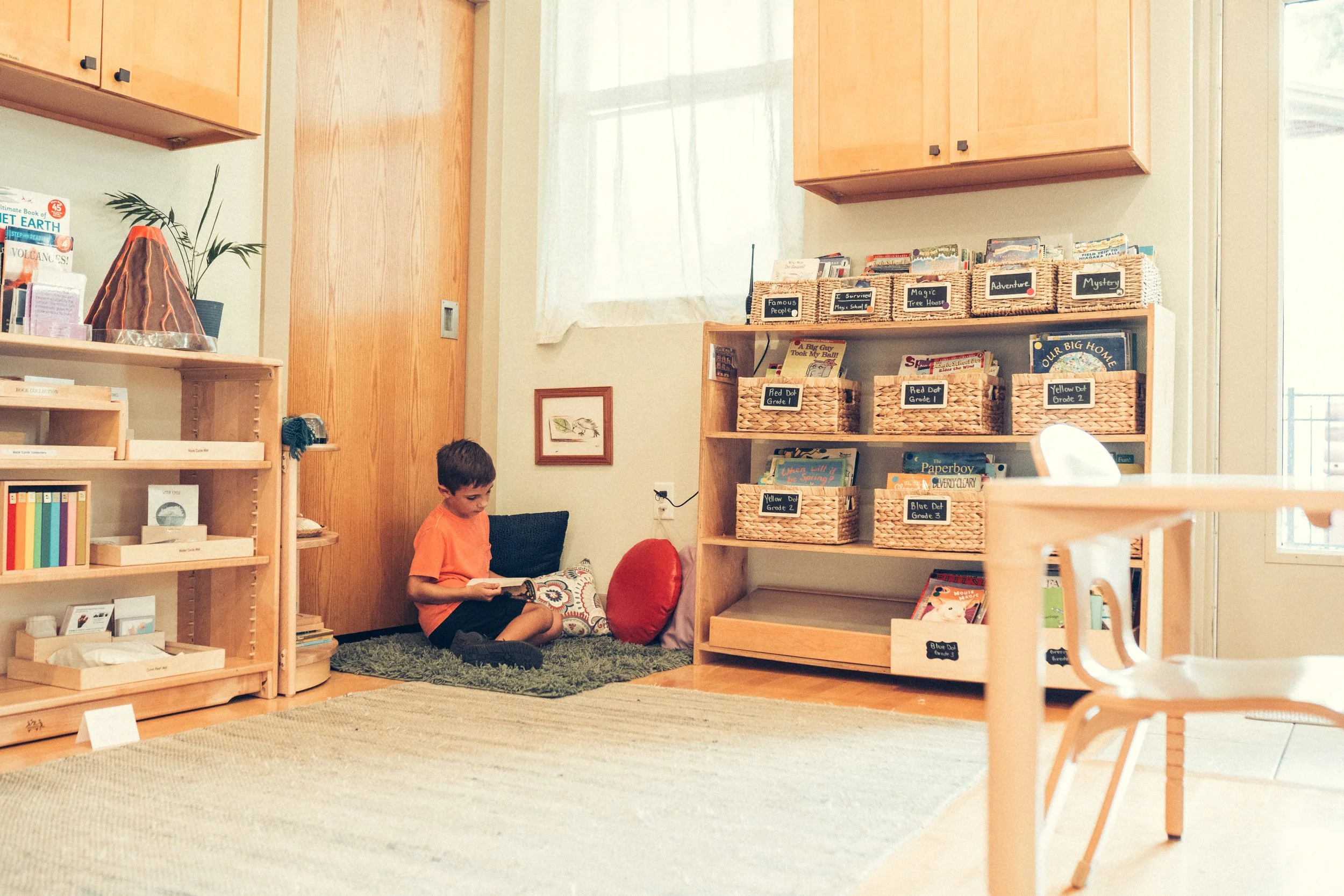
The school—after working out of various sites around Lakeland— now sits on two acres. Inside the classroom buildings there are no florescent lights, but lots of wood furniture and natural colors on the walls. All purposefully done. Classroom size is limited and Lakeland Montessori, which currently enrolls 200 students, has a waiting list of nearly 2,000.
Inside one of the main hallways, a banner with a passage from the childhood favorite, “A Velveteen Rabbit” hangs on the wall. A tortoise and hermit crabs have classroom homes to help with science. A butterfly garden thrives outside the buildings near outdoor class tables with playground equipment on the lawn in the near distance.
The youngest students don’t wear shoes with shoestrings until they can tie them themselves— a subtle lesson in independence. No backpacks are necessary in this primarily “homework-free” setting and while lunch-from-home is the norm, the classrooms feature full kitchens that are available for students to prepare meals— as cooking is part of the all-around program as well.
In each classroom you will find a “peace table”, a designated space for students to calm down and work through disagreements independently.
There are field trips, guest speakers, even a student-led “business” selling things like coffee to parents to raise money for the trips, which are decided upon by the students with a discussion and vote—a civics lesson of sorts. The concept of community is unmistakable here.
The graduates of Montessori education are plentiful and impactful in so many forms of work. National Basketball Association (NBA) superstar Steph Curry and the founders of Google are former Montessori students as are cellist Yo-Yo Ma, renowned chef Julia Child and even a couple future British kings, Prince William and his son Prince George.
“I believe kids are in schools so they can read and they can do math and they can do science and they should be able to do those things, but there’s so much more to being a human being and Montessori has both,’’ Hill says.
“That’s why I love Montessori. It says, ‘yep, we’ve got all those [academic] achievement things and. …what’s your gift as a human being that you can also pursue?’
“And that gift should be a gift to your community. I don’t think a lot of people understand what Montessori is actually about. It’s about going to school and achieving those things [academically] so you find your gift and you give that gift back to the world.’’
“I feel like children are everything. And for them to have an opportunity to have a great education, what more could I accomplish in my life.’’