
Proud to ‘B’ but Striving for More
INTERVIEW BY RJ WALTERS | DESIGNED BY ELIZABETH PEREZ-LIBRAN | PHOTOS PROVIDED BY POLK COUNTY PUBLIC SCHOOLS
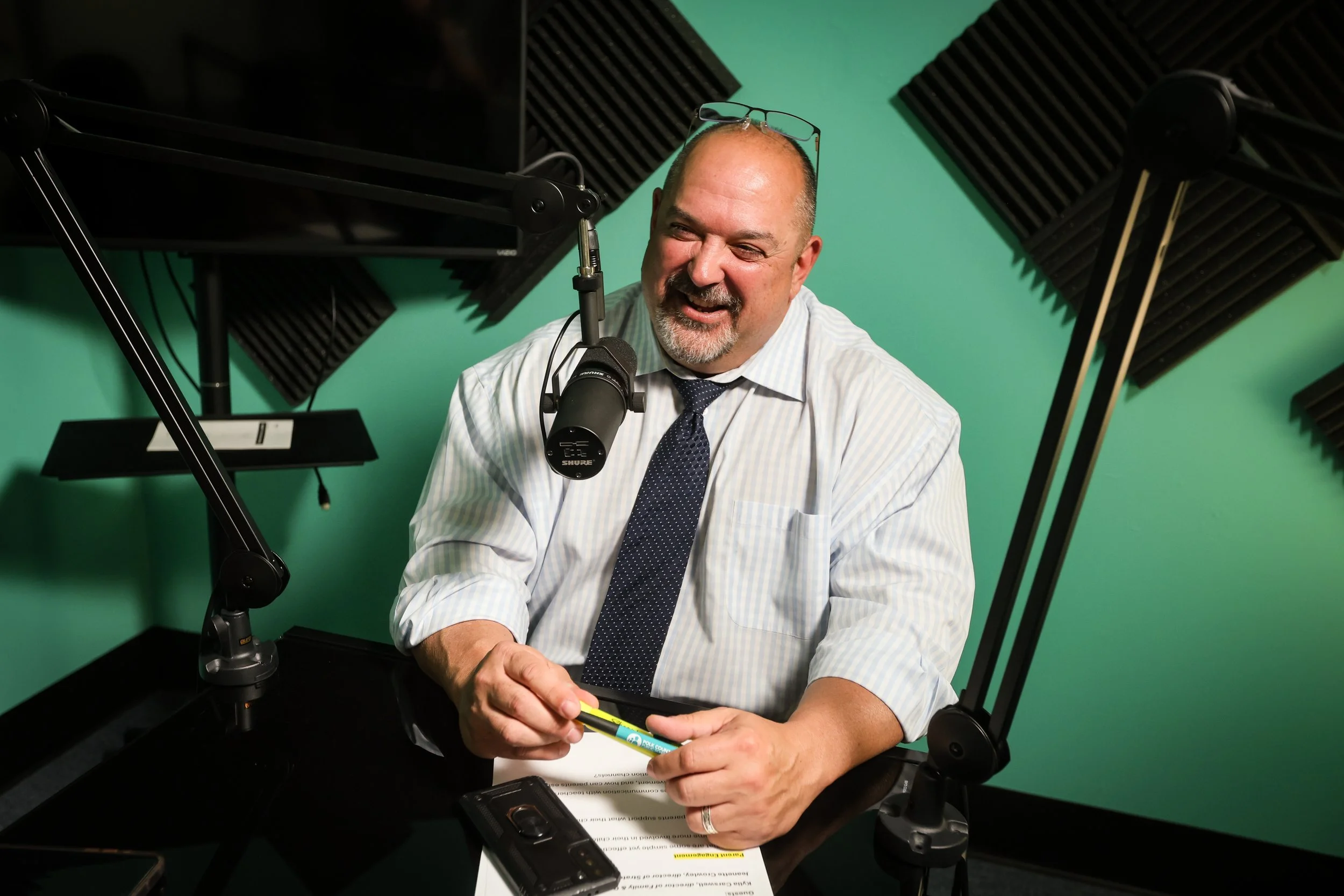
Life isn’t all about accomplishments, but sometimes, especially when it has been a grueling toil to get there, you can’t help but celebrate and tout your achievement a little bit. Fred Heid, Superintendent of Polk County Public Schools, doesn’t act like a “B” school grade from the Florida Department of Education is the pinnacle he is trying to lead one of the largest districts in America to, but he’s OK with stopping at the summit to acknowledge all the hard work it has taken to earn the first “B” for PCPS since 2019.
In a district where the number of industry certifications earned by students is skyrocketing there is a palpable sense that positive momentum that has been built can be the catalyst for even stronger returns such as improved early literacy scores and graduation rates in the near future.
But work remains, and Heid and his leadership team is prepared to keep proving the value and staying power of public education. As the 2025-26 school year kicks off, we had the opportunity to sit down with Heid to discuss School Grades, vouchers and what excites him about the future.
The conversation has been edited for length and clarity.
THE LAKELANDER
If this were a State of the Union, how are you feeling as the school year gets kicked off, about the trajectory of the school district with all of the variables and intangibles that everyone likes to talk about?
FRED HEID
I’m excited about this school year…for several reasons. This last year showed that our growth has not been isolated to one or two years—It’s been a consistent pattern, a consistent positive trajectory for the last four years. So as we go into year five, the district grade of a “B” does a lot to reinvigorate our organization. Schools can and teachers can be proud of the work that they continue to do, and that…it’s resulting in outcomes for our kids. I think for our community, the district grade is a big, big indicator and a positive indicator of how successful and healthy our school district and school system is. They can be confident that when a kid walks across the stage, they’re actually graduating—they’re not just getting a certificate of completion. The one piece I would really highlight is that out of the 14 components that the state uses to calculate a school district grade, we improved in 12.
TL
What does it mean to be a “B” district and what does it not mean?
FRED
It doesn’t capture the intangibles, right? It doesn’t capture the realities of many of the barriers, real or perceived, that our kids face on a daily basis when they come to school—whether its nutritional needs, household issues, poverty—all those things are very real. What the school grading system does not capture…is the empathy and the relationships that our staff build with students that nurture that support and help us overcome those deficiencies or barriers for kids so that they can continue to be successful. We minimize disruptions, we minimize fear and we create opportunities for kids to thrive in an environment they may otherwise not be able to experience.
The other thing is it doesn’t capture the individuality of every student…it has a very limited myopic kind of assessment of students’ academic performance, but it doesn’t measure their personal growth, their emotional development, their workforce readiness, some of those things. You could make an argument that acceleration captures some career tech ed and workforce...but it really doesn’t capture the whole child. I think we’re very proud of the “B’ but quite frankly, if you were to ask me, we’re an “A” district all day, every day because we do great things for kids.
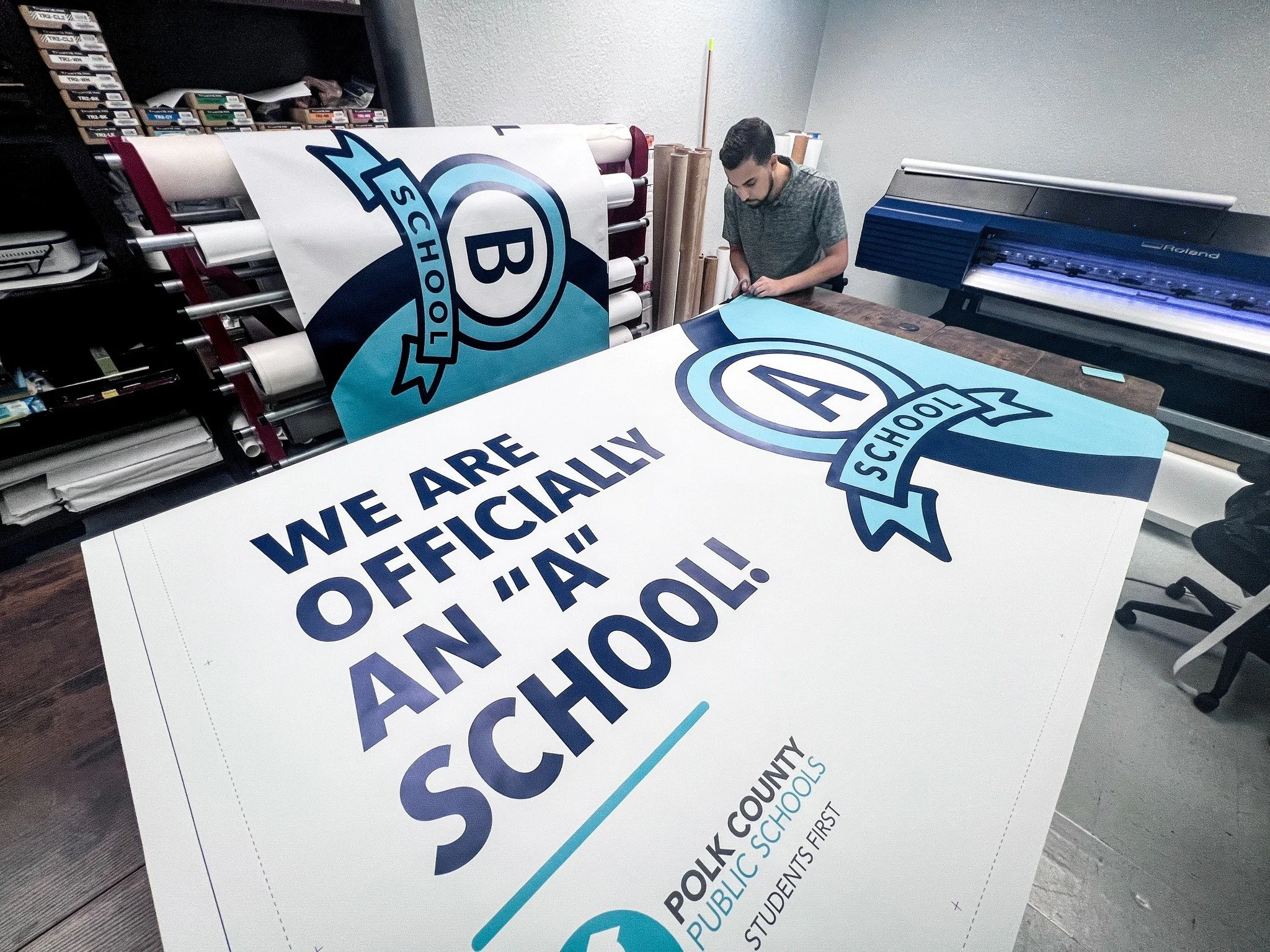
“I think we’re very proud of the “B’ but quite frankly, if you were to ask me, we’re an “A” district all day, every day because we do great things for kids.”
TL
Nothing is static about education, not even how school grades are determined. With more “A” and “B” schools and districts throughout Florida, it appears you might have to work even harder to get the same “B” grade—am I right?
FRED
It’s very true, and thank you for acknowledging that. I believe it’s a rule or statute that says that when a certain percentage of schools earn an “A” or “B”, that the state then has to modify [the scoring scale] and make it more difficult. Conceptually. I understand it, right? I’d be lying if I didn’t say I get what they’re trying to do with that. And if we weren’t talking about children, if we were producing widgets or manufacturing something, maybe that makes sense. I think the struggle that myself and other professional educators have is the score is the score. You know, it feels like for those of us who are in education and for anyone else, you remember 90 to 100 is typically an “A.” And now we’re saying, well, too many kids are passing and doing too well, so now we’re gonna make it 95 and above as an “A.” I understand why, I just don’t agree with doing it right now. I think we should wait a couple years and make sure that the results that we’re seeing are consistent…and I think there should be a little bit more conversation around that issue because that system was developed [more than 20 years ago].
And you know, my job is not to make excuses, my job is to make sure we get the kids there, and that’s what we strive to do each day. So it’s a hard question to answer—I mean, we’re talking philosophy versus pedagogy.
TL
I recently read an article in The Ledger that talked about data from the Florida Policy Institute looking at Step Up for Students state voucher dollars and the dollar amounts and percentages of growth we may see in the state, and even Polk County, in the future. As you continue to advocate and work for the students of Polk County, if you’re at the table with other superintendents or you’re talking with legislators and trying to impact change, how do you navigate the voucher dilemma in terms of what you believe is a good long-term solution that allows for the freedom of choice in the education system but also recognizes taxpayers fund public education?
FRED
We’ve been talking a lot about this, and I have said publicly already that my job is not to stand in the way of school choice or options, but it has to be regulated. I think the frustration can best be explained if I give you the example of what just took place. At the end of each year, every school district works with the Department of Education to basically project what our enrollment’s gonna be in the subsequent school year, and there’s a lot of different ways we do that. But the one piece we don’t provide and the state provides is the number of students who are gonna get a scholarship or a voucher. Last year…we had 11,040 kids on vouchers. And going into this school year, when we did our initial budget projects and submitted everything to the state, we were [told we were] going to see an increase to about 13,100, so an increase of a little over 2,000 kids. The reality was that they turned around and told us what it actually is, and it’s 17,000. The issue isn’t that the number jumped, the issue is that the number changed so late in the summer and did not give us the opportunity to adjust our fiscal situation. Now I have to wait until the first two weeks of school are over to determine how many of those kids actually came, didn’t come, those kinds of things that we can adjust our staffing, and that’s not really appropriate because I would’ve preferred that to have been done over the summer.
What I am suggesting and what I am proposing is that the state continue to honor scholarships, they continue to allow annual growth in a number of scholarships. If that’s where parents want to go and where they want their dollars to go, fantastic, you know, we’re here to compete. But at the end of the day, what I would ask for, it’s just a more reasonable way to budget and plan for it.
We’re all about choice and I think the fact that overwhelmingly parents are choosing public schools, including Polk County Public Schools, continues to demonstrate that trust. So we’re here, and charter schools are here, private schools are here, scholarship students are here…and I would hope that the legislature remains open to continually tweaking and refining this process to make sure that we’re doing the right thing.
TL
You make it a priority to be out in public having conversations with as many people in as many different communities as possible. What are some of the key things people can expect to hear you talking about this school year?
FRED
That we’re not done until 100 percent of kids graduate, 100 percent of our kids can read on grade level and 100 percent of our kids can do math on grade level. We’re not done.
We’re excited, we’re thrilled, we’re pleased with our progress, but you know, it’s kinda like the old Janet Jackson song, “What have you done for me lately?” I’m gonna celebrate what we’ve accomplished, but I’m gonna reassure people that we’ve got a long way to go and we need their help. We need their support. And, you know, it’s only together that we’re gonna move to that next level.
Really three things are keeping us from being an “A” district. Number one, we need parents to help us with chronic absenteeism and truancy—you can’t learn if you’re not in school. Number two, we need parents to really be engaged, read with their kids, stay abreast of their schoolwork—you know, be a partner with the school and your child’s teachers. Don’t be a passenger in education.
And then the last thing, as I mentioned earlier, we just have to [improve] our math scores in ninth grade, but that’s not a ninth grade teacher issue. This is not a commentary about ninth grade math teachers because math proficiency starts in kindergarten and or even earlier than that, it starts at home. We’ve gotta figure out what’s happening or not happening. And, and my personal view is I think we allow students to develop this perception that they’re not good at math, so that becomes the excuse, and that’s just simply not true. So how do we overcome that?