The Island Of Misfit Toys
How the Lakeland Lynx Are Building Character and Skill on Florida’s Trails
PHOTOS BY JACK PORTUNE
The sport of mountain biking often conjures images of steep, rocky climbs and epic downhill descents in places like Colorado or Utah. In Central Florida, however, the challenge is different, forcing a unique kind of creativity and grit from its riders. This spirit defines the Lakeland Lynx Composite Mountain Biking Team, a youth club that is less about Olympic dreams and more about transforming lives, one rooted, flat, but challenging, singletrack loop at a time.
As a cross-country mountain bike team for 5th through 12th-grade student-athletes, the Lynx operate under the umbrella of the National Interscholastic Cycling Association (NICA) and the Florida Interscholastic Cycling League (FICL). The team’s foundational purpose is stated clearly in its mission to “build strong minds, bodies, character, and communities through cycling.”
The thunderous applause at a mountain biking event in the Sunshine State often isn’t reserved only for the race winner. Instead, the crowd erupts for the last rider crossing the line, or the one who managed a particularly tricky section without putting a foot down. This is the culture created by a club that has rapidly become a second family and a crucible for character development for youth across Polk County.
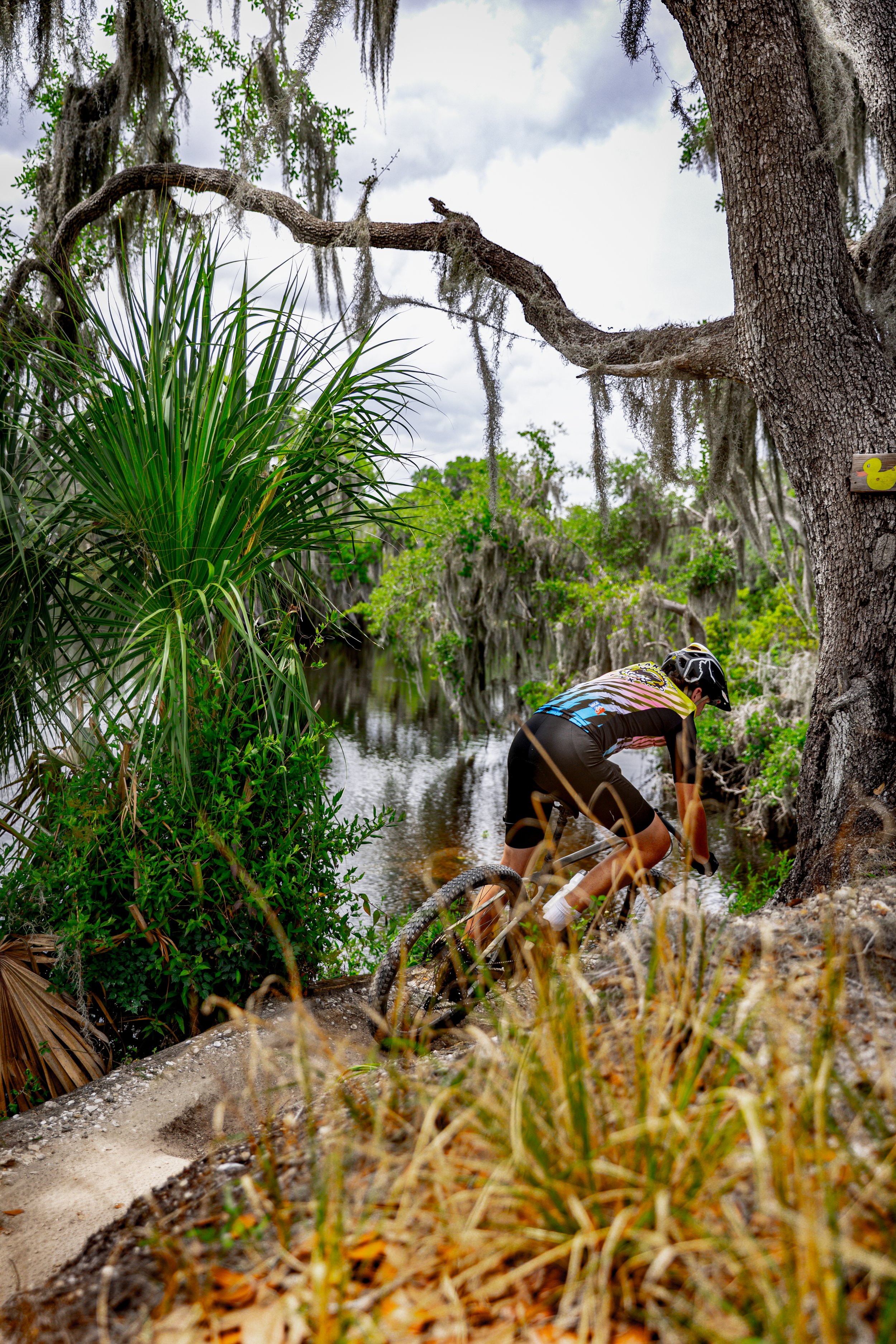
The “composite” status of the team means it draws student-athletes from public schools, private schools and the large local home-school community. Longtime coach Kyle Fedler, a professor of religion at Florida Southern College affectionately refers to the Lynx as “the island of misfit toys,” noting the Lynx attracts kids who “just didn’t fit [into] what we call traditional stick and ball sports.”
A Foundation of Family and Diversity
The culture of the Lynx—who were founded by Lakelander Loyd Corbett in the fall of 2019—is intentionally anti-burnout and open to just about everyone. This is by design, echoing NICA’s core dialogue about “creating the environment where everybody can stay.”
“The great thing is,” Fedler says about the club that is now home to more than 40 athletes, “if a kid goes out and comes in dead last, we’re out there cheering just as much for him.”
The racing structure itself supports this ethos of personal achievement over a win-at-all-costs mentality. Middle schoolers race only against athletes in their own grade levels, and high school divisions are based purely on ability, guaranteeing a level playing field for riders of varying backgrounds.
“We’ve got kids whose goal is…to make it to this trail without putting a foot down,” Fedler explains. “Just set your own goal. We’ll help you do it.”
This welcoming environment extends off the trails. Michelle Hoffert, a Level 2 coach (NICA has three levels of licensing) whose son Noah is on the team, and whose husband Isaac is also a Level 2 coach, emphasizes the family aspect, noting that NICA provides “something that they can have for a lifetime that they can go back to”.
For her son, who is home schooled and fairly introverted, the team became his crucial “buddy group”. Isaac told Fedler the Hofferts were an “insulated” family in many respects and the Lynx “has kind of become our second family as well.”
Team activities reinforce this bond. The competitive season runs January through April, and race weekends often involve camping, allowing families to bond on Friday nights. The team hosts large communal events, like a team dinner at every event—with fun themes like Mexican night or barbecue—and an annual end-of-year party last year where Fedler welcomed nearly 100 people to his home. Even in the off-season, alumni and families meet up for trips, such as camping in North Carolina.
Gunner Daughtry, a 14-year-old student at IB Bartow High School who just wrapped up his second season with the Lynx, appreciates the inviting culture of the local club.“The people are just very welcoming…which really helped because I didn’t really know if I’d be good at it,” he says.
He fell in love with biking on a family camping trip, where he was traversing the campground on a “Walmart bike.” Soon after, he found the trails at Loyce E. Harpe Park in South Lakeland, as well as the Lynx.
For veteran rider Ashton Newman, a 17-year-old senior at George Jenkins High School, mentorship is rooted in friendship. “A lot of it’s just like, just be friendly,” Newman shares. “You’ve gotta be
a friend—you can’t always just be
a mentor”.
Newman is also proof that there is plenty of room on the Lynx for high-level athletes looking to showcase themselves on the state’s biggest stages. He is an OG Lynx team member, having been with the club since its inception, and he has racked up a number of wins and podium finishes at the junior varsity and varsity levels.
He attributes his success in part to continually grinding—riding upwards of 80 miles per week during the season—as well as to watching and learning from other veteran riders.
Rapid Growth With an Accessible Starting Point
The popularity of youth mountain biking has surged nationwide, with NICA comprised of nearly 150,000 athletes and coaches—not bad for an organization that didn’t exist until 2009. The Florida Interscholastic Cycling League (FICL) began in the fall of 2019, only to be immediately derailed by the pandemic after a single race. Despite the setback, the league is thriving, with the Lakeland Lynx emerging as the largest team in the league. This year the Lynx competed in five races around the state, including hosting a race weekend at Loyce E. Harpe Park.
The Lynx actively work to make the sport accessible to all. They target underrepresented riders through scholarships and the Girls Riding Together (GRiT) program.
“We’ve got kids whose goal is…to make it to this trail without putting a foot down,” Fedler explains. “Just set your own goal. We’ll help you do it.”
The GRiT program is critical for recruiting and retaining female riders, as evidenced by the fact Fedler’s daughter, Maddie, was the only girl on the Lynx team for two years. GRiT puts on fun, supportive events for female coaches and riders, like craft tents at races where girls make patches and stickers—activities so popular even middle school boys try to sneak over and join.
The cost of competing in the FICL is quite reasonable, coming in around $400 per athlete per season. The cost of a bike, safety equipment and travel can add
up, though.
Trek Bikes, NICA’s title sponsor, provides the Pathfinder Scholarship to cover registration, a bike, helmet, shoes and tools. The Lynx have earned an impressive number of these scholarships, resulting in a team that is genuinely diverse.
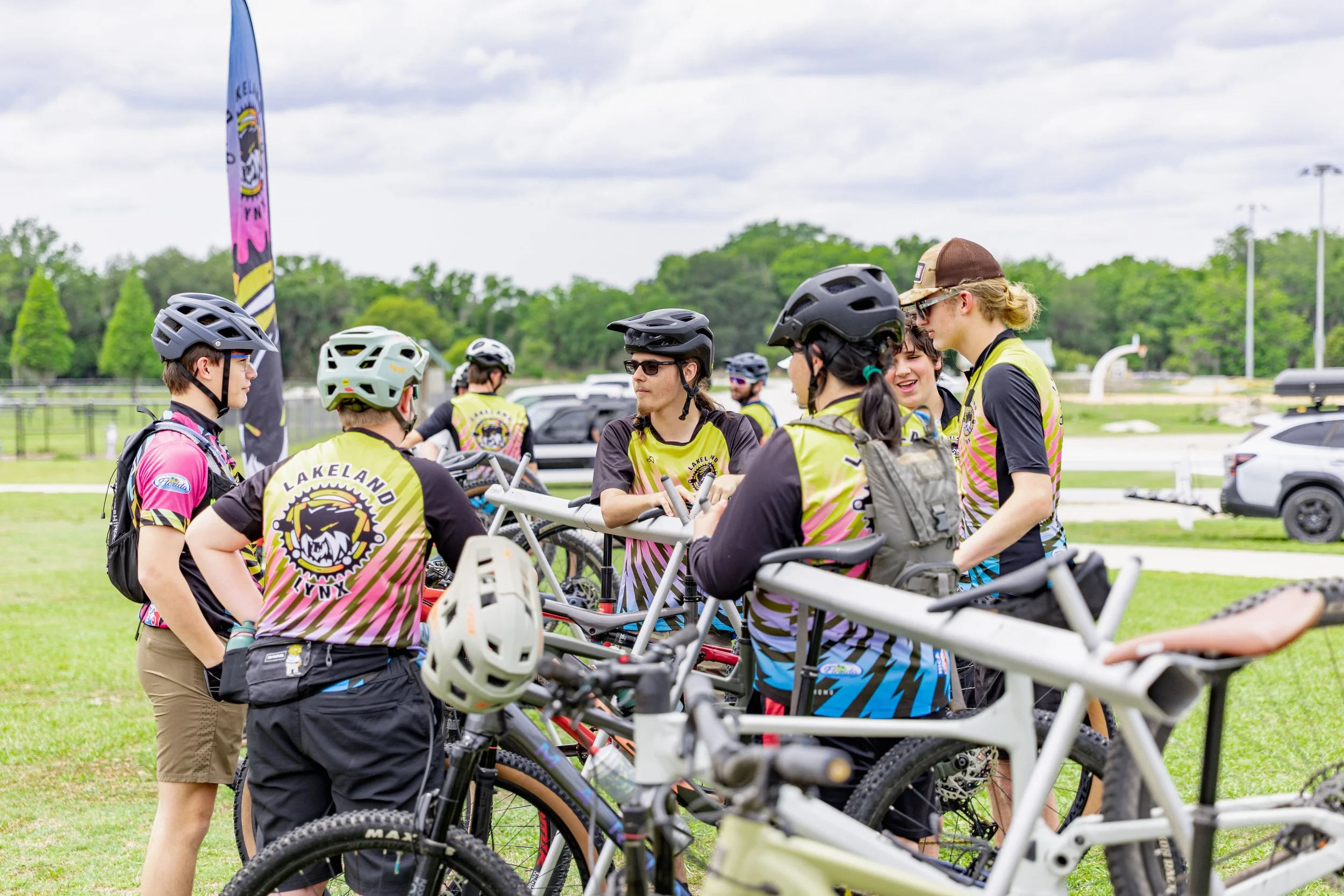
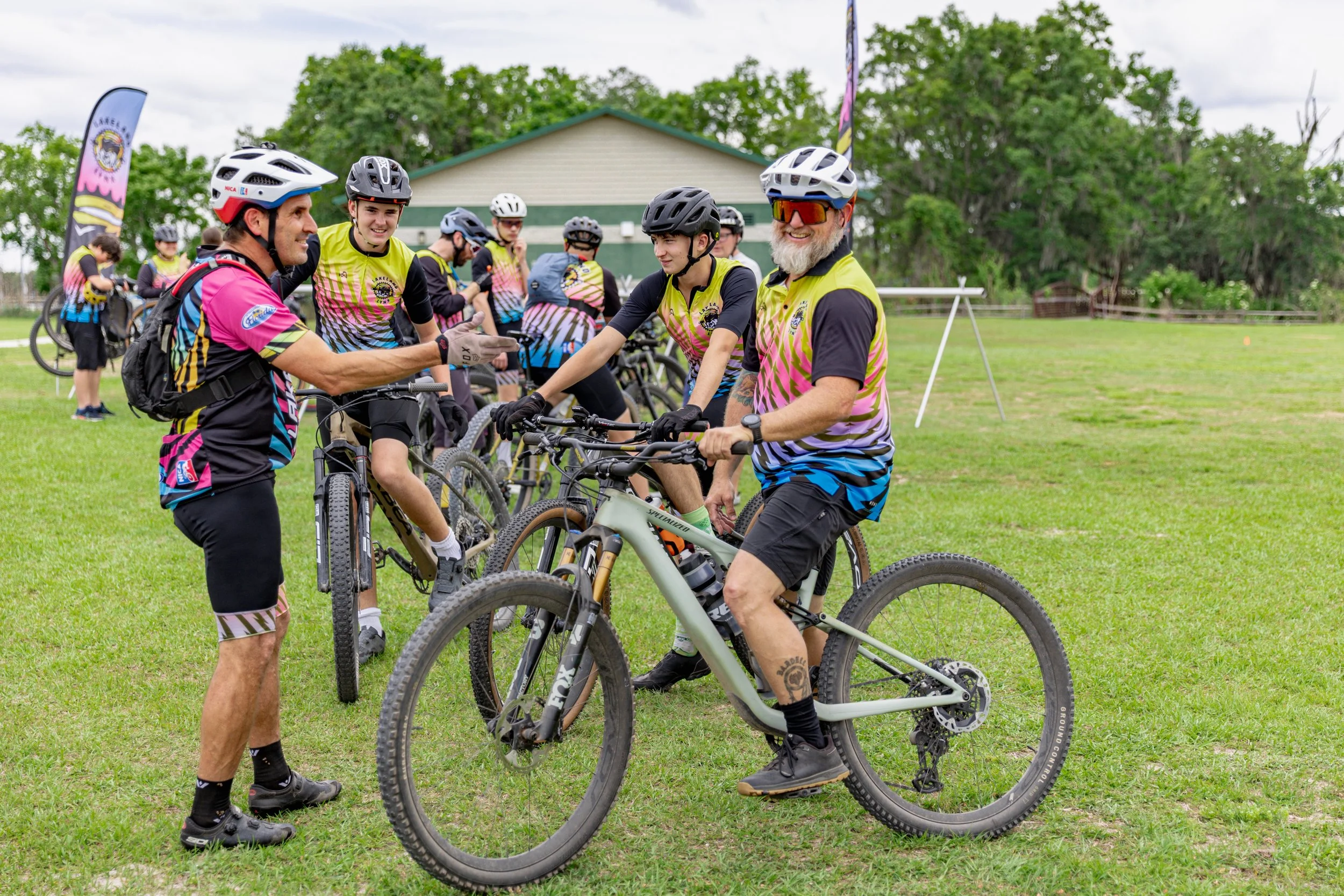
Fedler said it can be a somewhat tough conversation when a new athlete arrives with “the bike they just got for Christmas that is great to ride around the neighborhood but not quite cut out for mountain biking.” But he says, in general, local bike shops are great at helping newcomers understand what they need without up-selling them. Fedler said a quality new ride that is fit for the grind of regular practice and competition usually starts in the $600-800 range.
The Lynx are just as focused on community engagement as they are climbing the ranks of competitive mountain biking. The team has been recognized for its extensive trail maintenance work and the Lynx have become synonymous with volunteering at ministries and even riding their bikes to deliver food to a local food bank.
Dedication Runs Deep
The foundation of the Lynx’s success is its deep roster of dedicated volunteers. The team operates with roughly 20 coaches, all of whom are NICA-licensed and rigorously vetted. This extensive training includes background checks, first aid and CPR certification, and specialized training on sexual abuse prevention and concussion protocols.
This commitment translates to safety and quality coaching on the trail, where the maximum ratio is six riders per Level 2 coach, often dropping down to a one-to-one ratio for newer groups.
Leading the charge is Fedler, who is so devoted to the Lynx that he continues coaching even though his daughter no longer competes. The FSC professor, who moved to Lakeland in 2011, brings an impressive resume from decades in competitive cycling.
He started biking during graduate school in Atlanta, but his real initiation came at the University of Virginia, where he ran the mountain bike club for five years. In addition to mountain biking, Fedler has competed in ultra-endurance racing, adventure racing and triathlons. He’s also tackled the demanding Cross Florida Individual Time Trial, an off-road race across the peninsula.
He has long loved pushing his body to its limits while having fun doing it, which informs his coaching philosophy: “I’m not making better racers. I’m making better kids.”
“The people are just very welcoming…which really helped because I didn’t really know if I’d be good at it.”
Building Resilience on Florida’s Unique Terrain
Despite the perception of mountain biking as a high-risk sport, Fedler stresses that it is a “super safe sport”. The extensive NICA safety protocols mean coaches are well-prepared, and injuries often result from simple parking lot skids rather than technical trail mishaps.
The sport inherently teaches resilience. Newman, who raced BMX before finding mountain biking, noted that a great mountain biker needs both skill and “the love to actually do it.”
“I’m not making better racers. I’m making better kids.”
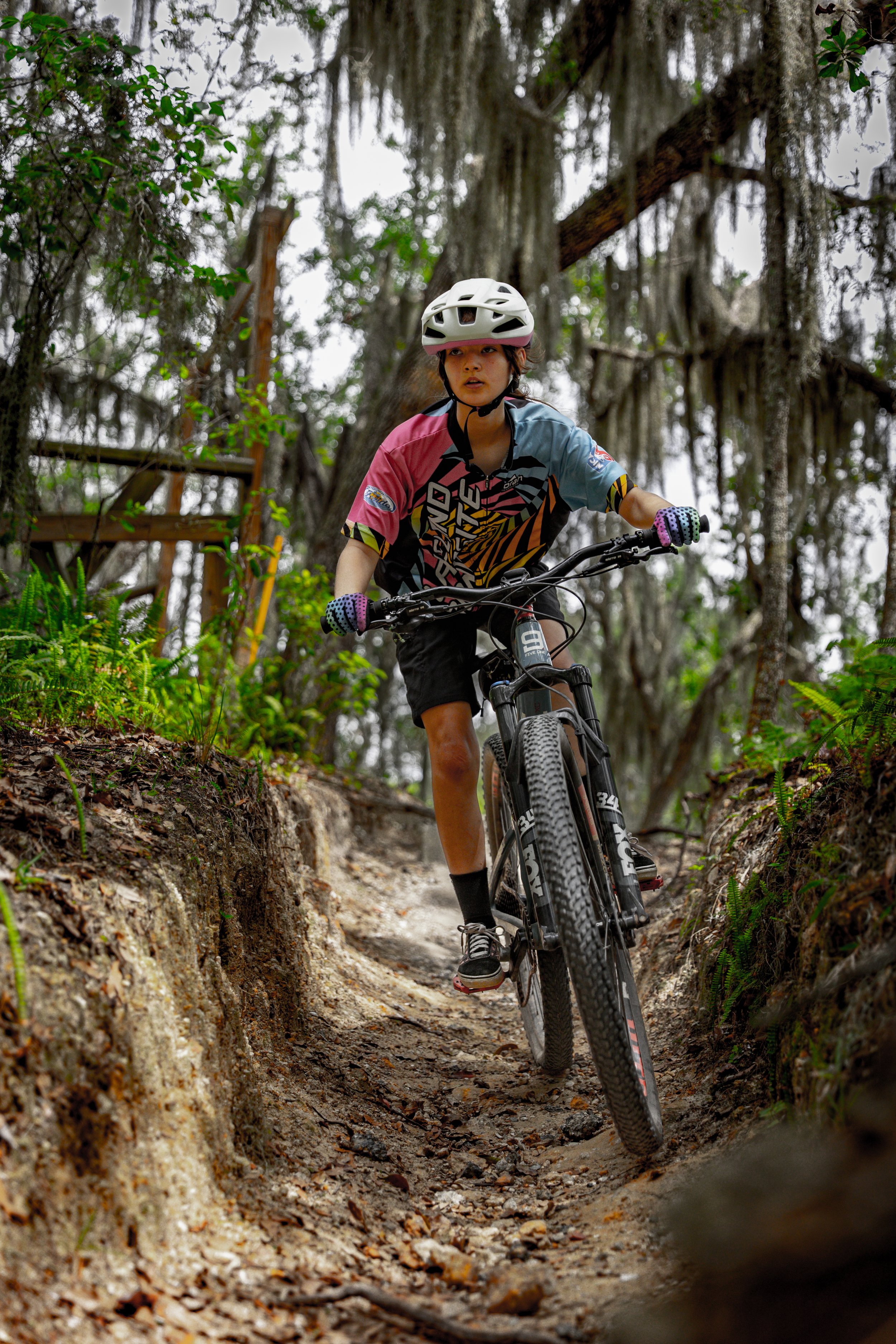
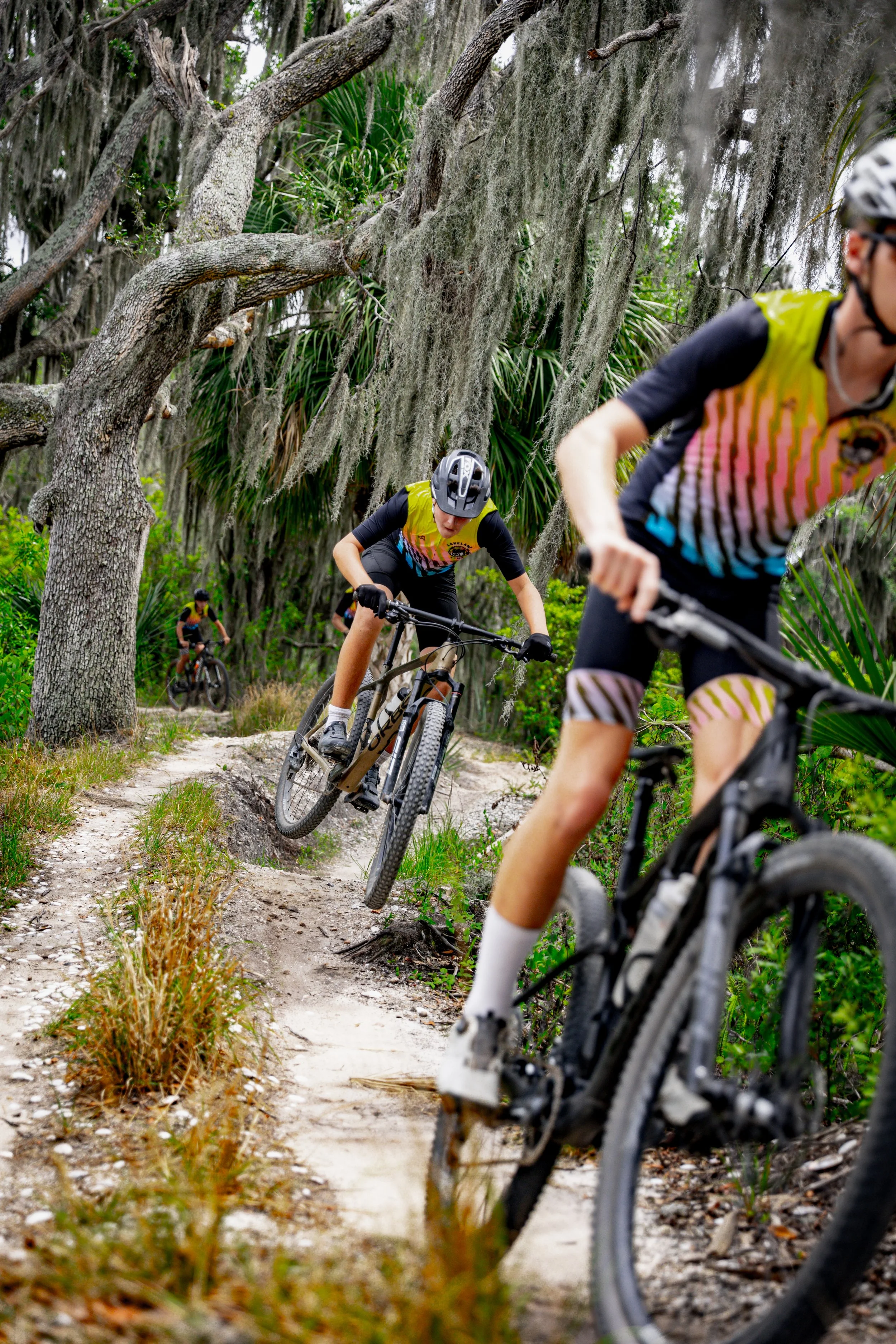
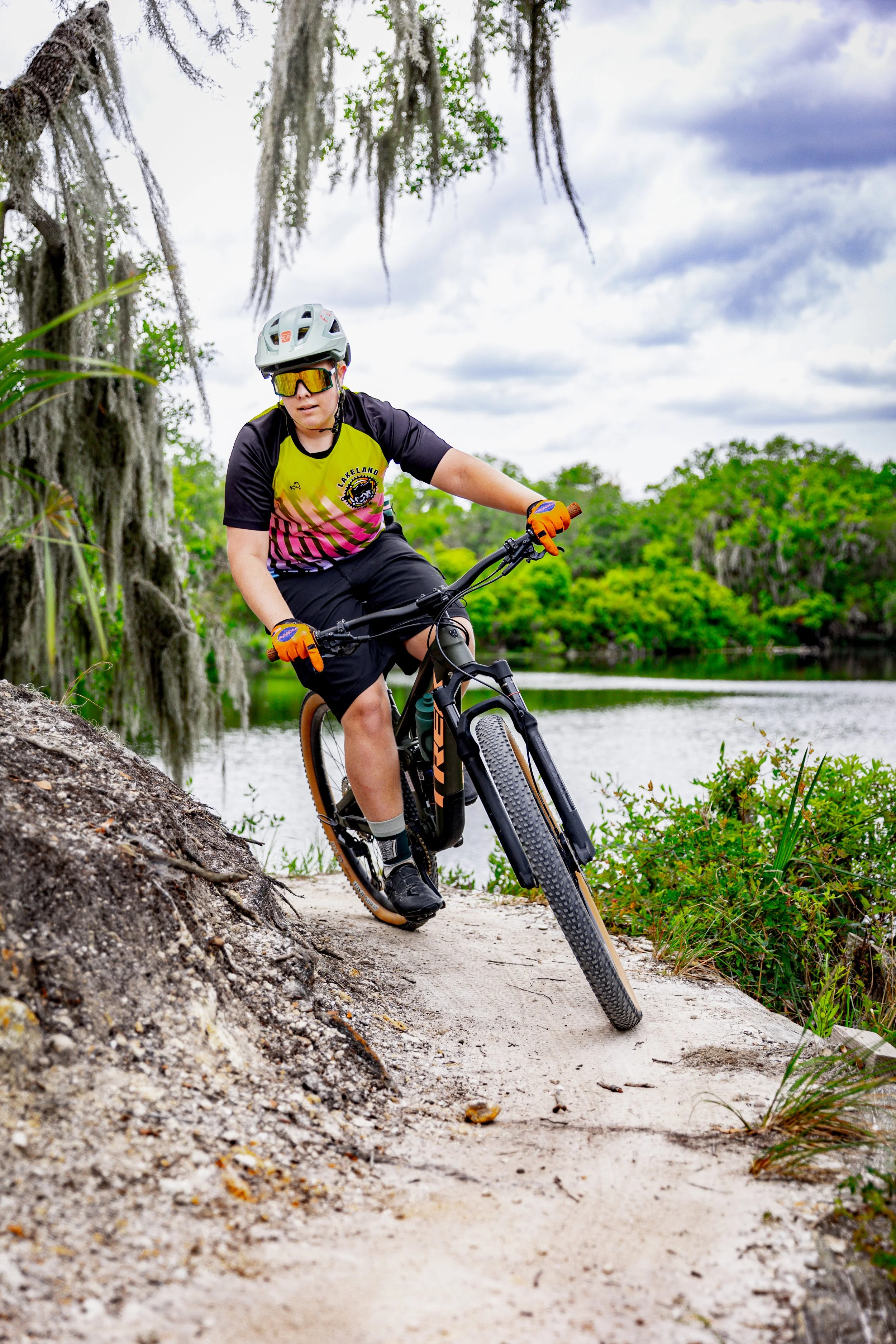
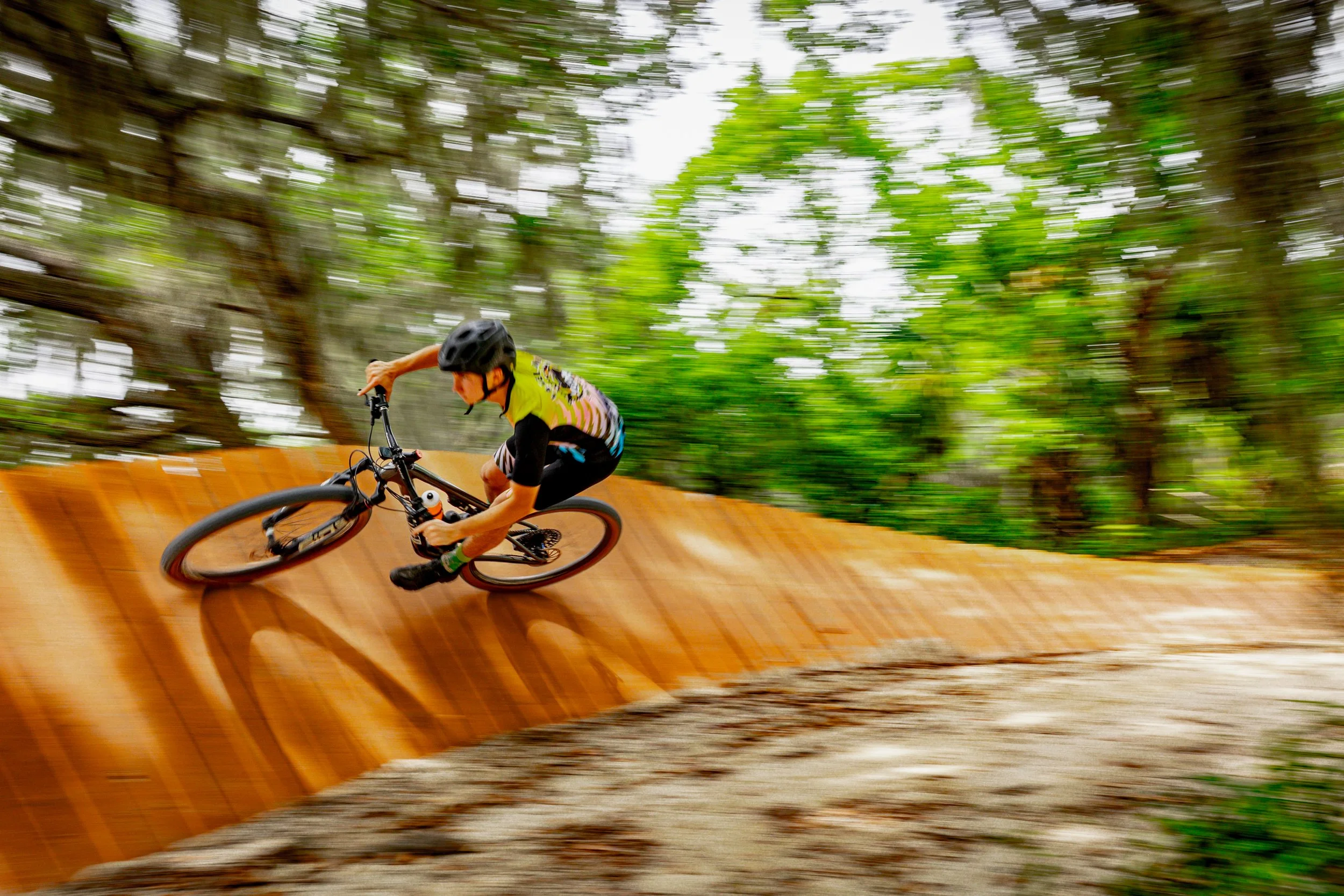
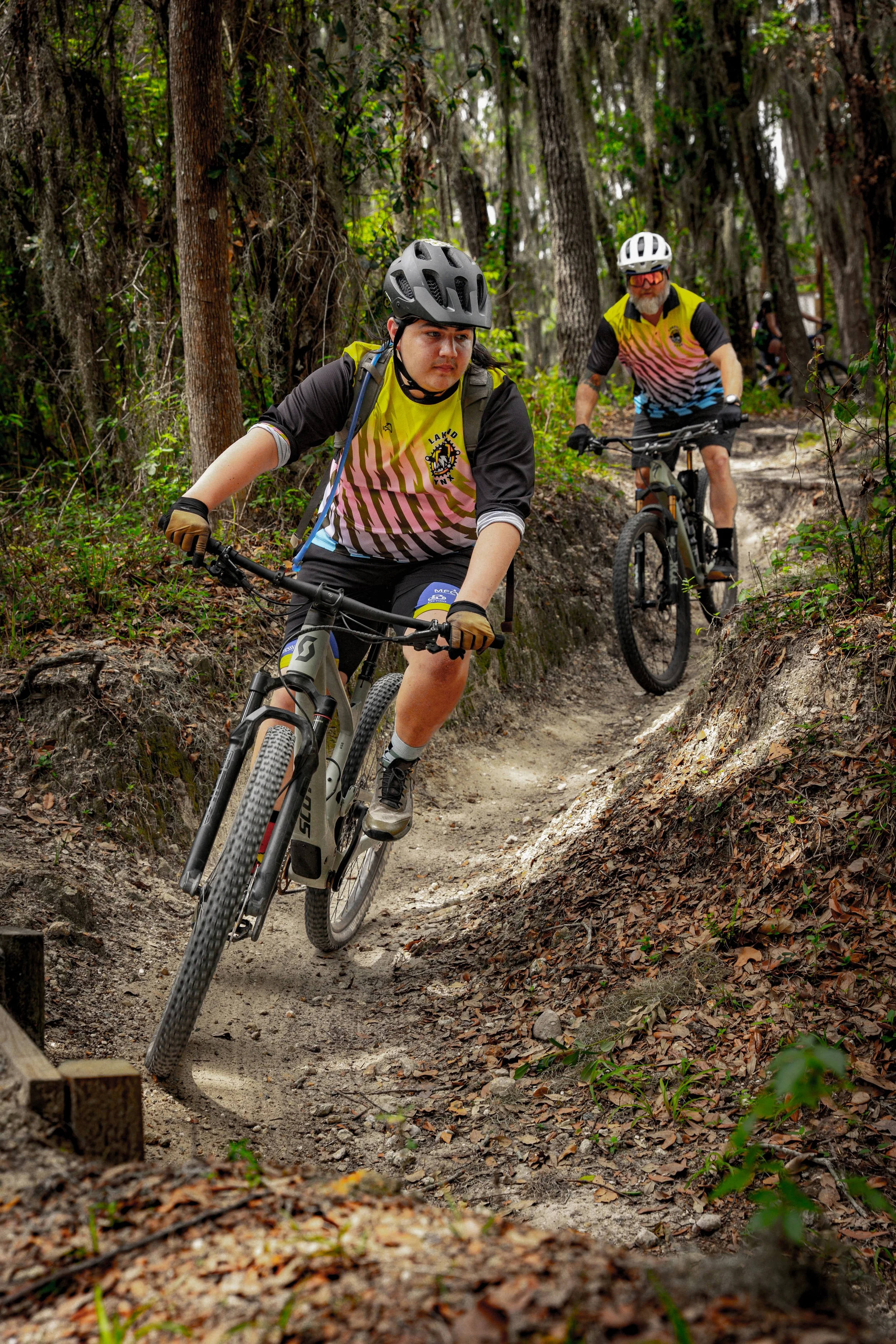
The Lakeland Lynx put work in all season long at Loyce E. Harpe Park to prepare themselves for races throughout Florida.
The experience gained on the trail is what sticks with the athletes. Daughtry saw his hard work pay off with a recent 10th-place finish at a home race. He credits this achievement with pushing him to keep getting “gradually better,” especially since he started off “by getting almost last” in some of his first races.
The Florida landscape itself demands a different kind of technical grit than other parts of the country and world. Newman describes the local terrain as flat, but with “more like punchy stuff, like tight up, tight downs, nothing like gradual.” The trails are often “bumpy, rocky”
and “rooty”.
Fedler attributes some of this unique challenge to the phosphate pits around Loyce E. Harpe Park. While Florida’s “black diamonds are not Utah and Colorado Black diamonds,” Fedler affirms the state’s surprising diversity of treks, including 80 to 90 miles of singletrack in Ocala.
For the athletes who weren’t finding their place in traditional sports, the Lynx offers a profound sense of self-discovery. Fedler shares the story of an athlete who joined the team “pretty significantly overweight” and spent the summer transforming himself physically: “I remember this kid telling me, ‘I wanted to be faster on the bike,’ and it really motivated him”.
He smiles while recalling how Daughtry went from having fun just riding around on a recreational bike a couple of years ago to now being an advocate for the sport.
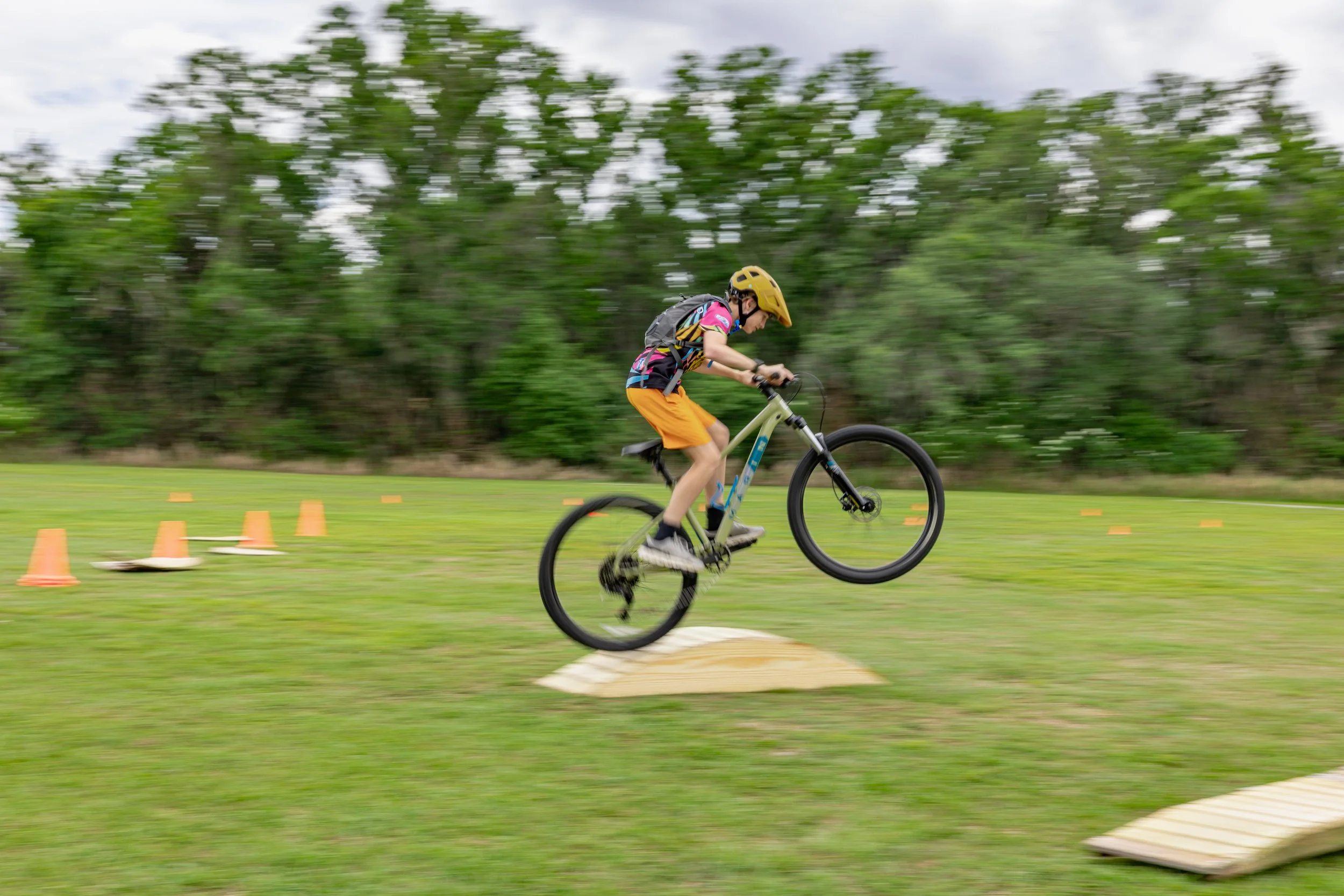
“Gunner went in front of the [staff of] Bartow Parks [& Recreation] division and was advocating,” Fedler says, “and he put together this whole presentation about a pump track where you can practice your stuff, when he was in 7th or 8th grade.”
The Lakeland Lynx are focused on more than just teaching kids how to ride bikes; they are fostering a thriving, diverse community dedicated to personal growth and service. By welcoming everyone, regardless of skill or background, they ensure that every student-athlete finds a home, a purpose, and maybe, even a deep lifelong love for a sport they knew little or nothing about. Just like life, sometimes it’s steep climbs and sometimes the wind is at your back, propelling you to whatever
is next.