
Be Well, Lakeland.
“The Team at Hollis Saved My Life”
HOW A CUTTING-EDGE SURGERY HELPED A HUSBAND AND FATHER BEAT PANCREATIC CANCER
DEVELOPED IN PARTNERSHIP WITH LAKELAND REGIONAL HEALTH
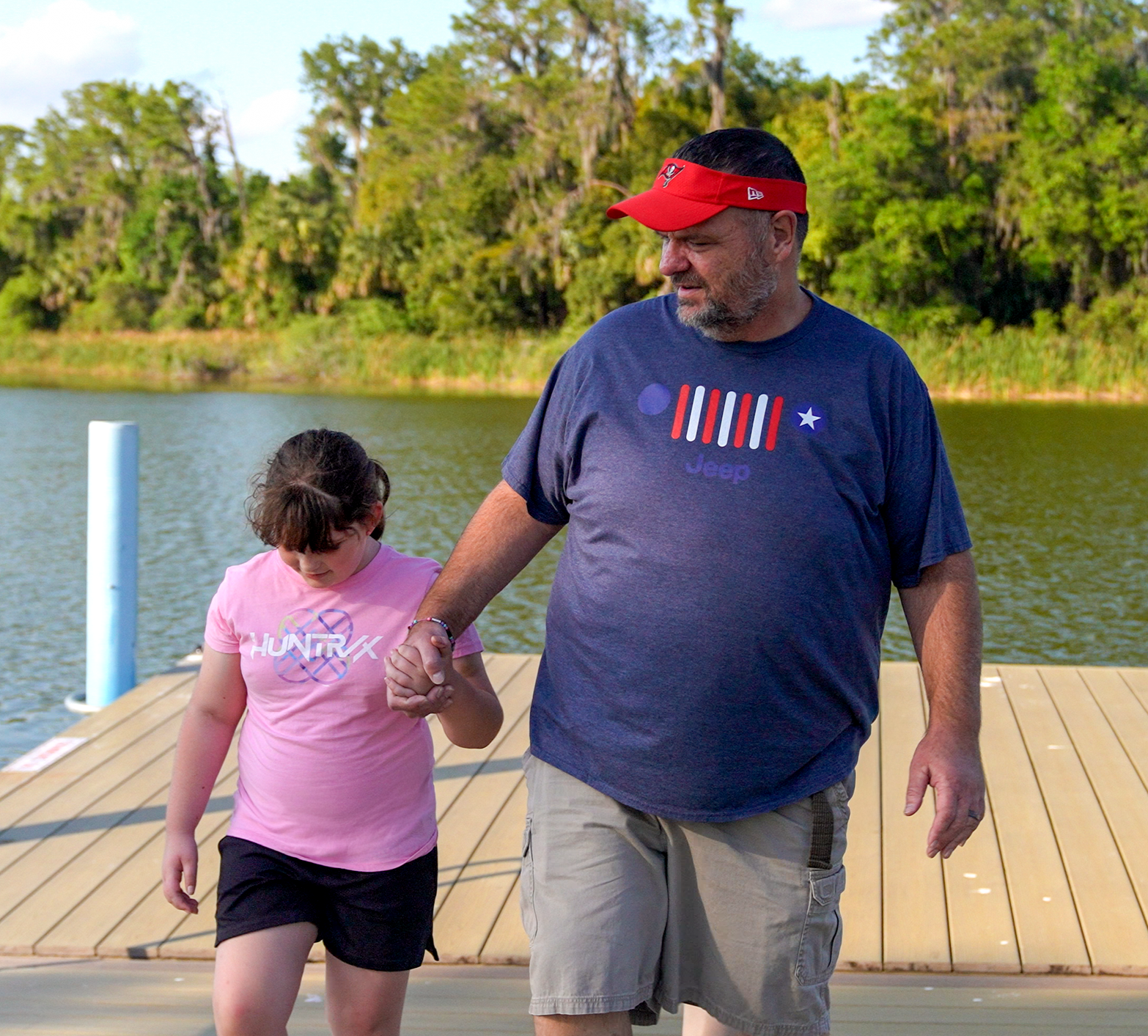
Allen Townsend went to the ER last summer with severe gallbladder pain. He wanted to know what was ailing him, but in no way was he prepared for a cancer diagnosis.
“They did a CT scan and found a tumor on my pancreas,” the 52-year-old says. “The doctor told me I should follow up with an oncologist. I was extremely scared.”
Allen was diagnosed with a neuroendocrine tumor, which is rare and most often occurs in the lungs, appendix, small intestine, rectum, and pancreas. When he began to research pancreatic cancer, and the specific type of tumor, he quickly realized how serious the diagnosis was.
Pancreatic cancer diagnoses are on the rise, and it is expected to become the second leading cause of cancer-related death in the U.S. by 2030. Unfortunately, it is often not found until it is more advanced, and it has a high recurrence rate.
With his head spinning, Allen and his family began to look for an oncologist. His sister-in-law, who works for Lakeland Regional Health, told him that he should go see Dr. Manuel Molina-Vega, a surgical oncologist at the Tampa General Cancer Institute | Lakeland Regional Health Hollis Cancer Center. “She said he was the best,” says Allen, who wanted to be treated close to his home in Zephyrhills.
Soon after, Allen met with Dr. Molina, who told him he wanted to schedule surgery quickly. Allen says he trusted Dr. Molina immediately because he was candid about the seriousness of Allen’s condition. “He is extremely smart, but he doesn’t talk down to people or use words you don’t understand,” he says. “And he doesn’t sugarcoat anything.”
A MINIMALLY INVASIVE, TECHNOLOGICALLY ADVANCED APPROACH
Dr. Molina specializes in surgeries of the liver and gallbladder system, which includes the pancreas. He is among a select group of surgeons performing the robotic Whipple procedure to treat pancreatic cancer, having done more than 25. Less than half of academic health centers around the nation offer the robotic procedure, and Lakeland Regional Health is one of them.
The Whipple procedure is a surgery specifically designed to remove tumors in the head of the pancreas, distal bile duct, gallbladder, regional lymph nodes and a portion of the small intestine. The robotic Whipple revolutionized the procedure by adding the benefits of minimally invasive surgery: reduced recovery time, higher accuracy and better outcomes. Most of Dr. Molina’s patients go home just four to five days after surgery.
Dr. Molina performed a robotic Whipple procedure on Allen on Nov. 6, 2025, completely and safely removing the tumor and 14 lymph nodes .
“If we could more easily detect pancreatic cancer early, we could use the robotic Whipple to remove and treat it,” says Dr. Molina.
He and his colleagues at the TGH Cancer Institute | LRH Hollis Cancer Center participated in a Florida-wide study on early detection of pancreatic cancer. He says Lakeland Regional Health’s new partnership with Tampa General Cancer Institute will make it possible for local patients to participate in more clinical trials.
“I believe the robotic Whipple will become the standard of care for pancreatic cancer in the next 10 years,” he adds.
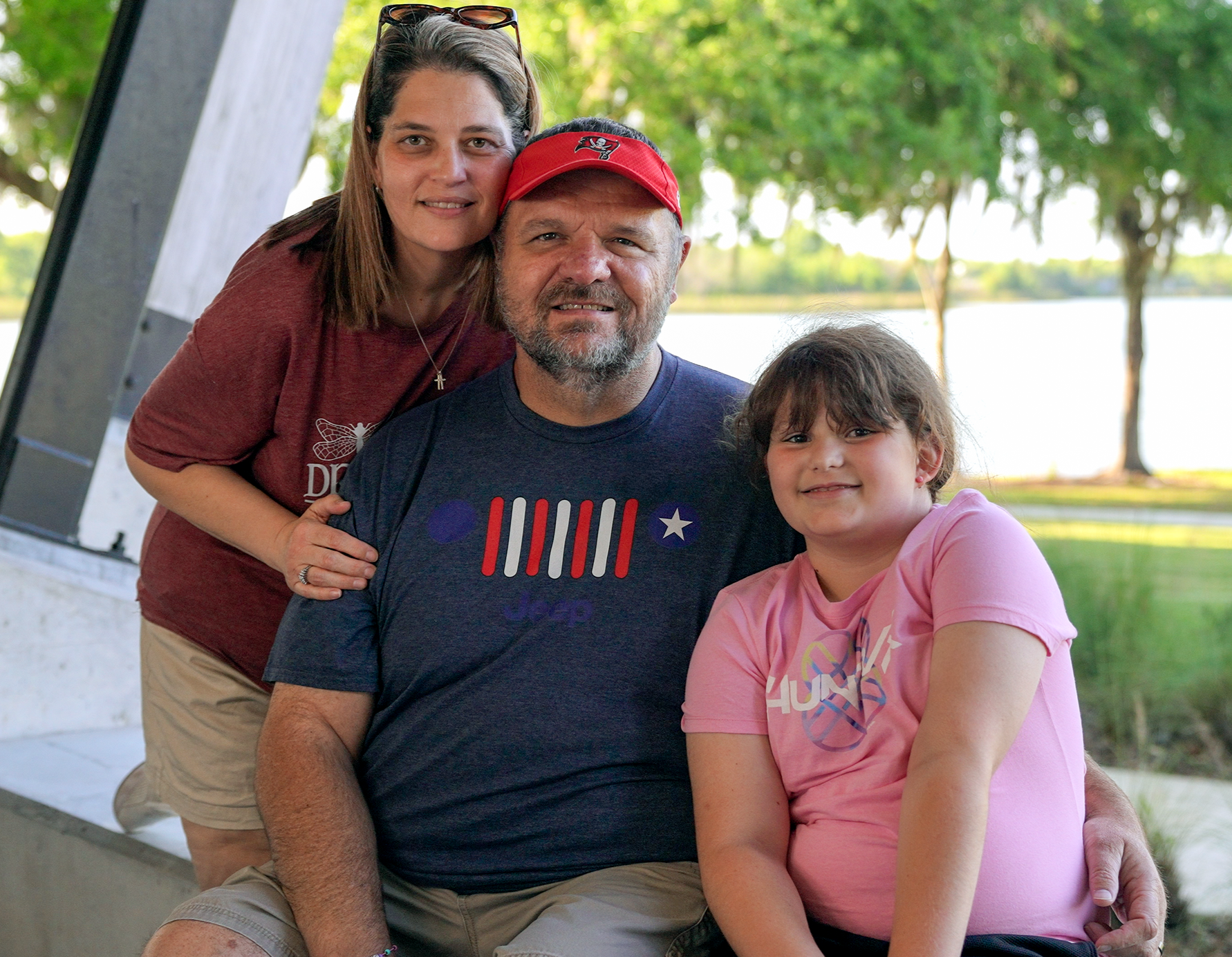
Allen Townsend is grateful to be able to continue to make memories with his wife, Nicole, and daughter, Addie, after being diagnosed with pancreatic cancer last year. Thankfully, with surgery ad effective treatment, he is cancer-free.
GETTING BACK TO WHAT HE ENJOYS
Allen says the weeks after surgery were challenging and included adjusting to dietary changes and more. When he contacted Dr. Molina’s team to ask questions, Molina or his nurse practitioner called Allen back right away. “They are both amazing,” he quips.
Just three months after his surgery, Allen was back to work and enjoying time with his wife and precious 7-year-old daughter, Addie. He is grateful for every day that the lifesaving surgery gave him, as are his wife and daughter.
Addie drew a thank-you card for Dr. Molina that says, “Thank you for saving my daddy.” It still hangs over Dr. Molina’s desk.
Allen says he continues to feel stronger and stronger and is looking forward to attending some Tampa Bay Rays games with his family this summer.
Meanwhile, he returns to the TGH Cancer Institute | LRH Hollis Cancer Center every few months for a checkup. His tests show he is cancer-free, and he is optimistic about the future.
He says he is eternally grateful to Dr. Molina and the TGH Cancer Institute | LRH Hollis Cancer Center. “I’m still recovering, but I’m here,” he says. “Dr. Molina and the team at Hollis saved my life.”
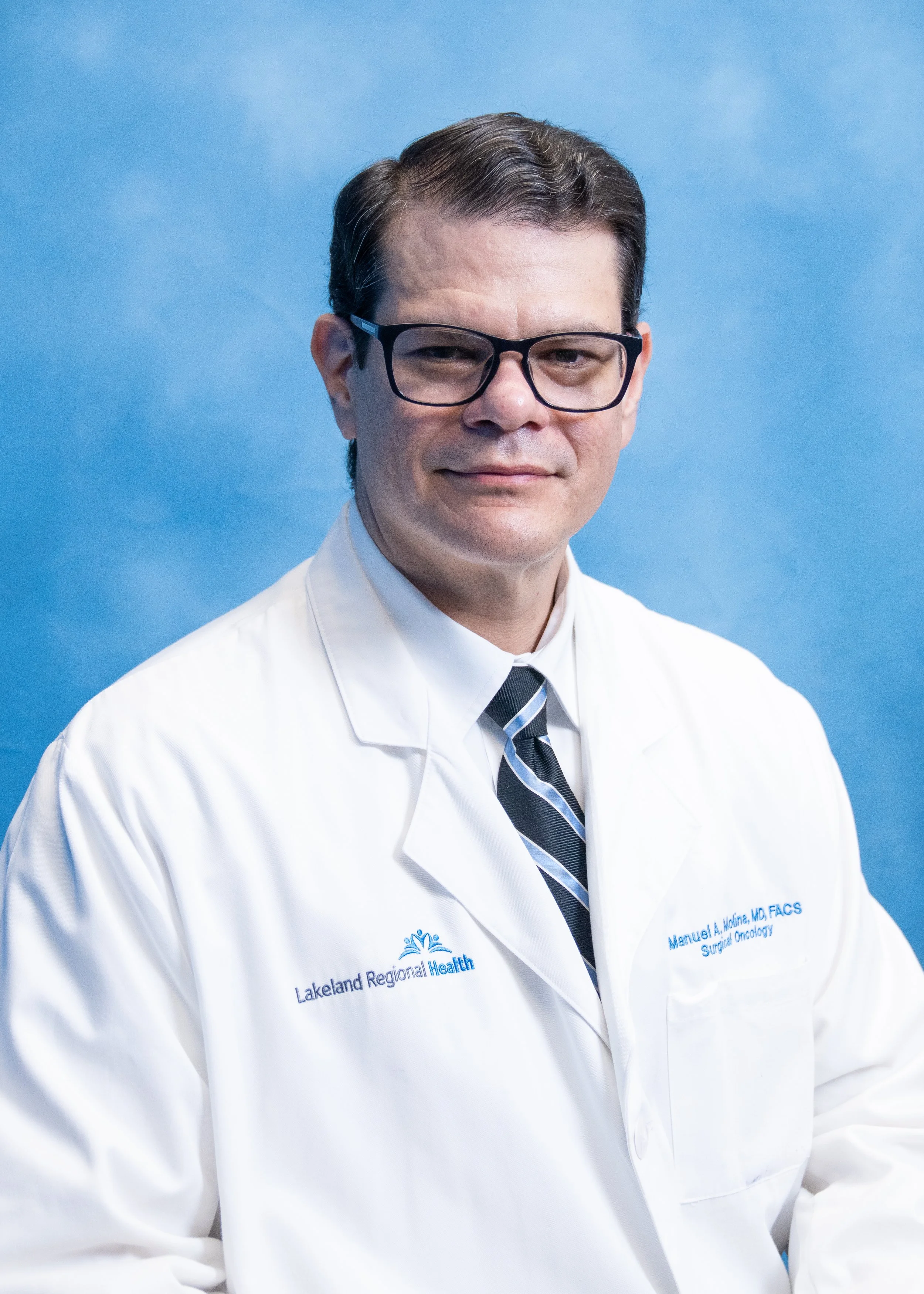
Dr. Manuel Molina-Vega, Surgical Oncologist