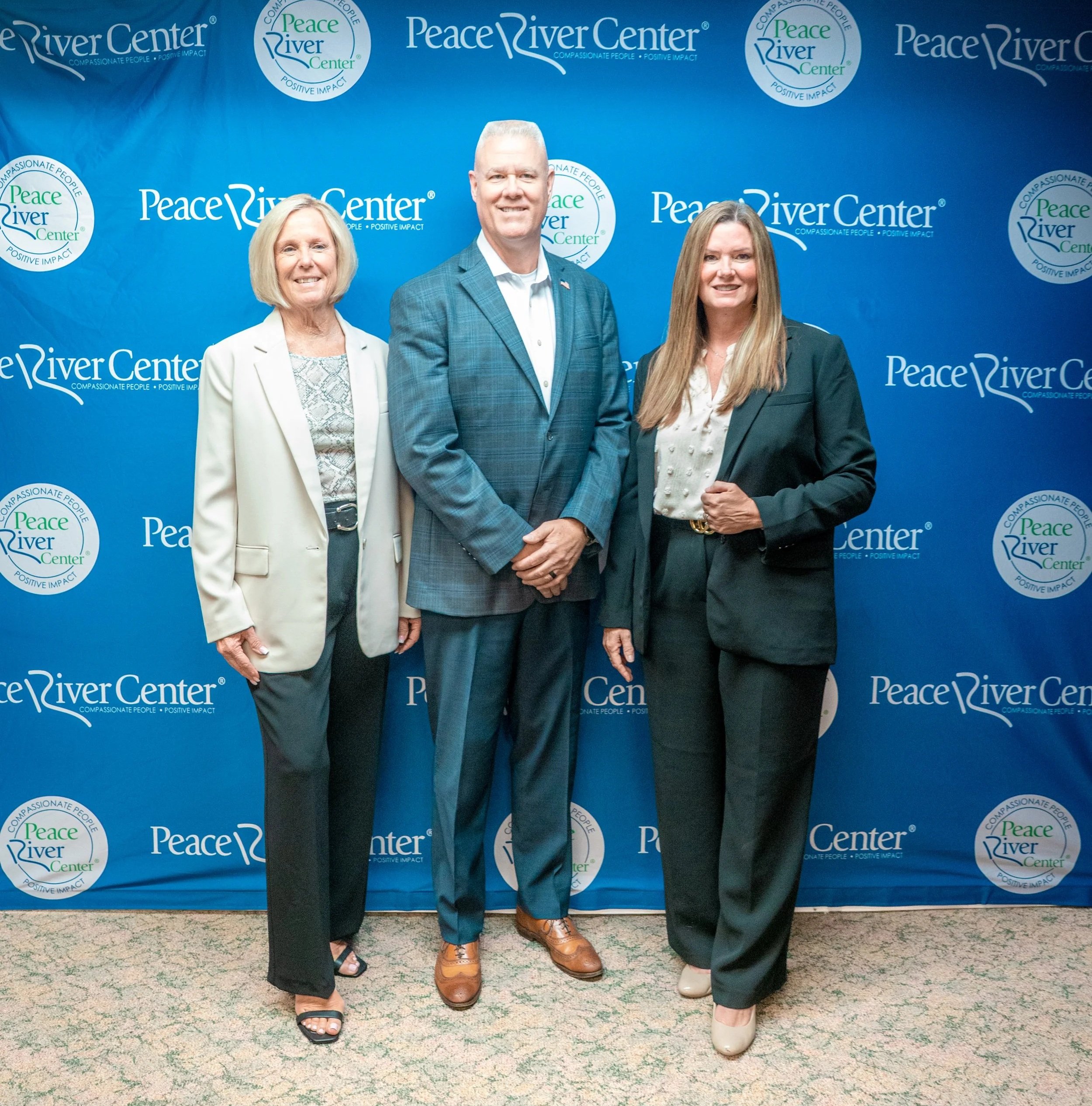
Providing Paths Toward Healing
How Peace River Center Helps People Rediscover Their Best Self
PHOTOS BY JACK PORTUNE | DEVELOPED IN PARTNERSHIP WITH BANK OF CENTRAL FLORIDA
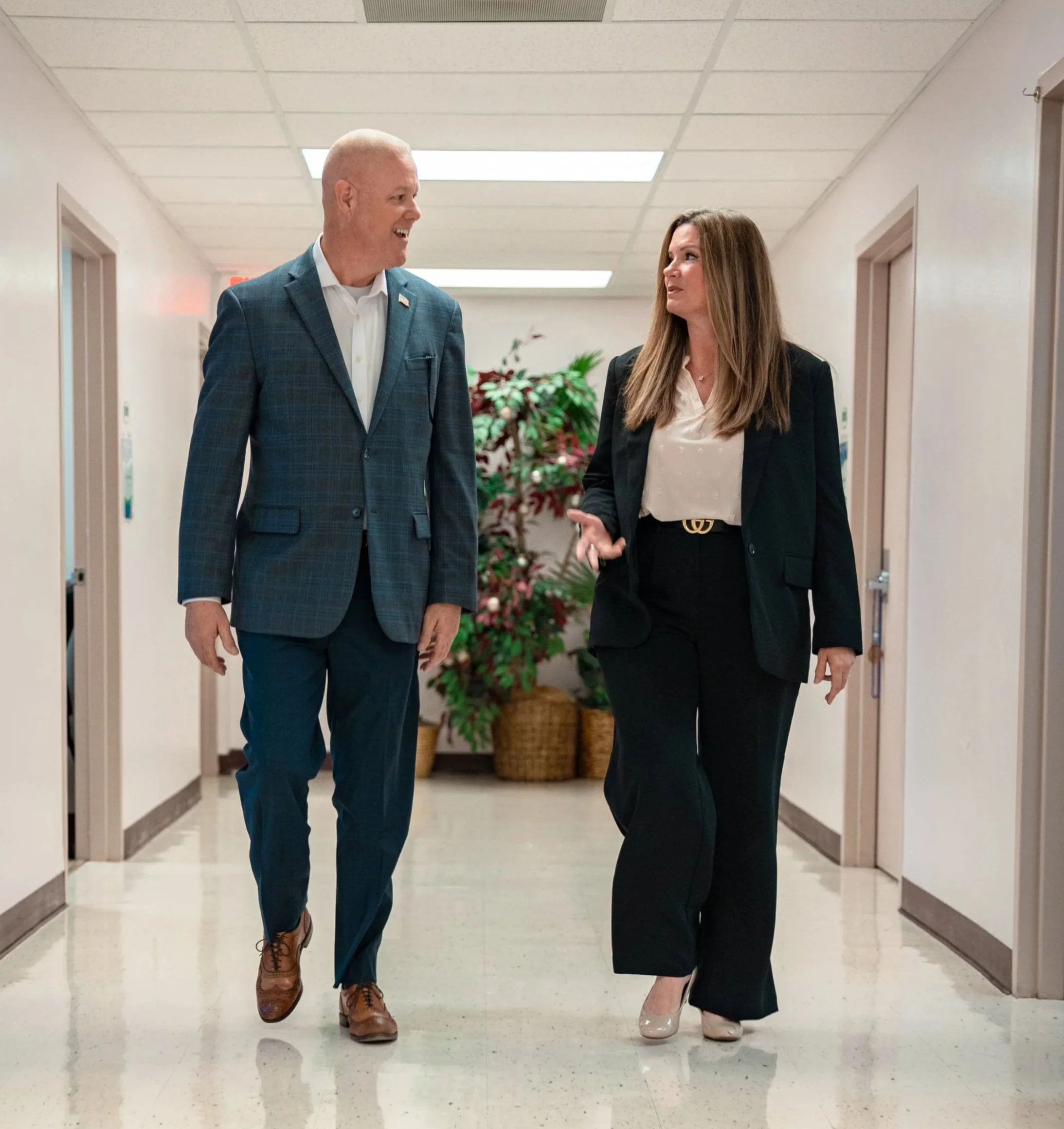
Larry Williams, CEO and President, Peace River Center
Standing in a room filled with families and graduates of Peace River Center’s Psychosocial Rehabilitation (PSR) program, Larry Williams saw something that 34 years in law enforcement hadn’t quite prepared him for: the quiet, profound victory of a life being reclaimed.
“It brought tears to my eyes,” Williams recalls, reflecting on a vivid memory from his first year as CEO and President, back in 2022. “We graduated like 12 people that year, and talking to the family about the progress [graduates] had made was just incredible.”
For Williams, these moments are the “why” behind Peace River Center. Through programs like PSR and Club Success, the organization equips individuals living with mental illness and substance use disorders with the most fundamental tools of independence—balancing a checkbook, cooking, organizing their life and personal hygiene.
“It is a club for folks to be around like-minded people,” Williams says about the local chapter of an international program that is helping change lives in more than 30 countries. “It helps them not only stay sober but helps them with their mental illness because they can talk to each other and we teach them skill sets where they can get gainfully employed.”
A VAST SAFETY NET
Peace River Center is often the “last stop shop” for those in need in Polk, Highlands and Hardee counties. While many associate the center solely with mental health—which constitutes 90 percent of their work—PRC serves as the only certified domestic violence shelter and rape recovery program in the three county area. From children’s services starting at age two to adult crisis stabilization, the breadth of care is staggering.
“We make a difference in the lives of more than 23,000 people each year,” Williams notes. This includes operating a 24/7 crisis hotline that, unlike many others that close at midnight, remains available 365 days a year.
PRC has a 24/7 mobile crisis response team that can provide immediate assistance and intervention to families and individuals, and also offers accredited, licensed care in on-site crisis counseling units.
A TRANSITION OF SERVICE
Following a celebrated career at the Polk County Sheriff’s Office (PCSO), Williams joined PRC in May 2022. Rising from a part-time deputy to Chief of the Department of Law Enforcement, he managed 1,200 employees and a $123 million budget. While the scale of the Sheriff’s Office was larger, the stakes at Peace River Center are no less significant. Williams’ law enforcement background provides a unique vantage point on the crises Peace River Center manages daily.
“There was a learning curve with the transition, but I had some understanding from day one because I’ve seen the front side of what we deal with on the back side clinically,” Williams explains. At PCSO, he witnessed firsthand how substance abuse destroys lives and how mental health crises can fracture families. Now he oversees a $42 million budget and 400 employees across 30 programs and 25 locations.
His mission is simple yet massive: ensuring the 78-year-old organization is prepared for another 78 years of service by meeting the increased demands for mental health services and educating a community of people that are still learning how to talk about mental health and ask for help for themselves or loved ones.
FINANCIAL STEWARDSHIP AND STRATEGIC GROWTH
Growth has been a hallmark of Williams’ tenure. In just four years, the organization has grown from a $29 million nonprofit to a $42 million enterprise. This growth is fueled by a mix of federal, state, and county funding, alongside the generosity of private donors who Williams describes as having a “special place in their heart” for the center’s mission.
As CFO David Tournade noted, as a nonprofit, every dollar of net income is reinvested back into the organization. Peace River Center recently embarked on a $7.7 million remodel of its Gilmore office in Lakeland near Tigertown to connect three buildings, add 12 additional offices and hire more therapists.
“Central Florida is growing faster than anywhere else in Florida,” Williams says. “We have got to keep up with the growth because as the population increases, so does the mental health community.”
Managing such rapid expansion and complex funding requires more than just a bank— it requires a partner. The relationship between PRC and Bank of Central Florida began in the wake of the 2008 financial crisis when Peace River Center was seeking a financial institution that truly understood the nuances of the nonprofit sector.
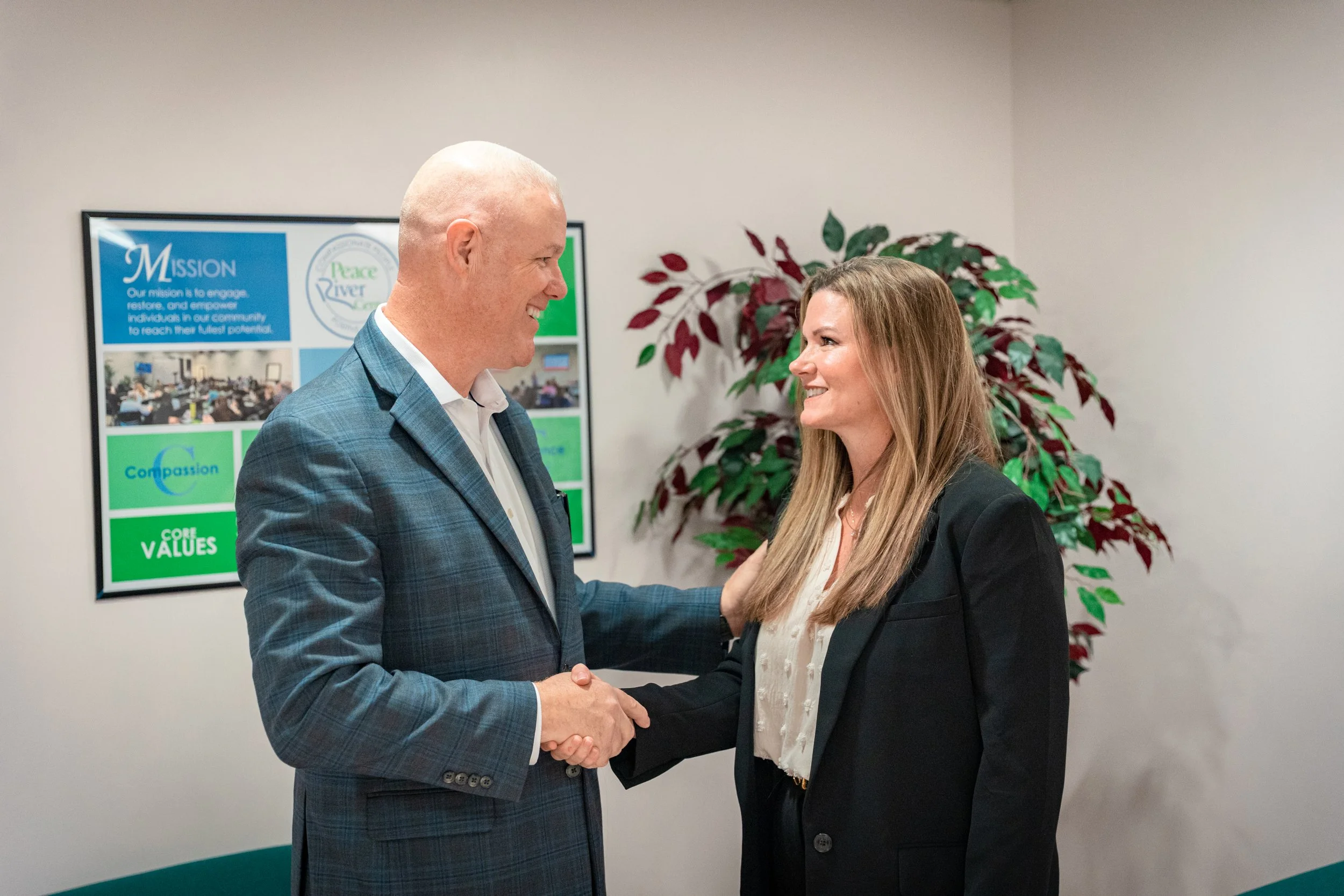
“We were looking for a true partner in the community and not just a bank,” Williams says, noting that at a nonprofit their size it’s normal to see auditors on-site on a monthly basis. “We have to rely on a partner with our banking system that we can call and say, ‘Hey, we need this,’ and we need them to be responsive to us.”
Tournade emphasizes the stability the bank provides, allowing the center to focus on its clinical and people-first mission rather than financial administrative hurdles.
This sentiment is echoed by bank leadership, including Treasury Management Officer Linda Harkins, who says the Lakeland-headquartered bank prioritizes education over sales.
“It’s more coming in and educating our clients on what’s available to them so they can make the best decision for themselves,” Harkins says.
Kim Knaisch has served as the bank’s commercial relationship manager to Peace River Center since 2018.
“It’s been fun to see them have success, and really it’s been easy because we understand the pain points a nonprofit can encounter and we have built a strong relationship together,” she says.
LOOKING AHEAD
For Larry Williams, the bottom line isn’t just about the $5 million in unfunded care Peace River Center provides annually—it’s about the integrity of the work and leaning into others in the community to multiply efforts together.
“The relationships that you build today are gonna be your equity tomorrow,” he told Polk State College graduates in a recent commencement speech.
Some of those local relationships include Heartland for Children, GiveWell Community Foundation and United Way of Central Florida. At Peace River Center, that equity is being reinvested every day into the lives of the 23,000 people they serve, ensuring that Polk County remains a place where healing is always within reach.
For Williams and his team, it’s kind of like shooting clays—which he’s ranked in the top 10 in the state of Florida for his age group in several categories: strategically plan to hit the moving targets associated with mental health and substance use disorders and take their best shot to help as many people as possible. That’s the kind of high score that can help generations to come.
Bank of Central Florida | Member FDIC