First Name Basis
PHOTOS BY JORDAN RANDALL
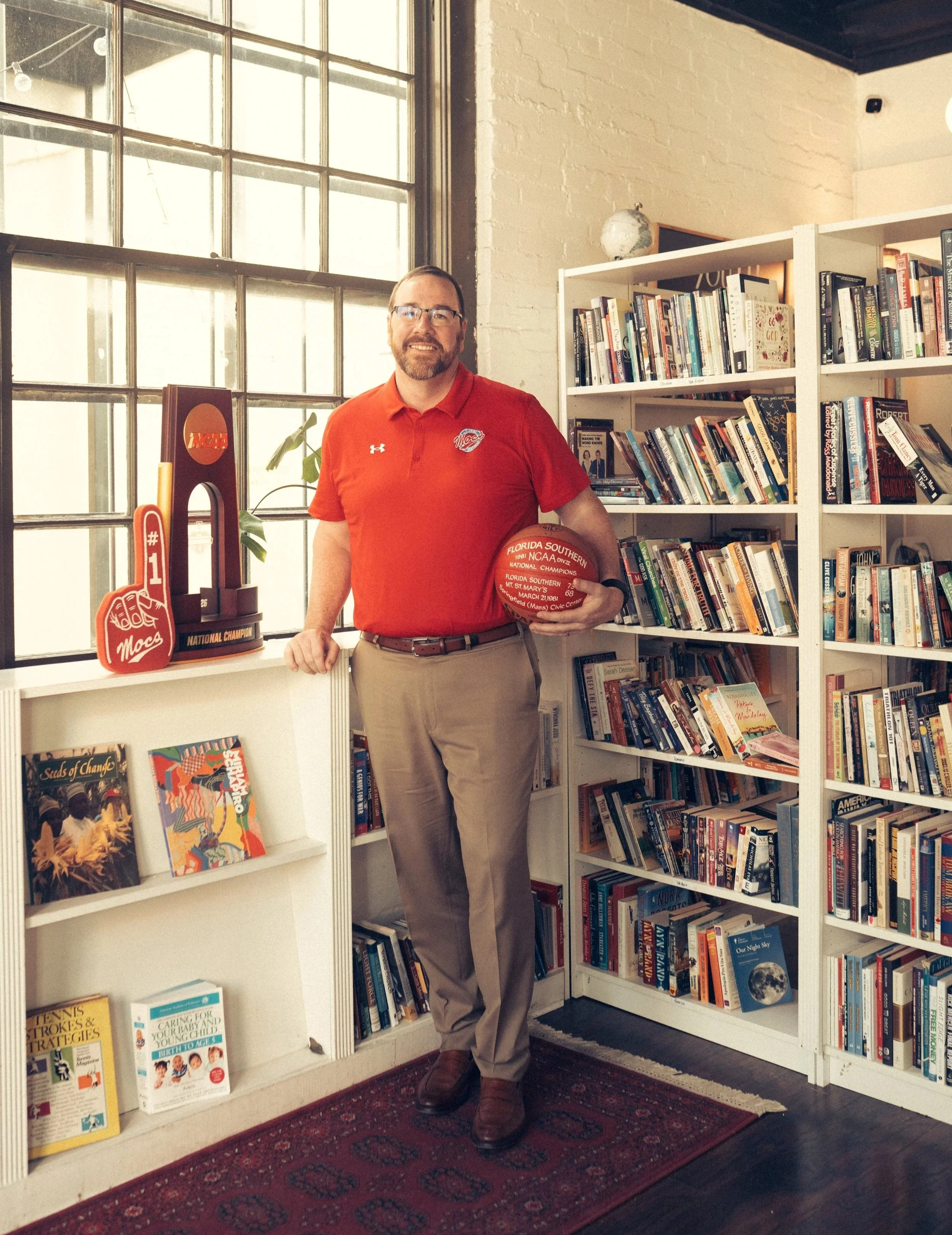
Dr. Jeremy Martin, Florida Southern College
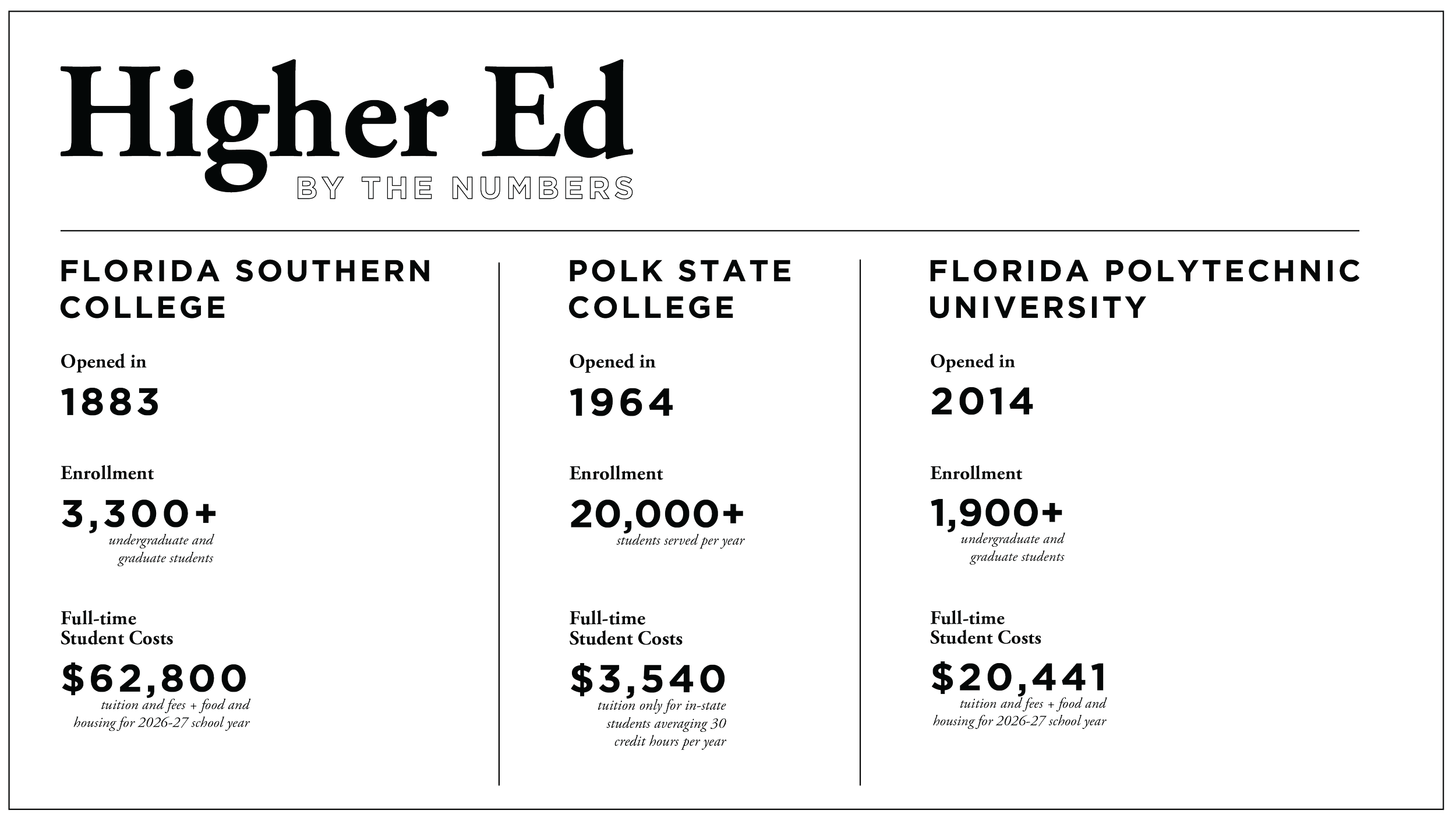
If you stand next to Dr. Jeremy Martin on an elevator, you might see him duck his 6’5” frame to enter or exit. But it would take having a conversation with the 18th president of Florida Southern College to appreciate how deeply committed he is to the concept of pushing the school to be an “elevator institution”—a phrase he uses to describe a place where the generation of students currently enrolled is propelled further than the generation that helped send them to school.
Martin’s leadership could be characterized as warm, approachable pragmatism. He is a former college basketball player and athletic director with a quick sense of humor, but he’s very serious about his “why” when it comes to higher education. Having spent 16 years at The College of William & Mary, he brings a sharp strategic edge, focusing on four pillars: purpose, programs, people and place.
Now in his third year as president, he treats his role as one that requires deep observation and appreciation of the principle “we all have two ears and one mouth.”
Martin is no stranger to Lakeland. His roots here run deep, tracing back to summers spent golfing at Cleveland Heights with his “Poppy” and family ties in Bartow. Now, he and his family are settling into the rhythm of the city—finding community, staying involved in the school his and his wife, Tia’s, two children attend and frequenting local churches—that’s right, he and his family attend a Presbyterian church and a Methodist church most Sundays, in respect of both he and wife’s religious upbringings.
Whether he is handing out freeze pops to students on move-in day, praising facility staff for maintaining what some call “the most beautiful campus in America”, or following his favorite Florida pro and college sports teams, Martin is exactly where he wants to be. It’s no easy task to shape the future of a 183-year-old institution that requires a sizable financial investment to attend, but Martin emphasizes it is a highly collective effort that requires a culture where people are “great teammates” who show up, give their best efforts and celebrate others.
WHERE THIS CHAPTER BEGAN
Dr. Martin recalls that in his first meeting with the athletic department he asked the staff about sky blue being a tertiary color in the school’s branding scheme, and they responded, “A what type of color?”
Why does that matter? It’s a symbolic and colorful recognition of a changing of the guard.
President Dr. Anne Kerr served as president of the college for 20 years, spurring on a season of incredible development, of both buildings on campus and new programs that
delivered enhanced excellence to the institution. Almost every time you saw her she would be donning Moccasins red.
You’ll find Martin traversing the campus set alongside Lake Hollingsworth in the trademark red or the vintage sky blue or white, on a mission to do whatever it takes to show locals that what was founded as a liberal arts college has positioned itself as what he touts is a “comprehensive university” that aims to prepare every graduate to make an impact on the world.
It’s a balance to continue the excellence of fine arts programs that have been historically celebrated, determining next steps for highly ranked programs in fields like business and nursing, and launching new career paths, such as architecture—but Dr. Martin is resolute in his confidence in his team, as well as the students they work diligently to serve.
HIS COFFEE ORDER: Flavored latte
A BOOK THAT WAS FORMATIVE IN HIS DEVELOPMENT: “Team of Rivals: The Political Genius of Abraham Lincoln” by Doris Kearns Goodwin
HIS FUN SUMMER READ: “Undaunted Courage: Meriwether Lewis, Thomas Jefferson and the Opening of the American West” by Stephen Ambrose
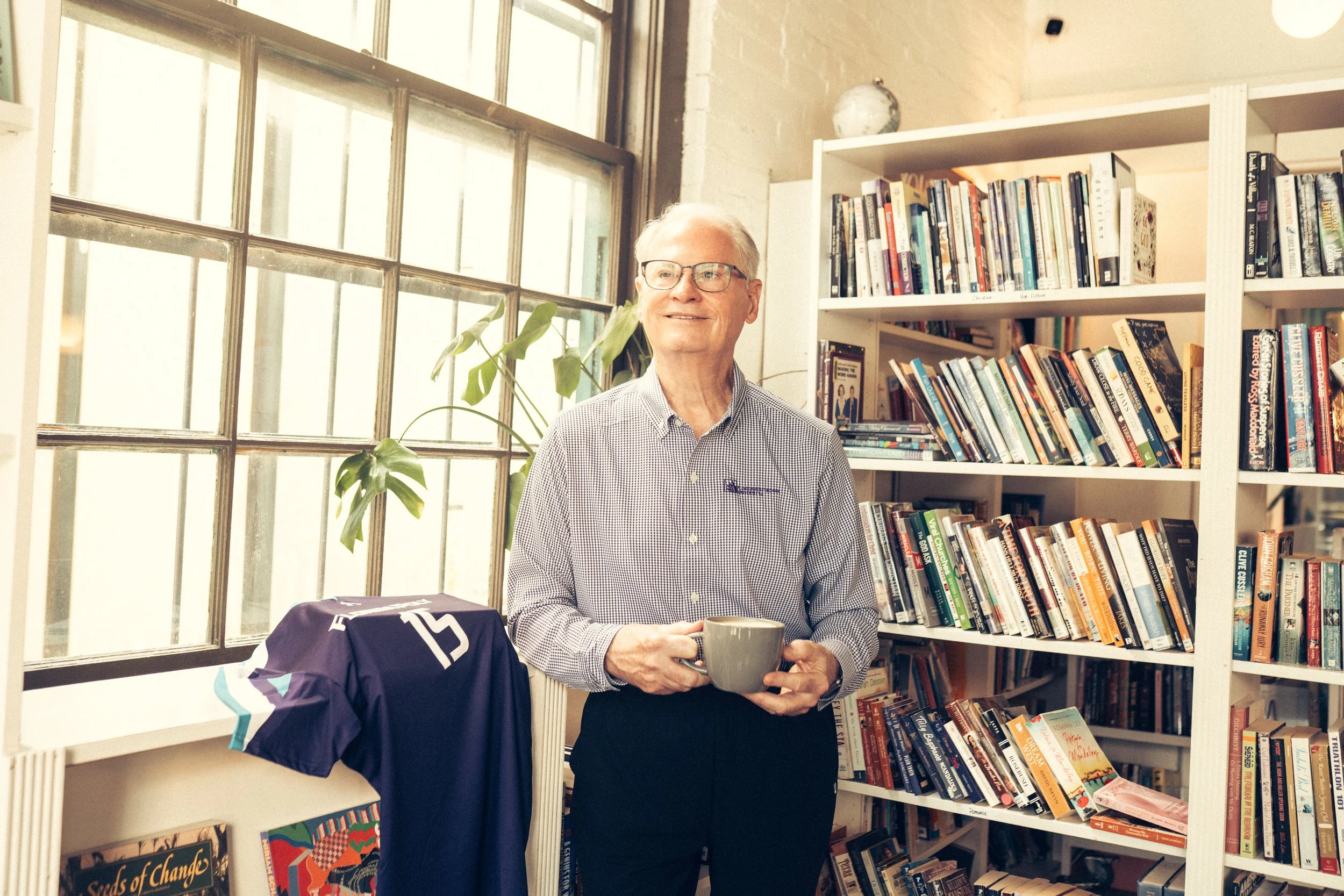
Dr. Devin Stephenson, Florida Polytechnic University
Dr. Devin Stephenson’s journey to the presidency of Florida Polytechnic University didn’t begin in a STEM lab, but on the roads of Alabama. Raised near Birmingham, he watched his father—an Alabama highway patrolman and personal bodyguard to Governor Jim Folsom—navigate a life of service and discipline. It was there that a foundational mantra was etched into his psyche: never settle for “average.” His father’s relentless drive for excellence became the engine for Stephenson’s own career.
Though he initially envisioned himself immersed in strategy sessions in corporate boardrooms, Stephenson discovered a natural aptitude for the mechanics of higher education while setting up a financial aid office in northwest Alabama. He quickly found a niche as a “fixer,” and in essence became a troubleshooter deployed to solve complex institutional challenges in a variety of roles at higher education institutions in Alabama, Missouri, Kentucky and Florida. Whether being a catalyst for financial development or helping improve athletics programs or retraining coal miners in the heart of Appalachia, Stephenson learned how to make the gears of an institution turn.
A self-described “people person,” Stephenson shuns the echo chamber. He intentionally builds diverse teams filled with thinkers who challenge him. “I don’t want ‘yes people,’” he says. For Stephenson, the goal isn’t just to lead Florida Polytechnic, but to work collaboratively with city, county and state leaders to ensure the university’s growth mirrors the excellence he once watched his father embody.
WHERE THIS CHAPTER BEGAN
In 2024, after serving seven years as president of Northwest Florida State College, Dr. Stephenson was interested in the president’s role at Florida Polytechnic University following the retirement of its inaugural president, Dr. Randy Avent.
His appointment ended up being a nail-biter—a 7-6 vote by the university’s board of directors that was marked by much debate over his non-STEM background. Compared with his predecessor, a distinguished research scientist, Stephenson certainly came with a distinctive and different skillset.
Then, and still today, Stephenson remains unfazed by the narrow margin or the “non-engineer” label.
“I know how to engineer good institutions,” he asserts, leaning on a leadership philosophy defined by collaboration rather than hierarchy.
One of the reasons he ultimately landed the job was his propensity for raising millions of dollars to support institutional stability and growth, a trend that has continued as he leads the Phoenix into the future.
For the 2026-27 school year, Governor Ron DeSantis greenlighted $19 million in state funding for the university, allotted for the construction of the new Student Achievement Center, to fuel the school’s strategic initiative to raise enrollment to 3,000 by 2030 and $1.5 million in recurring operational support.
HIS COFFEE ORDER: White chocolate mocha
A BOOK THAT WAS FORMATIVE IN HIS DEVELOPMENT: “The 21 Irrefutable Laws of Leadership” by John C. Maxwell and “Tough Times Never Last, But Tough People Do!” by Robert H. Schuler
HIS FUN SUMMER READ: “The Power of Moments: Why Certain Experiences Have Extraordinary Impact” by Chip Heath and Dan Heath
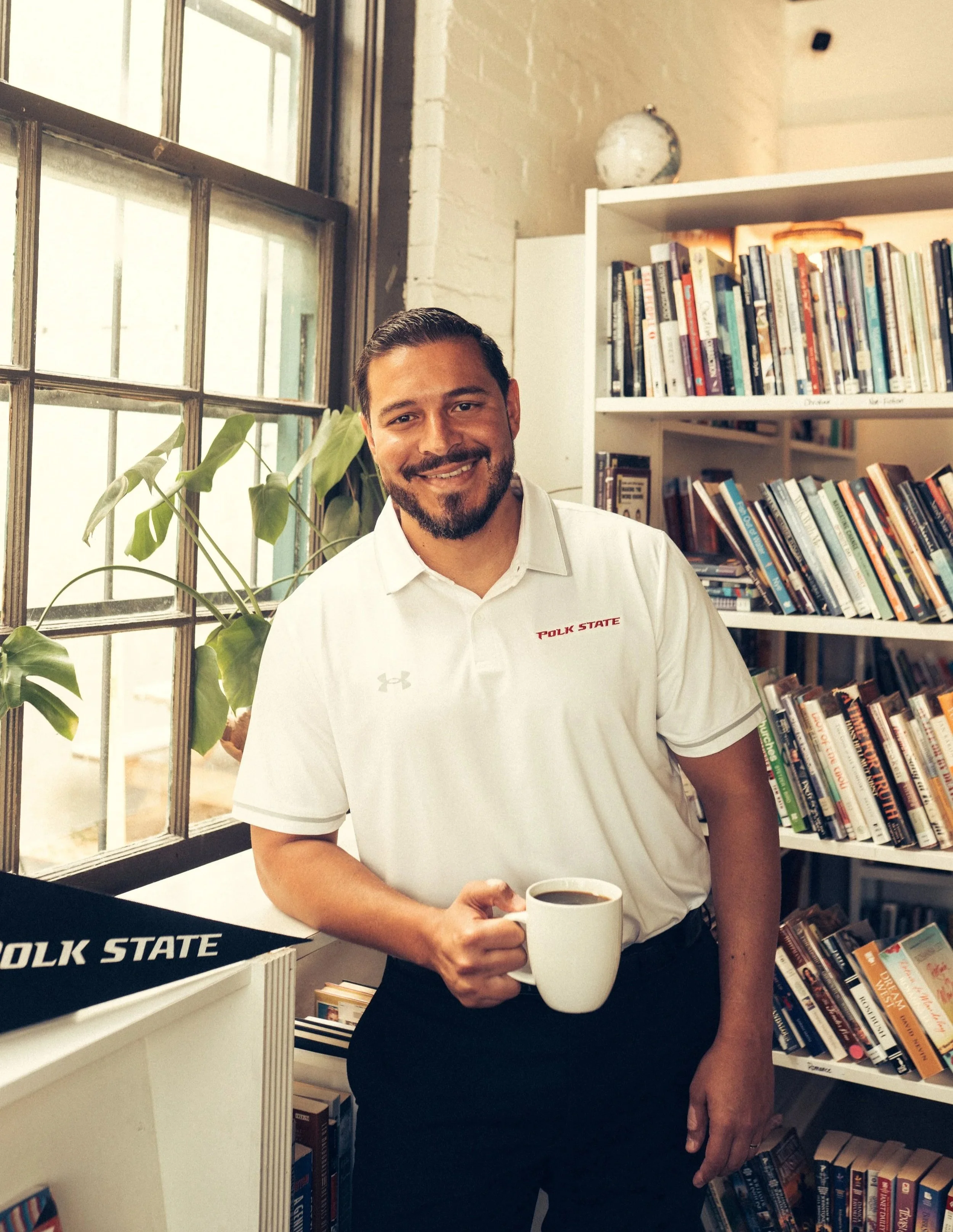
Stasi Kamoutsas, Polk State College
For Anastasios Kamoutsas, the newly appointed president of Polk State College, education is more than a system or a means to an end—it is a personal mission in the truest sense of the word. The path to leadership for the energetic young leader, who goes by “Stasi” for short, wasn’t paved with privilege. In fact, it started in a modest, 780-square-foot Miami duplex. Raised by a single mother, Kamoutsas credits his mom and his grandparents, who fled Communist Cuba to secure the promise of American education, for instilling in him a relentless drive.
“I chose to come to Polk State to give every single student an opportunity at a pathway to prosperity,” he shares.
It’s a mission he carries with him, grounded in his own recent whirlwind transition to Lakeland. He is diligent to balance a demanding career while managing a household of four young daughters with his wife, Rachel B. Kamoutsas, who Gov. Ron DeSantis appointed to the Sixth District Court of Appeals on Nov. 7, 2025. The last several months for the family have been steeped in change—and included living in a one-bedroom, one-bathroom apartment for a month. Stasi said in many ways it brought the family closer than ever, and it also created a sort of resilience.
He believes the grit he has developed working through countless dilemmas over the years helps him truly understand students who are navigating their own complex lives.
Kamoutsas brings more than just empathy to the table; he arrives with an impressive resume. A former Assistant State Attorney and Florida’s Commissioner of Education under Gov. DeSantis, he is a seasoned legal and policy professional. He also served as DeSantis’ Deputy Chief of Staff. Now, as he settles into the president’s office, his focus is singular: turning Polk State into an even sharper economic engine for our county. When talking with him, it’s clear he is here to build, to lead and to ensure that the American Dream remains possible for every student walking onto a Polk State College campus.
WHERE THIS CHAPTER BEGAN
In some ways, Kamoutsas is taking over for a local legend, and he is also looking to bring some stability to a college that has been a lightning rod for some tense public discourse in recent years.
He officially took over in July for Dr. Anne Kerr, the iconic former president of Florida Southern College, who served as interim president of Polk State College for roughly six months.
Her tenure immediately followed that of former President Angela Falconetti, who served in that capacity for nine years. She was celebrated for helping facilitate more than $100 million in legislative funding for the college under her leadership, as well as launching new programs and significantly expanding existing programs that directly relate to better job placement outcomes for graduates.
The end of her tenure was also marked by disagreement between her and at least one board member about the school’s full-time enrollment numbers, as well as an investigation into how some of the school’s scholarship funds were used, which Falconetti was ultimately exonerated of.
The 5-0 vote of the college’s District Board of Trustees earlier this year shows a clear trust that Kamoutsas has what it takes to build upon the foundation left by Falconetti.
HIS COFFEE ORDER: Black coffee
A BOOK THAT WAS FORMATIVE IN HIS DEVELOPMENT: The Bible
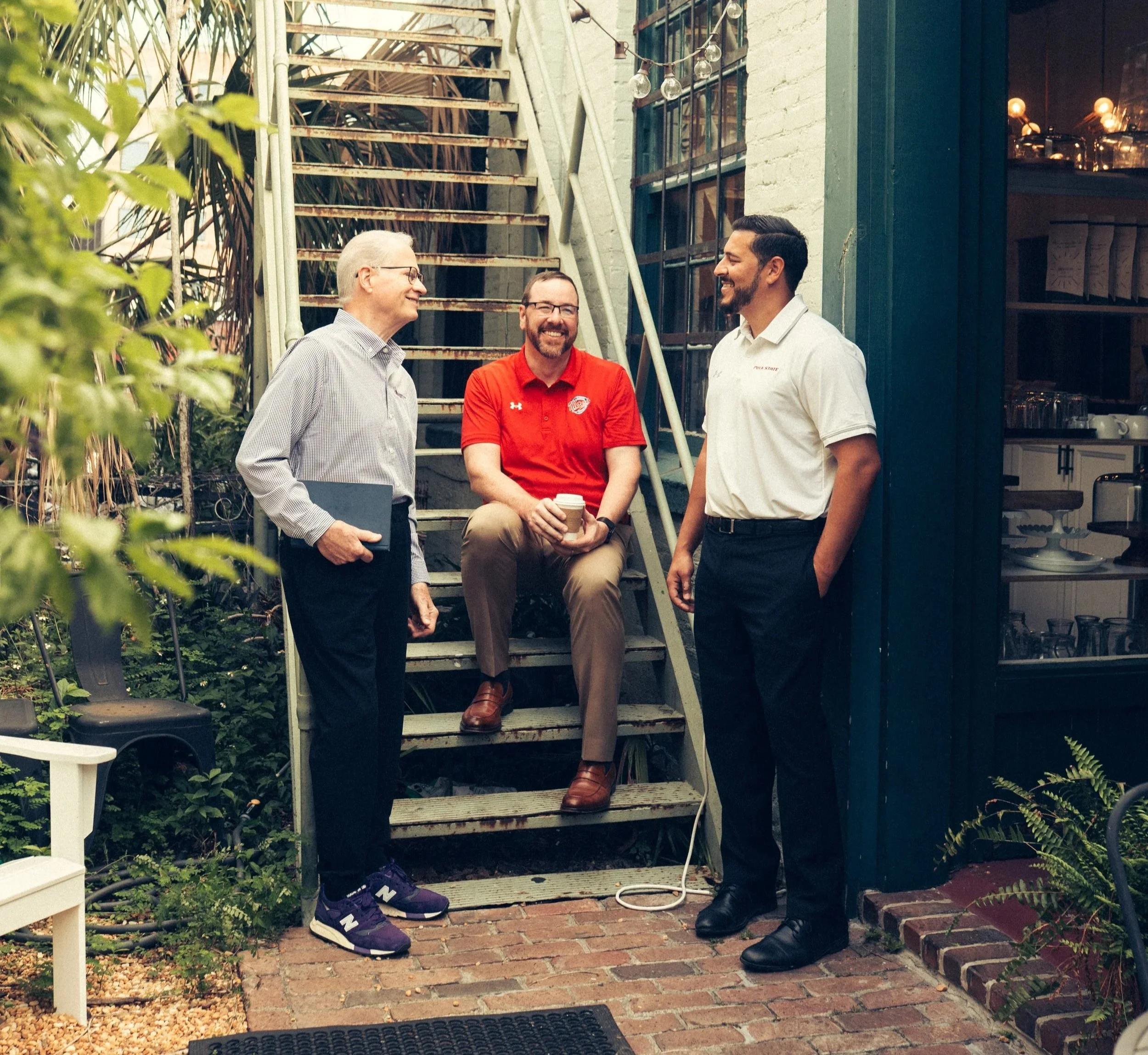
Editor RJ Walters sat with the presidents at Pressed Books & Coffee to get their insights on the evolution of higher education and what it’s really like to be a college or university president. The conversation has been edited for length and clarity.
From the Lens of Students
THE LAKELANDER
Give me adjectives that describe modern students who you engage with, recruit and that represent your college or university.
DR. STEPHENSON
Well, we may be a little different. Definitely ‘intelligent’ and ‘focused.’ Our students know what they want to be.
STASI KAMOUTSAS
‘Pragmatic.’ Our students know when they come to our programs what they want to do. Many of them have a vision…(and think to themselves,) I’m balancing a lot at home, I’ve got a family, I have work and I’m coming here because I want to pursue a specific certificate or I want to pursue a specific degree program because I understand at the end of it, there’s a job waiting for me and I need that job to be able to provide for my family.
DR. MARTIN
I’d say ‘authentic.’ They know what they’re passionate about and want to be passionate about those things. Eighteen to 22 year olds and beyond have a great way of detecting inauthenticity. If you are inauthentic, they will figure it out really quickly and they won’t accept it.
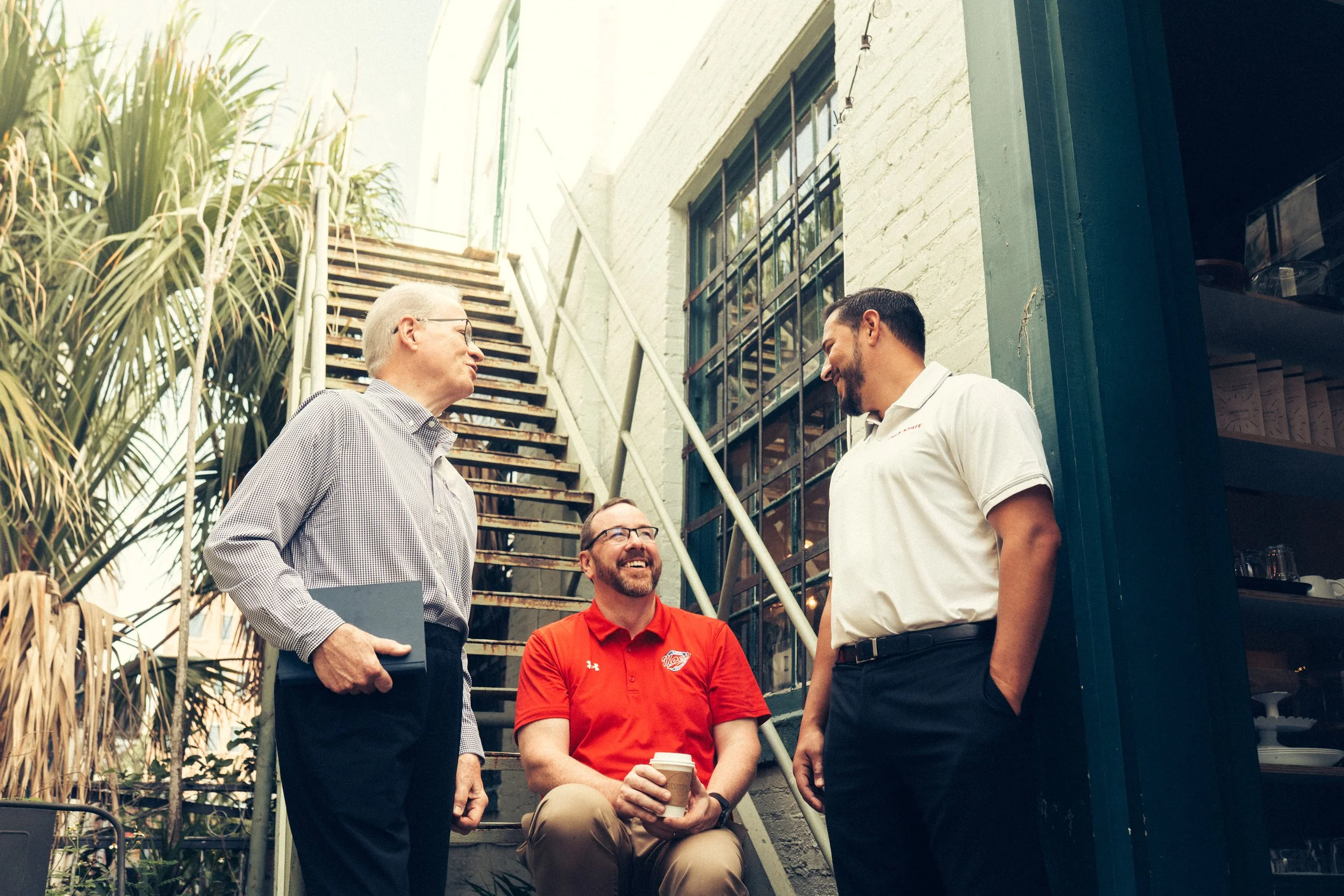
THE LAKELANDER
Dr. Stephenson, I recently read in the Tampa Bay Business Journal about these ‘pop-up offices’ you do to engage students, and Dr. Martin, I remember when you first arrived I would see videos of you all over the place on campus, letting students have fun with you, dressing up like a goofball, etc. How do each of you intentionally work to relate to students and develop relationships with them?
STASI KAMOUTSAS
Stakeholder feedback is something that is so important when it comes to…the direction of where we’re headed, and I’m blessed that at Polk State College we have an incredible team. I’ve really been able to take some time to dive in with each member of the executive leadership team, and I’m looking forward to getting to know the faculty more, but most importantly, the students as we approach the fall semester.
We have a presidential ambassador group that is comprised of students. I just met with them (recently)...and one of the things they asked is ‘How do we expand access to students?’
I said, well, why don’t we go to where the students are? There was a big push at the state level on this issue when it came to dual enrollment. So what did we do? We provided dual enrollment opportunities at the campuses that these students are at because there are transportation barriers for them to be able to go to the college. Similarly, we need to sell the amazing pathway through education at Polk State College to these students and show up at their door.
We’re looking at opportunities, whether it’s myself, it’s our staff or it’s utilizing these student ambassadors to go out and speak to these seniors and let them know, ‘Hey, there is a pathway for you.’ Oftentimes we talk to students and they didn’t even know about these amazing programs that are being offered right here in their backyard.
DR. STEPHENSON
Students don’t care how much you know until they know how much you really care. As I like to say, using old southern vernacular, you’ve got to ‘be out amongst them.’
That gives me an opportunity to just get out from behind my desk, out from behind that sacred door that says ‘Office of the President’ to be with them.
The other day I was in the wellness center where (students) work out, and I was amazed at the number of students that just walk up and said, ‘Man, it’s great to
see you.’
I don’t set the table up without toys. So I provide things to them they can use and play with in the dorm room. They love playing cards…so we (created Florida Poly) branded playing cards.
The other thing is I want them to wear a president’s pin, so we designed a president’s pin when I came there, and I will tell you the only place they can get it other than the pop-up office is to actually come to my office and visit with me.
A lot of times students are apprehensive to even approach a president…sometimes you have to be the first one that says, ‘Hey, how are you doing today?’
There’s an old scripture that says to receive friends, you’ve gotta show yourself friendly, and you have to do that.
DR. MARTIN
Yeah. I agree with being out all over campus. We’ve made it a family affair…our daughter loves the performing arts, so she’s generally coming to that side of things. Our son…he’s more into the athletic side, so we do all those things.
We have a tree in the center of campus, and the students typically table around it. And so the notion of walking past at lunch and stopping and saying, ‘What’s on your mind?’ I think not being afraid to actually just listen to students and acknowledge them (and at times saying,) ‘I don’t have a great answer for you today, but I want you to know I’m going to think about this and we’re gonna figure something out.’
In some ways, particularly when they’re bringing a more substantive thing, I think they appreciate not trying to have the answer then.
I will say, for Stasi, I’ve been deeply impressed. On occasion when someone says, ‘Well, he’s new to higher ed,’ I’m like, ‘He’s been part of running the third most populous state in the country, it’s gonna be fine!’ And you just heard him talk about how we meet the needs of the students, which is literally what good governance is all about. So I’ve really been impressed, frankly, with the humility that he’s come to the community with…and I think Polk State is going to find itself in great hands in that regard.
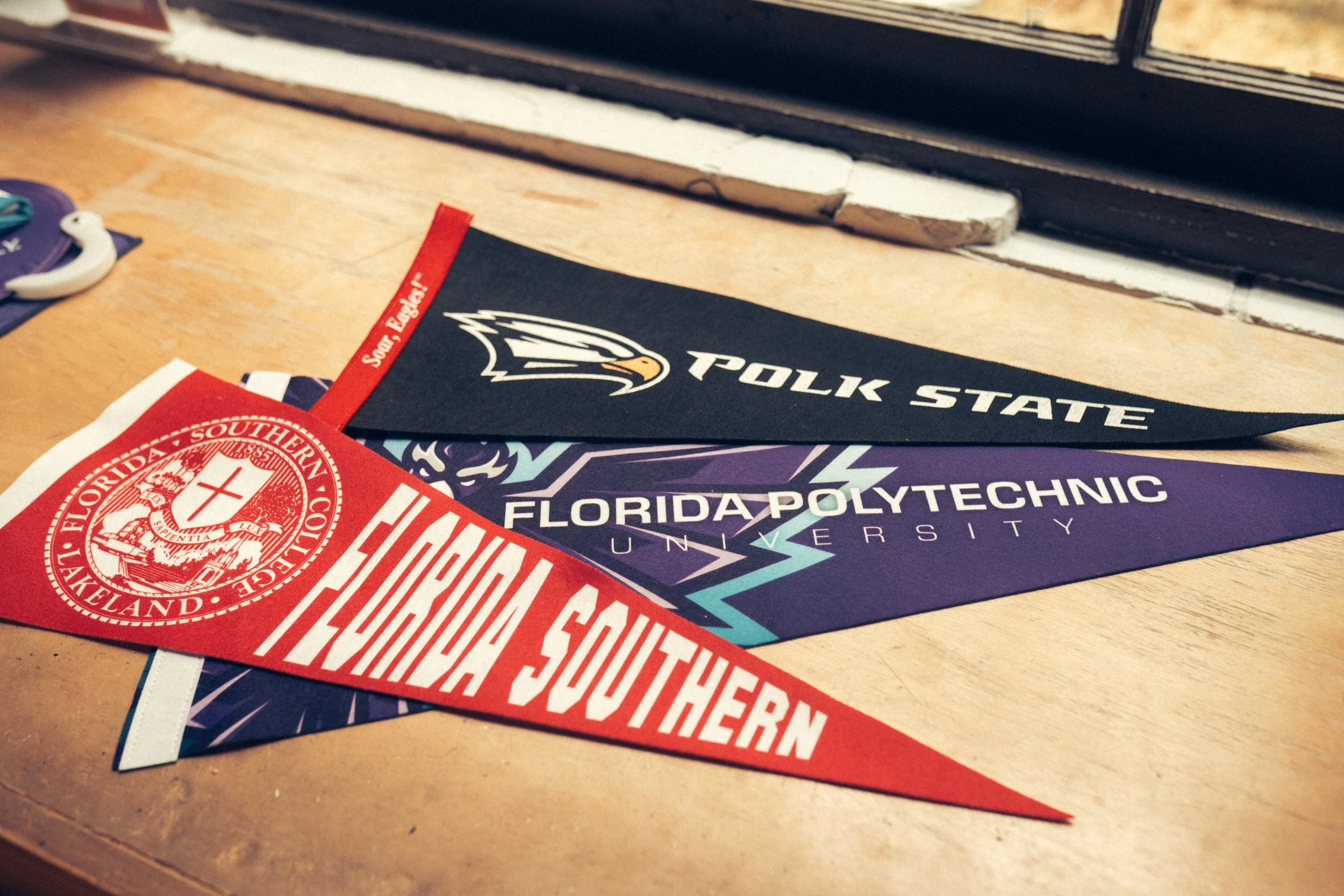
The ROI on a College Education
THE LAKELANDER
If someone is asking what the return on investment is on a college or university degree, considering the significant cost and time investment, how do you respond?
STASI KAMOUTSAS
When I approach a student and answer that question I emphasize how education is the great equalizer. It doesn’t matter where you come from, it doesn’t matter your economic background—you can literally pull yourself up at the bootstraps and make anything you want out of yourself. As we talk about the ROI…Florida has the most affordable tuition in the country, and we are ranked almost a decade straight, number one in higher education by “US News and World Report,” so you literally are getting the best bang for your buck. You meet them with that data element, but then you show them…in this state you get an AA or an AS degree on average, within a year of graduation, you’re making $65,000; you get a baccalaureate degree that’s closer to $70,000.
You explain this is what you would pay on the front end, which by the way, we can work with you through financial aid and potential scholarship opportunities. So you talk about access and affordability and making sure that there are no financial barriers to these students to be able to achieve an education, and you just make it as seamless as possible. Sure, you may be able to get a job without an education, but have you developed a skill and do you have a career?
DR. STEPHENSON
(According to Gallup surveys), over the last probably seven or eight years, public sentiment for higher ed was only about 37 percent of adults believed that it was valuable. We’ve seen a rise in that in the last three or four years, so it’s up to like 57 percent.
In Florida, specifically in the state system, the return on the investment (of paying for school to earn a degree) is about 300 percent.
It’s defined by what an individual or a parent invests, and then the return is based on the salary one year out or five years out.
At Florida Poly, it’s a little different because we have not had a tuition increase in 10 years…so at Florida Poly, the return on the investment is over 500 percent. Five years out (from graduation), we’re number one in the university system, at almost $100,000 a year in salaries. So it’s easy to sell that. You invest and here’s a return on the investment. We can literally champion that in all our recruiting…because it’s truth and nothing but the truth.
DR. MARTIN
We have a liberal arts core, but we’re a comprehensive university. (Students can) get all the way through the doctoral degree, which is a different deal.
For us, we have four strategic imperatives, and the third is employ. We put it right up front. We’re focused on how do we go from whatever the skill set is to get a job. That means whatever your major is…we’re talking to you from your first semester on about what you are actually going to do within this field to be employed.
One of the great things about Florida as a state, is there’s a huge investment in public higher education, and we’re also a state that values private industry, believing that there are efficiencies in the private sector that don’t always exist in the public sector.
And so, for the total cost of education, there are a number of private institutions in Florida that remain a real value in terms of what you actually get for what it costs you to go there.
We say, if you’re here, we’re on an enrollment to employment journey, and we’re serious about being your partner in that.
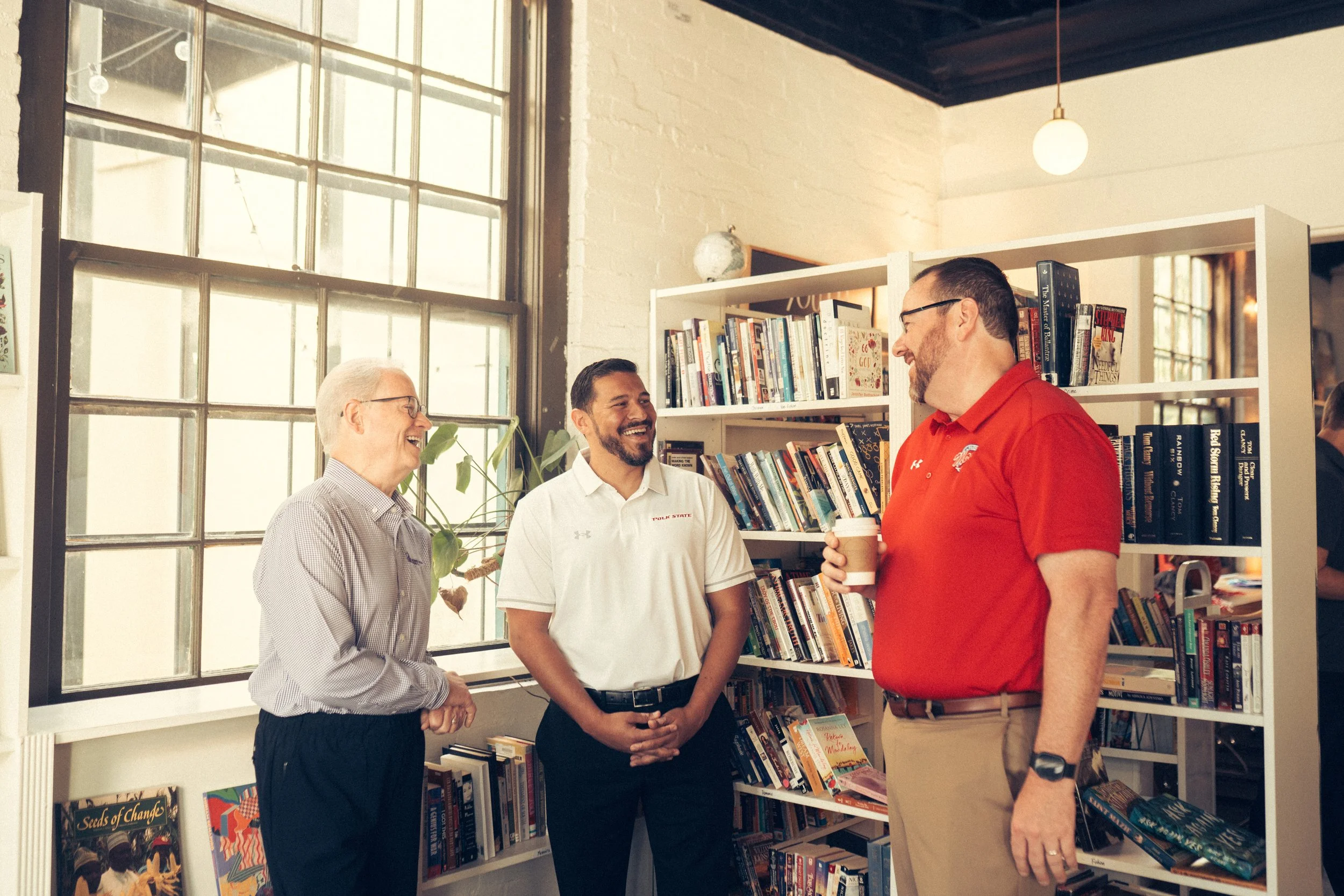
Artificial Intelligence
THE LAKELANDER
As you lead your teams and you consider new programs or cutting back on certain programs, how do you personally, as the leader of an institution look at the role of AI, and where it is now and what it demands of you in terms of understanding its role and being what it needs to be for the students and for your staff long term?
DR. STEPHENSON
We believe it’s a tool to help. We’re not threatened by it. You may have read about the AI model that we created called Phoenix AI that we onboarded last year for students. We put some safeguards around it for them to start using, but then we rolled out the AI model.
With Grady Judd (and the Polk County Sheriff’s Office)...we’ve created an AI that goes (with officers) in the car. They can program in it the scenarios of a particular site they’re going to, whether it be an active shooter or a hostage situation, and then the AI model will say, ‘Based on this information you put in, here’s a way that you could respond.’
We also have just gotten another $2.5 million AI grant for biomedical health devices and we’re now using AI in our enrollment management model..and it helps us determine out of that top inquiry base, what are the 20 to 30 percent of those students that are most likely to come, and how should we be investing our time, energy and our talent into recruiting those individuals?
You have probably read recently in some of the publications where they’re sort of accusing AI as being a grade inflation tool. In the university system we are now going to be requiring disclosures from the students if they’re using AI, (as well as) faculty, and I think that’ll filter down.
You know, some people don’t want to work to learn AI. Some people are just afraid of it. We believe you’ve gotta be able to work toward it and not be afraid of it, using it appropriately and have the right guardrails.
DR. MARTIN
It’s artificial intelligence, not artificial correctness.
I think (what Devin said) is spot on. AI is not going to replace accounting, medical professionals or engineers. Accountants with AI are going to put accountants without AI out of business, lawyers with AI are gonna put lawyers without AI out of business. The same for computer programmers and all the rest. So it’s a tool that graduates need to have in their toolkit. We actually gather our entire faculty one day before every semester for professional development day, and for the last three years, it’s all been focused on AI. We bring an AI speaker to talk about ‘How are you including this?’
We were relatively early to have AI statements on every syllabus and require the faculty…because the reality is no faculty member should ever express surprise that AI was part of an assignment submitted, particularly if you don’t say, ‘Here are the levels of AI use that’s allowed.’ And if you don’t want any AI use, Bluebooks are making a comeback where it’s like, I need to see you write your original thought.
One of my favorite assignments, regardless of the subject, is to ask students to go out and generate a literature review or review of the existing research using AI and then the assignment is to actually critique the research that was provided by the AI.
So you literally have to say, alright, ‘How did AI think about going out to look for it? How might I improve my questions? Or how might I improve the output? And again, that spans…any discipline.
STASI KAMOUTSAS
Not to beat a dead horse, but AI literacy is going to be pivotal in all professions.
You have to have a basic understanding just like at one point in time when I was growing up, you had to learn how to type—I mean computers were the way of the future.
Thinking through AI in a way that could really benefit students is going to be crucial to deal with the narrative. What I mean by that is when I was Commissioner of Education, a lot of the policy discussions that we had around K-12 was how can we multiply tutoring efforts through AI? Not replacing teachers, right? You want the teacher to do the classroom instruction from bell to bell, of course. And any notion that that is ever possible in the future to replace a teacher needs to be dispelled and just done away with because it’s just not factual.
However, we know that after school, (there could be benefits of) having an AI platform that a student can receive a tutoring service from that can measure that student on what their strengths and their weaknesses are, that is completely monitored by a parent so that they see what their child’s being exposed to and they simultaneously can track the child’s progression (through).
In 2023, we were at 49 percent proficiency in English language arts, 53 percent in math. We just announced at Lakeland High School a couple weeks ago that as a state, we’re at 61 percent and 62 percent. That’s literally hundreds of thousands (more) students that are now demonstrating proficiency on grade level. And so progress monitoring…you can take it to the next level through tutoring services provided by AI, and now you’re able to measure the child’s growth throughout the week or the student’s growth throughout the week. And I think that is going to prove to be transformational education.