
The Blueprint for Better
Superintendent Fred Heid Dives into Helping Teachers, Working with the State, Tools for Progress and a Crucial Referendum on Polk’s Education Future
PHOTOS PROVIDED BY POLK COUNTY PUBLIC SCHOOLS
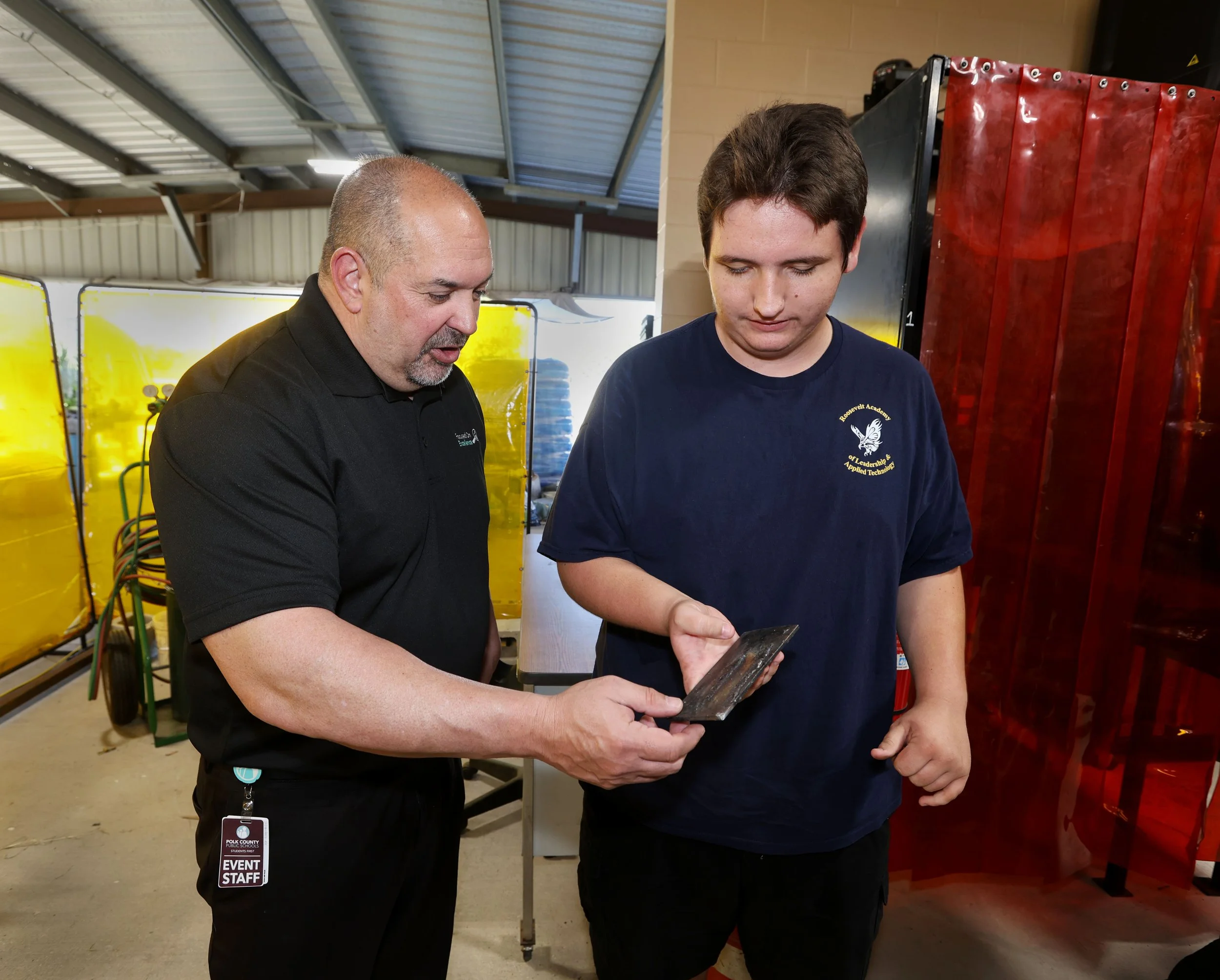
When Fred Heid, superintendent of Polk County Public Schools, is visiting a welding program at one of the local high schools he is shoulder to shoulder with the students, all smiles.
It makes sense, because if school district staff and keen observers have learned anything about Heid after five years with him leading the district, they know he loves building things, he deeply values relationships and he is solutions oriented.
Heid’s approach to leadership is grounded in an often recurring question he poses to his staff: “What do you need? What can I do for you?”
It is a question that cuts through the noise and enormity of a district spanning more than 2,000 square miles. Sometimes the answer may seem trivial—a broken blind or a leaky roof—but to Heid, these are not small matters. They are distractions from the mission of education. He admits to moving quickly, perhaps too quickly at times, to fix these problems because he refuses to allow frustrations erode the morale of his team.
“I don’t think people see teachers for what they are,” Heid says. “True professionals that have to go get an education, earn a certification, get all the endorsements... then show up every single day, despite their personal struggles, despite anything else that’s going on in their lives. And they pick up the pieces for 23 to 30 kids a day”.
This empathy is not just rhetoric. It is the fuel for his advocacy. He speaks with visible emotion about teachers who work second and third jobs to make ends meet, or the ones who reach into their own pockets to buy supplies for the next day’s lesson. For Heid, these teachers are the unsung heroes of the community, and his strategic plan is built on the premise that if the district makes their jobs easier, the students will inevitably thrive.
In a district with more than 6,700 teachers, the cumulative challenges can add up quickly, but cultivating a culture of care for those who are at the desks and smartboards and in the lunch room and car rider line everyday is essential for continuing the progress that has helped the district maintain its “B” grade from the Florida Department of Education and bringing innovative new programming to students.
NAVIGATING MOVING TARGETS
Passion is only one side of the coin. The other is a pragmatic, data-driven navigation of policies, provisions and systems often passed down from the federal and state levels. As a veteran superintendent—in his 13th year in the role, sixth in Polk—Heid has developed a clear philosophy on working with the state’s department of education: stay at the table, keep emotions in check and bring data to support your ideas.
Yet, even with a professional approach, frustration persists regarding the “moving target” of school grading. Under Florida law, the Department of Education automatically raises the point threshold required to earn an “A” (and other grades) whenever 75 percent or more of schools in a specific category (elementary, middle, high, or combination) earn an “A” or “B” in a given year.
Heid shares a vivid analogy to offer his perspective on that law: if a teacher has a classroom where too many students are doing well, and the teacher suddenly decides to make an “A” harder to achieve just to force a bell curve, that is pedagogically unsound.
“I don’t think there’s a problem with too many kids being successful,” Heid says. “And I think sometimes, inadvertently, that’s the message that’s being sent. We’re doing too well. There are too many schools scoring ‘A’s and ‘B’s, so we’re going to make it harder.”
He is firm in his belief that grades should be an indication of proficiency, not an exercise in “jumping through hoops.” He describes the current grading system as a “scarlet letter” that undermines morale rather than building it. Despite this, he remains focused on the positive trajectory of PCPS schools on that very scale. With 35 schools earning an ‘A’ this year, including 13 schools rising to that status, the district is proving its capabilities regardless of the shifting criteria.
THE OPERATIONAL ENGINE
Managing a district of this scale is a massive operational undertaking. Last year alone, school staff served more than 5 million breakfasts and 11 million lunches, and buses traveled a staggering 10 million miles. Also part of the reality is PCPS currently ranks 63rd out of 67 school districts in Florida in terms of per-student funding, meaning every dollar has to be squeezed for maximum impact.
Heid’s vision for the future involves leveraging modern tools like AI, not to replace classroom instruction, but to improve operations—such as streamlining call centers so parents get answers faster, and optimizing district logistics.
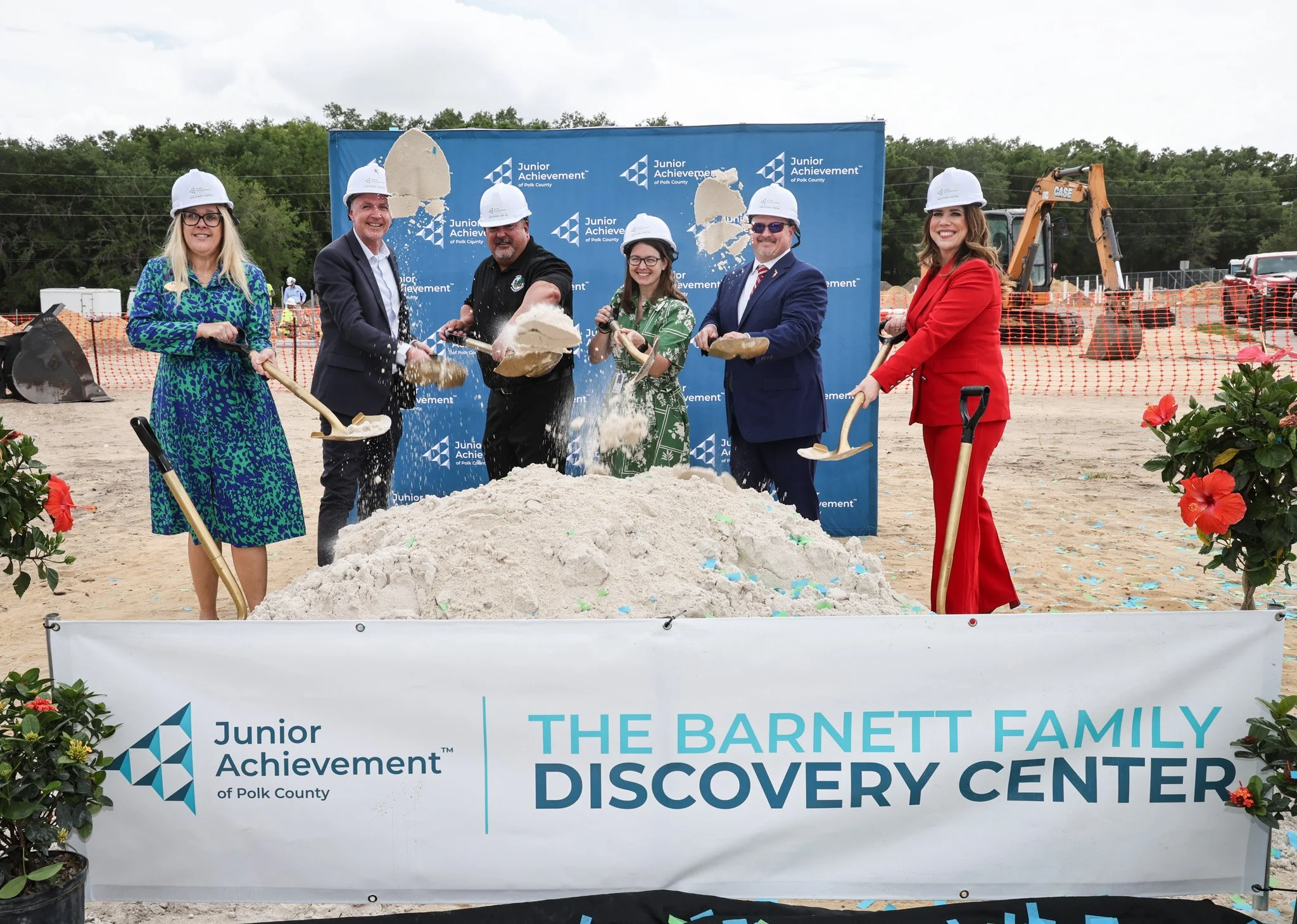
He is also an advocate for innovation through community partnerships. Heid sees benefits to creative collaborations like one he credits Sarasota County Schools for entering into, where the district partnered with a local children’s museum to turn unused campus space into a community asset. By bringing in partners—whether it’s expanding access to VPK or specialized programming such as the newly implemented WonderHere project-based learning program at Philip O’Brien Elementary—the district can create an environment that values the “whole child” while making the best use of public facilities.
A REFERENDUM ON VALUE
PCPS is one of the 30 largest school districts in the entire United States, yet teacher pay lags behind the state average.
Average teacher salaries are significantly lower at PCPS than in more populated neighboring counties like Orange and Hillsborough, but also lower than rural counties like Highlands and Lake.
A potential means of increasing staff pay and more adequately funding fine arts, athletic programming and early childhood education initiatives comes in the form of a referendum on the November election ballot. The district is asking for voters to consider approving a 1.0 ad valoreum millage rate increase. In layman’s terms that equates to $1 per $1,000 of taxable property value per year after homestead exemptions, so the owner of a home valued at $250,000 after exemptions would pay $250 per year.
The millage would produce roughly $80 million in additional funds each year for four years—an estimated $66.4 million to PCPS and around $13.6 million to local charter schools. More than $53 million would go to retention of and recruitment of teachers and staff and more than $13 million would go toward supporting student programming.
Heid frames the decision the public makes on this referendum not merely as a budget adjustment, but as a test of what residents of the community actually value.
“I think it’s a vote as to whether or not public education is valued,” Heid explains. “If the referendum doesn’t pass, it will impact morale. And we will lose teachers.”
While unions would have to collectively bargain the exact allocation of pay increases, Heid said union presidents have been motivated to ensure an even distribution of funds for teachers and support staff separately.
The referendum is intended to stabilize the workforce by keeping pay competitive. With surrounding counties already utilizing referendums to pay teachers more, PCPS risks losing talented educators simply because it cannot compete in an inflationary environment.
It also should be noted that administrators do not directly receive compensation increases from the millage. According to data published in Florida’s Educational Funding Accountability Act, the district’s spending of $515.02 per student from the general fund on administration was the lowest reported amount in the state, as of the 2023-24 school year.
Heid is quick to address the skeptic who may not have children in the system. His response is practical: the economic viability of Polk County is tied directly to the quality of its schools. Every doctor, every mechanic, every entrepreneur that helps the county thrive began their journey in a classroom.
“The future of Polk County starts and ends with us,” Heid says.
Heid has signed on through 2030, and his goals are clear. He wants to leave a legacy where public education is respected, and where student outcomes are measured fairly. He is not looking for quick fixes. He is looking for the long-term, sustained progress that comes from keeping the focus where it belongs: on the teachers and the students.
He knows his “why,” and he challenges every principal, every teacher and every member of the community to find theirs as well. Whether he is popping into a classroom, announcing a new partnership or representing the district’s interests at the state level, his mission remains unchanged: to change the trajectory of a child’s life, every single day.
“I don’t think people see teachers for what they are,” Heid says. “True professionals that have to go get an education, earn a certification, get all the endorsements... then show up every single day, despite their personal struggles, despite anything else that’s going on in their lives. And they pick up the pieces for 23 to 30 kids a day.”