
Waking up to Hope
How LRH’s advanced stroke care saved a Lakelander’s life
DEVELOPED IN PARTNERSHIP WITH LAKELAND REGIONAL HEALTH
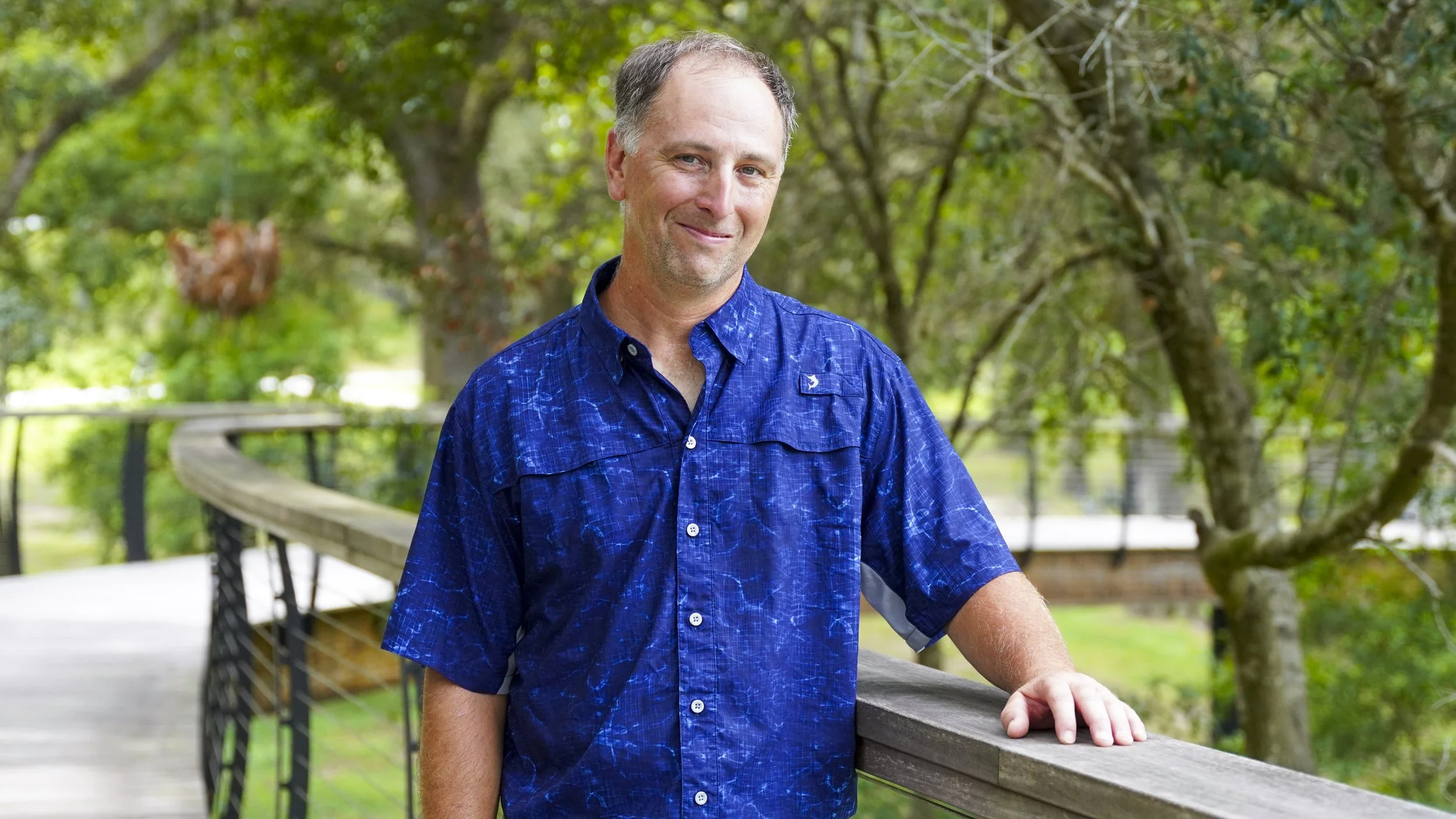
Early one morning last April, Vince Roddy was jolted awake by the sound of a cup crashing onto the hardwood floor.
The night before, he had fallen asleep in his chair in the living room while watching TV. But at 5:30 a.m., he was wide awake. A cup had fallen off the TV tray, and he realized he was on the floor, too.
His wife and mother-in-law rushed in. They were talking to him, but he couldn’t respond. Vince managed a half-smile for his wife, but she knew something was wrong. He looked confused and couldn’t speak. Thinking he might have hit his head, she called 911.
WAKE-UP STROKE
The emergency medical technicians who responded to Vince’s house immediately recognized the signs of a stroke and took him to Lakeland Regional Health Medical Center, home to Polk County’s first and only Comprehensive Stroke Center, which provides 24/7 access to the highest level of care for complex strokes and cerebrovascular emergencies.
Vince had experienced a “wake-up stroke,” a condition in which someone goes to sleep feeling well but wakes up exhibiting the symptoms of a stroke — a drooping face, weak arms, and trouble speaking.
Wake-up strokes account for 15 to 20 percent of ischemic strokes, those caused by a clot blocking blood flow into the brain, says Dr. Sheyar Amin, an endovascular neurosurgeon with the University of South Florida who cares for patients at Lakeland Regional Health’s Brain & Spine Institute.
In the past, treatment options were largely dictated by time, with intravenous clot-busting medications generally limited to within 4.5 hours of symptom onset. However, advances in stroke imaging have changed that.
“Advanced imaging with MRI and CT perfusion now allows us to evaluate the condition of the brain tissue itself,” says Dr. Amin. “Instead of relying solely on the clock, we can identify select patients who may still benefit from clot-busting medications or mechanical thrombectomy — a procedure that removes a blood clot from an artery in the brain — even beyond the traditional treatment time windows.”
Although Vince could not speak, he recalls the details of that morning vividly. “My senses were really heightened,” he says. “I felt like I had chugged a case of Red Bull.”
He remembers the glow of traffic lights through the ambulance windows. He remembers lying in the operating room as Dr. Amin and he medical team prepared him for an emergency mechanical thrombectomy. And before the anesthesia took effect, he remembers noticing his hand, frozen stiffly in the shape of a C, as though it were wrapped around a can of soda.
Shortly after the procedure, Vince woke up in the Neuroscience Intensive Care Unit and could speak and move his fingers again. Within an hour, he had regained control of his body.
“The first two days after they removed the clot, my head felt strange,” Vince says. “I didn’t have a headache, exactly, but there was some pressure. Then it just went away.”
Just five days after his stroke, Vince was discharged from the hospital.
A HOLE IN THE HEART
A comprehensive evaluation at Lakeland Regional Health’s Comprehensive Stroke Center identified a Patent Foramen Ovale (PFO), a small opening between the chambers of the heart, as the likely source of Vince’s stroke.
A PFO is a small opening between the heart’s upper chambers that persists after birth and is present in about one in four adults. Dr. Amin says most people with a PFO never know they have one because it typically causes no symptoms and requires no treatment. In some cases, however, a PFO can provide a pathway for a blood clot to bypass the lungs and travel to the brain, where it can block an artery and cause a stroke.
After other potential causes of his stroke were ruled out, Vince’s doctors recommended closing the PFO. Three weeks after his stroke, he underwent a minimally invasive procedure to close the PFO and significantly reduce his risk of another stroke.
FULL RECOVERY
Vince, 50, still has trouble wrapping his head around the fact that he had a stroke. “I remember my great-grandpa having a stroke in his mid-70s, and he was never the same again,” he says.
The most noticeable lingering effect wasn’t physical. For weeks afterward, Vince found himself becoming emotional over things that had never bothered him before. This is common among stroke survivors, often due to damage to the part of the brain that regulates feelings.
“I was a mess,” he says. “I couldn’t watch a show with a puppy. I couldn’t take a tear-jerker movie. It was pretty weird.” As he healed, that emotional response faded, and today, Vince’s prognosis is excellent. He occasionally catches himself searching for a word when he speaks too quickly, but otherwise, he has returned to his normal life.
He is still amazed by how quickly everything changed — and how quickly it changed back.
Remember the warning signs of stroke with the acronym BE FAST:
B[alance]: Sudden loss of balance or coordination
E[yes]: Sudden vision changes or loss
F[ace]: Facial drooping or weakness
A[rms]: Sudden weakness in an arm or leg
S[peech]: Difficulty speaking or understanding speech
T[ime]: Call 911 immediately