
Be Well, Lakeland: Life-Saving Surgery Options Close to Home
WRITTEN BY RJ WALTERS | PHOTOS BY LAKELANDER MEDIA | DEVELOPED IN PARTNERSHIP WITH LAKELAND REGIONAL HEALTH
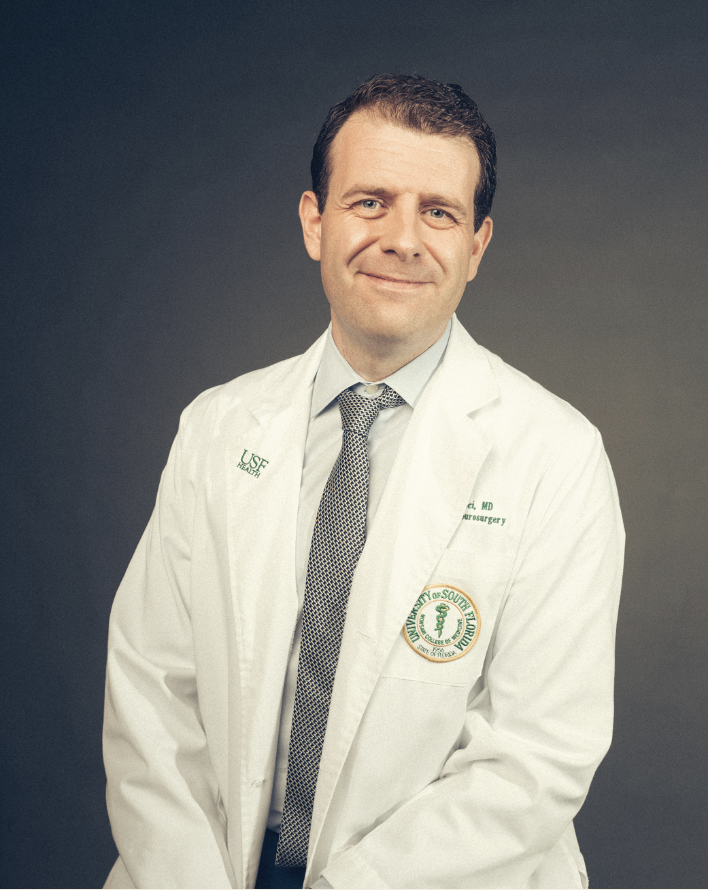
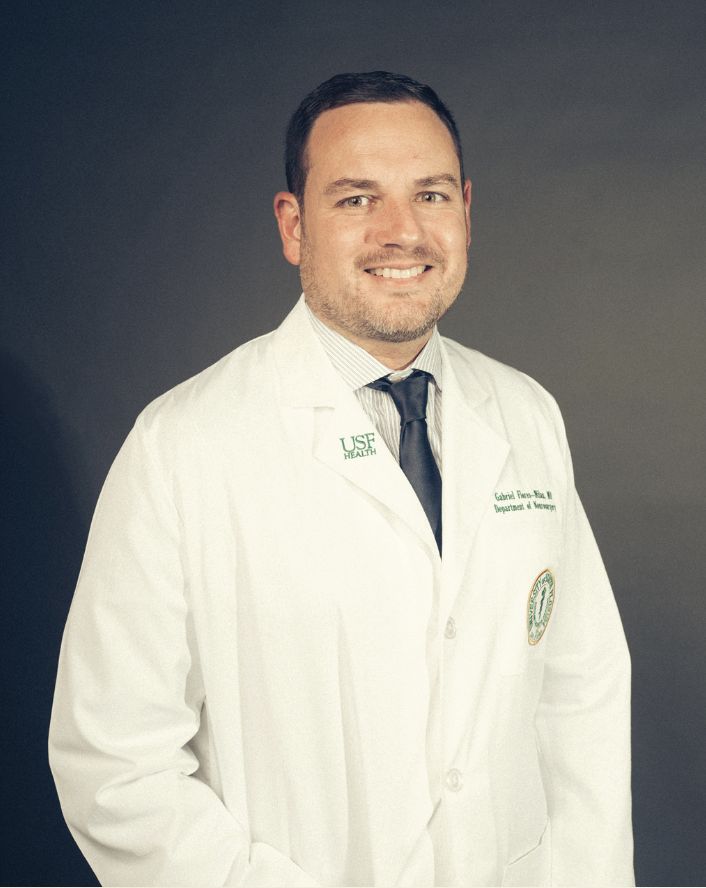
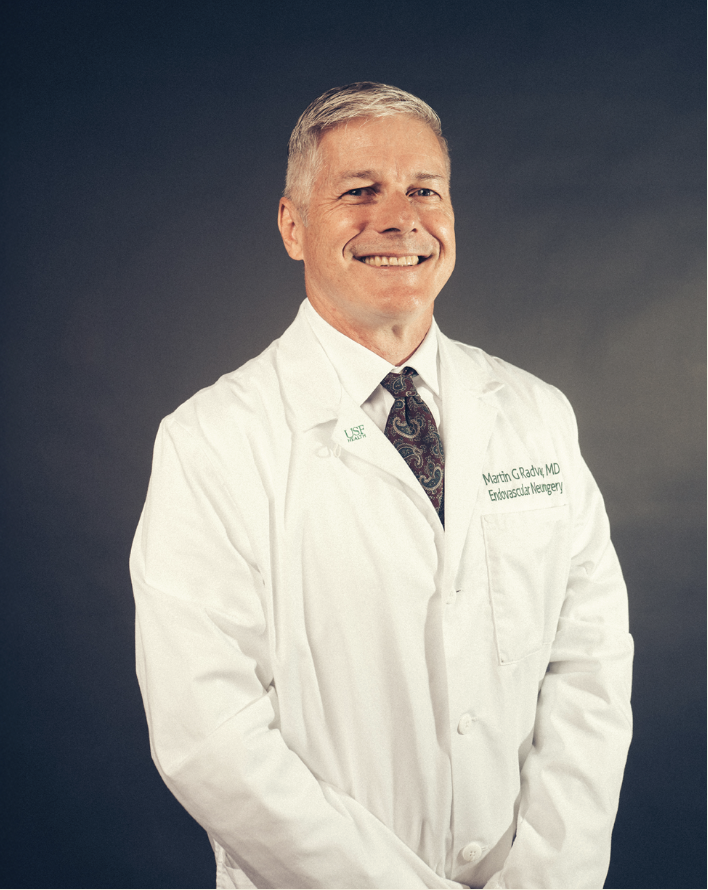
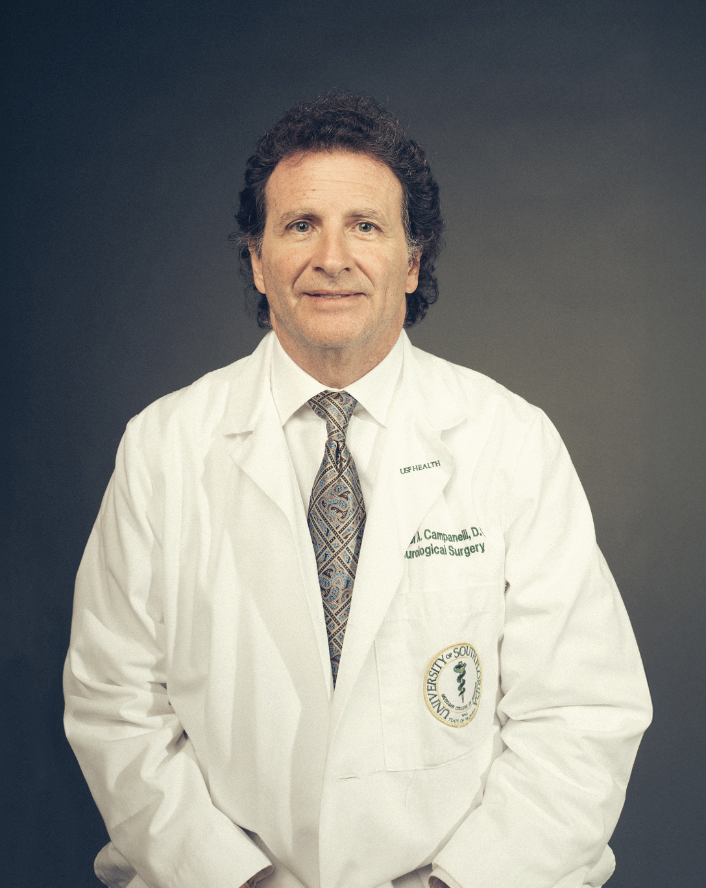
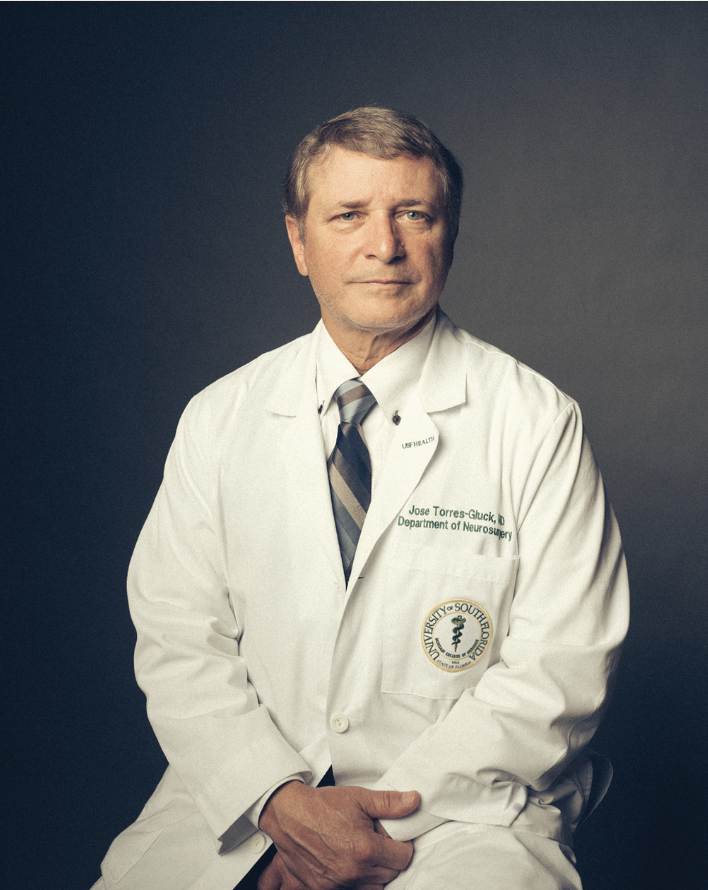
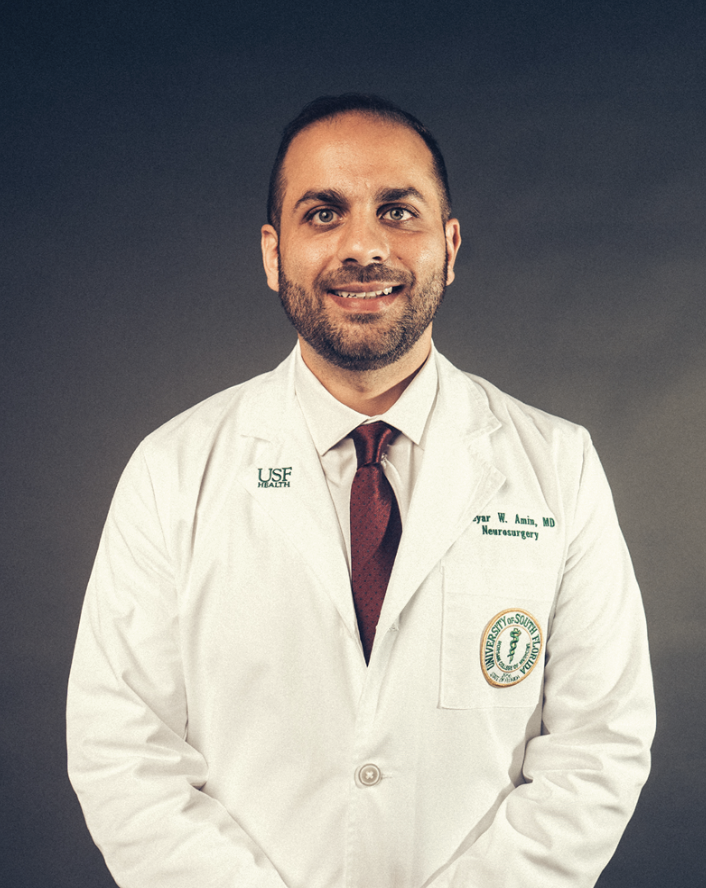
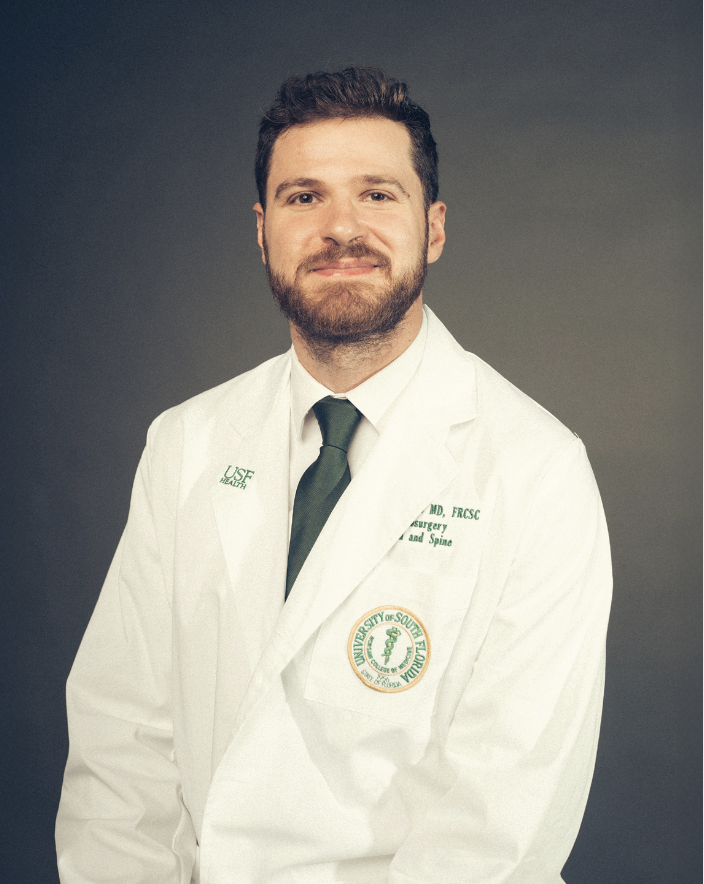
From left to right:
Dr. Davide Croci, Dr. Gabriel Flores-Milan, Dr. Martin Radvany, Dr. Michael Campanelli, Dr. Jose Torres Gluck, Dr. Sheyar Amin, Dr. Abdul Yassin Kassab.
For too long, residents of Polk County in need of specialized neurosurgical care—including stroke patients—faced a daunting journey along Interstate 4 to Tampa or Orlando that not only could be anxiety inducing but could compromise the odds of the best long-term outcomes. In medicine, it’s not cliche to state that “every minute counts.”
Today, thanks to the intentional investment in the tools and expertise needed, Lakeland Regional Health is a highly rated neurosurgery center that has become vital to meeting the growing patient demand in Polk County.
LRH, in partnership with the University of South Florida, has assembled an entire team of neurosurgeons specializing in the diagnosis and treatment of strokes, brain tumors and spine disorders, covering the entire spectrum of neurosurgical procedures from complex brain and spine surgery to minimally invasive and endovascular procedures.
A cornerstone of LRH’s neurosurgery offering is its Comprehensive Stroke Center, which has earned The Joint Commission’s Gold Seal of Approval Accreditation and the American Stroke Association and the American Heart Association’s Heart-Check Mark for Comprehensive Stroke Certification. These accolades recognize the significant resources, specialized staff and rigorous training required for treating complex stroke cases.
Dr. Martin Radvany, a specialist in Radiology and Interventional-Radiology, who has been instrumental in establishing and building the stroke program, notes that a stroke is a painless emergency that is often ignored because people might just feel they are suddenly a little weak and expect for it to improve in time.
The reality is that there is a four-and-a-half hour window in most cases for a stroke patient to receive critical care that is most effective at restoring blood flow and minimizing irreversible brain damage.
As Dr. Sheyar Amin, an interventional neurologist, puts it, he is “in a race against the clock” when treating a stroke patient because the team needs to get the blood vessel opened up as quickly as possible to improve the odds of a better outcome.
“Time is brain. When you have a place this close [by] to be treated properly there is less risk of complications happening, better recovery, better outcomes,” he says. “Having something close by will benefit not only patients or families, it’ll save brain cells.”
Dr. Radvany says that getting a stroke victim the treatment they need in the time frame necessary is “one of the few experiences that can be so life changing,” and Lakeland Regional Health has the advanced tools and facilities to make that possible.
He mentions the use of specialized tools are helpful to more accurately and safely open up blood vessels compared to the traditional balloon method.
“We’re really cutting edge and our goal ultimately is to start becoming involved in research so that we are literally at the bleeding edge of medicine,” he says. “Our goal is to be…evaluating new treatments before they even become mainstream…and we’re already doing everything that anybody else across the country does as far as cerebral vascular disease.”
The neurosurgeons encourage people to memorize the phrase B-E-F-A-S-T when evaluating the possibility of a stroke, an acronym that stands for: balance (sudden loss), eyes (loss of vision), face drooping, arm weakness, speech difficulty and “time” to call 9-1-1.
The neurosurgery department’s expertise extends beyond stroke care to a wide range of complex brain and spine conditions.
“Time is brain. When you have a place this close [by] to be treated properly there is less risk of complications happening, better recovery, better outcomes.”
Dr. Gabriel Andres Flores-Milan, who specializes in complex brain and spine surgery, is an expert in super minimally invasive techniques, particularly endoscopic skull base and endoscopic spine surgery.
He calls himself a “forever student” who loves to learn, not just about advanced techniques and emerging technologies, but about the unique life experiences and perspective of the patients he serves.
“We have to not to lose our humanity, [to remember] that every patient we deal with that is…not a disease, [he or she] is a human being,” he says. “You have to take into account their social factors like support and loved ones and ‘What is the goal of the surgery?’ and do we have to at the moment save a life or save a limb…you have to take everything into account.”
He joined the LRH team last year and is ecstatic to have found a tight-knit community where he hopes to make a difference for years to come.
Dr. Davide Croci, chief and director of neurosurgery, who specializes in complex brain and spine surgery, has played a key role in the department’s rapid growth since his arrival three years ago. He highlighted the introduction of high-level navigation systems for spine surgery, neuro monitoring, and robotic spine surgery, which enhance patient safety and accuracy. He also mentioned the use of fluorescence dyes in brain tumor surgery, which helps surgeons differentiate tumor cells from normal brain tissue.
Croci has authored more than 50 peer reviewed publications, he is a frequent reviewer of multiple journals and he regularly speaks at national and international neurosurgical conferences.
“I think research is one of the keys to continue to question ourselves [about whether] we’re doing the right thing for the patients, to investigate and also to understand what are the best treatment options for our patients,” he says.
Dr. Abdul Mounnem Yassin Kassab, who specializes in complex spine surgeries, recently joined the team and is already making a significant impact.
This summer he performed surgery on a tumor using carbon fiber composite screws, which significantly reduces artifacts in postoperative MRI scans, allowing for more accurate radiation planning.
“Having this technology is absolutely helpful in planning postoperative treatment for those patients,” he explained, emphasizing the multidisciplinary approach to patient care.
Dr. Jose Torres Gluck, a neurosurgeon with more than 30 years of experience, was recruited by Lakeland Regional Health and USF in 2013. He specializes in disc replacement surgery and minimally invasive spine surgery.
The long-time New Yorker was initially squeamish at the site of a live operating room, but the chance to work in a neurosurgery department during his first summer of med school captivated him.
He appreciates the variety of different opportunities that come with being a neurosurgeon, performing everything from brain tumor removals to subdural hematoma evacuations to disc replacements. Dr. Torres Gluck wants people to recognize LRH not only as a trauma center, but also as a destination for comprehensive neurosurgical care.
One long-time doctor who has helped LRH raise its profile and capabilities in the neurosurgery unit is Dr. Michael Campanelli.
When he looks back on his 25-plus year career in Lakeland, Dr. Campanelli is proud to have helped spur key advances that include the addition of the BrainLab technology in 2002, which he uses regularly, as well as advanced navigation in spinal surgery.
“It’s very precise and it makes putting instrumentation in the spine much easier than it used to be,” he says.
Dr. Campanelli says Lakeland has been an ideal place to raise his family. He adds that he has always considered his patients to be extended family and considered it to be a privilege be part of life-changing and life-saving procedures for so many individuals in the community.