
Engineering Common Sense
How Hard Work, Revealing Research and a Relentless Will Built a Development Empire
DEVELOPED IN PARTNERSHIP WITH HARPER REALTY FL | PHOTOS BY JACK PORTUNE
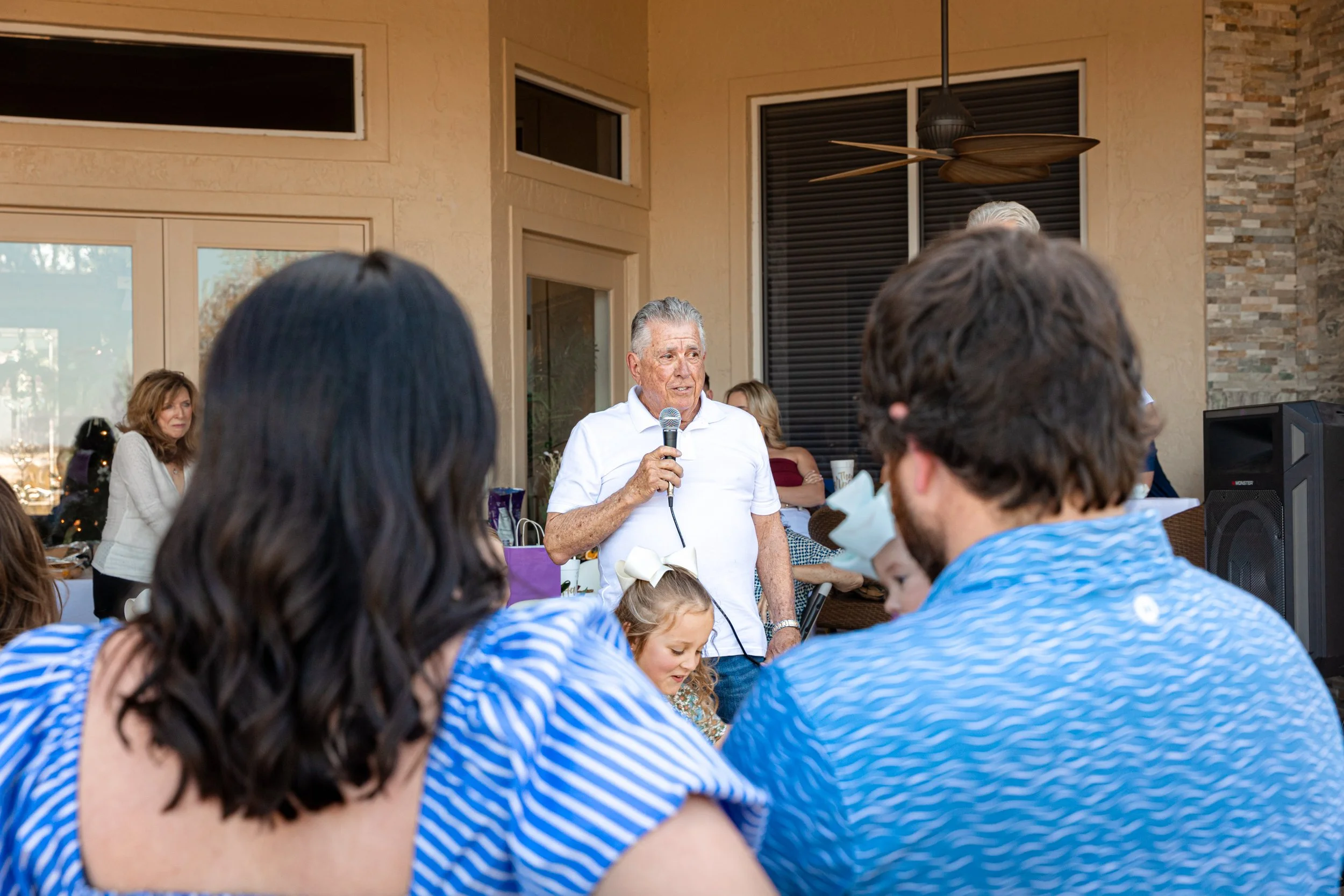
Sitting in his office filled with artifacts that range from homemade art to honors for admirable accomplishments, Robert Harper III sips on office coffee out of a Styrofoam cup at the same desk he’s probably worked behind for decades. At first glance you wouldn’t know he’s a Lakeland Realtors Hall of Famer, and the proud developer of more than 300 subdivisions, most of them in Polk County, but if you pull up a chair to converse with him, his stories prove there is often more than meets the eye.
He’s a candid and gifted narrator—so it’s no surprise to find out he’s currently drafting an autobiography that has the working title “A Florida Cracker,”—and if you spend time with him, you will soon recognize the 84-year-old Lakelander is the unique blend of a wise engineering mind mixed with a generous spirit and an indomitable will to fight for what he believes is right.
It Started With Grunt Work
The foundation of the story for the founder and owner of Harper Realty FL begins with the hard-earned lessons of Harper’s youth. Growing up in a “little old house” on Lake Parker, he learned the value of work early on, delivering The Ledger newspaper from a bicycle, and eventually a Cushman scooter.
The importance of independence was reinforced by his father, a World War II bomber pilot.
“He made me buy my clothes starting in junior high...I had to have a job and I had to buy my clothes, and I had to buy my first car, and anything I wanted, I had to buy,” Robert recalls.
At the age of 16, Robert earned Senior Life Guard certification and worked at the Lakeland Municipal City Swimming pool.
His go-getter attitude carried over to his first real job at the City of Lakeland. He jokes that his official title on the electric utility pole crew was spelled “G-r-u-n-t.”
In time he advanced from the pole crew to a line crew, then to the electric meter department, all while attending night school to pursue an engineering degree. He had initially tried to please his mother by studying dentistry but “hated it.” In engineering he found his passion, and by around age 30, he was promoted to Engineer One, putting him in control of major electrical systems for the city’s entire distribution system. In that role he helped design and install the first underground electrical system for residential properties in Lakeland, a project he still grins about when reflecting on.
As Harper became intimately familiar with Lakeland’s utility systems and land maps, he also concurrently began his foray into real estate development. His first purchase was a 10-acre piece of swamp land, bought with “no money down and interest only.” While still an engineer, he began finding beautiful tracts of land and partnered with Bob and Carl Warnock, local furniture store owners, who gave him a small start with a 1/16th interest in a project. He worked with the Warnocks for years, and was able to eventually take the connections and experience and break off to start his own business.
With just six months remaining before he would become eligible for the City’s retirement plan, he took the risk to dive headlong into real estate and land development with attorney Bill Ellsworth, whom Harper refers to as the “smartest guy I’ve ever met.” Time would prove Harper to be quite wise himself, as the duo developed hundreds of subdivisions in Central Florida together, including neighborhoods like Lake in the Woods and Highlands by the Lake.
One of Harper’s most satisfying professional victories may be the story of the Overstreet Ranch, which became Colt Creek State Park. Charlie Mack Overstreet wanted to sell his 5,400 acres but insisted the land be protected. The state offered $4.5 million, which Overstreet refused. Harper, the developer, proposed to “position” the land by designing a circular-tract, preserved-wetlands subdivision, not with the intent to build, but to “drive the government agencies crazy” with its stunning and environmentally sound design. This two-and-a-half-year process created value and leverage that resulted in the property being sold for $53.7 million and preserved as one of Florida’s nicest state parks. It’s a perfect example of his business ingenuity and land-management creativity working in harmony to preserve “true Florida.”
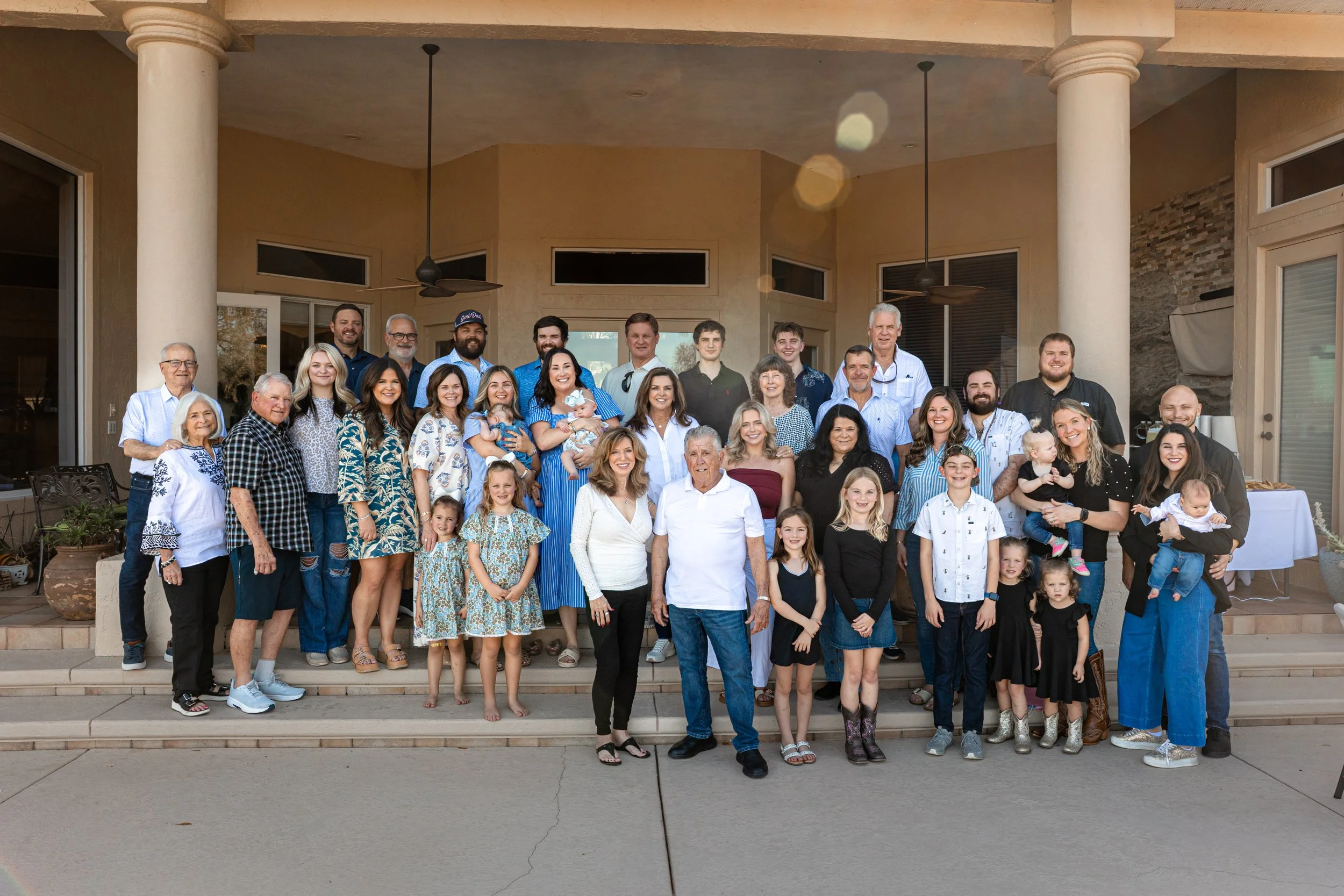
The Harper Family Reunion in February in Lakeland was a celebration of four generations of family members.
Battling Bureaucracy
Beyond the boundaries of a development plat, Harper’s most impactful work came in the legislative arena. His drive to protect the average family’s access to homeownership led him to become a passionate advocate against government over-regulation. He rose to become the President of the Florida Home Builders in 1995-1996, a role he used to fight for common sense in law, stating that many elected officials simply defer to “staff and bureaucrats” who create “all kinds of crazy ideas.”
Two battles stand out as hallmarks of his relentless research-driven approach:
Questioning the role of HOAs in water management: In the early 1980s, Harper passionately fought the mandate for every new subdivision to have a Homeowners Association to maintain stormwater management systems. He argued that this turned the “maintenance of a precious resource, our water,” over to “a bunch of people [who] don’t know what in the hell they’re doing,” a concern that he says has since been proven by the fact that today, “50 to 80 percent of these associations are now defunct.” He argued a government tax and a dedicated maintenance system was the only responsible way forward.
Revealing the real impact of radon: Harper was appointed to the Governor’s Commission to study radon, and he made it his mission to challenge a proposal that would have placed expensive, extreme building restrictions on all of Polk County. The regulation was premised on the idea that reclaimed phosphate land in Polk County, which emits radon, would be a major health risk. He argued that applying the restrictions to the entire county would “kill our county” by raising the price of a typical home by 20 percent, effectively putting a “skull and crossbones” at the county line. As Harper probed and researched, he found a Miami Herald article that revealed affluent people living on coastal sand dunes were setting off radiation machines because sand dunes also emit radon. He sent this evidence to Senator Curtis Peterson, and his argument—that if Polk County had to be regulated, so did the coastal beaches—stopped the legislation, in his words, “dead on arrival”. His research also showed Polk County was in the bottom 10 percent of Florida counties for lung cancer rates, further dismantling the proposed restrictions. Harper’s insistence on going deeper than surface-level panic, using common sense and exhaustive research became his calling card of sorts.
George Lindsey, a former longtime Polk County Commissioner and a fellow real estate and development guru in Central Florida said this about Harper in a 2003 article in The Ledger: “He’s very tenacious and bulldoglike. He wouldn’t take no for an answer.”
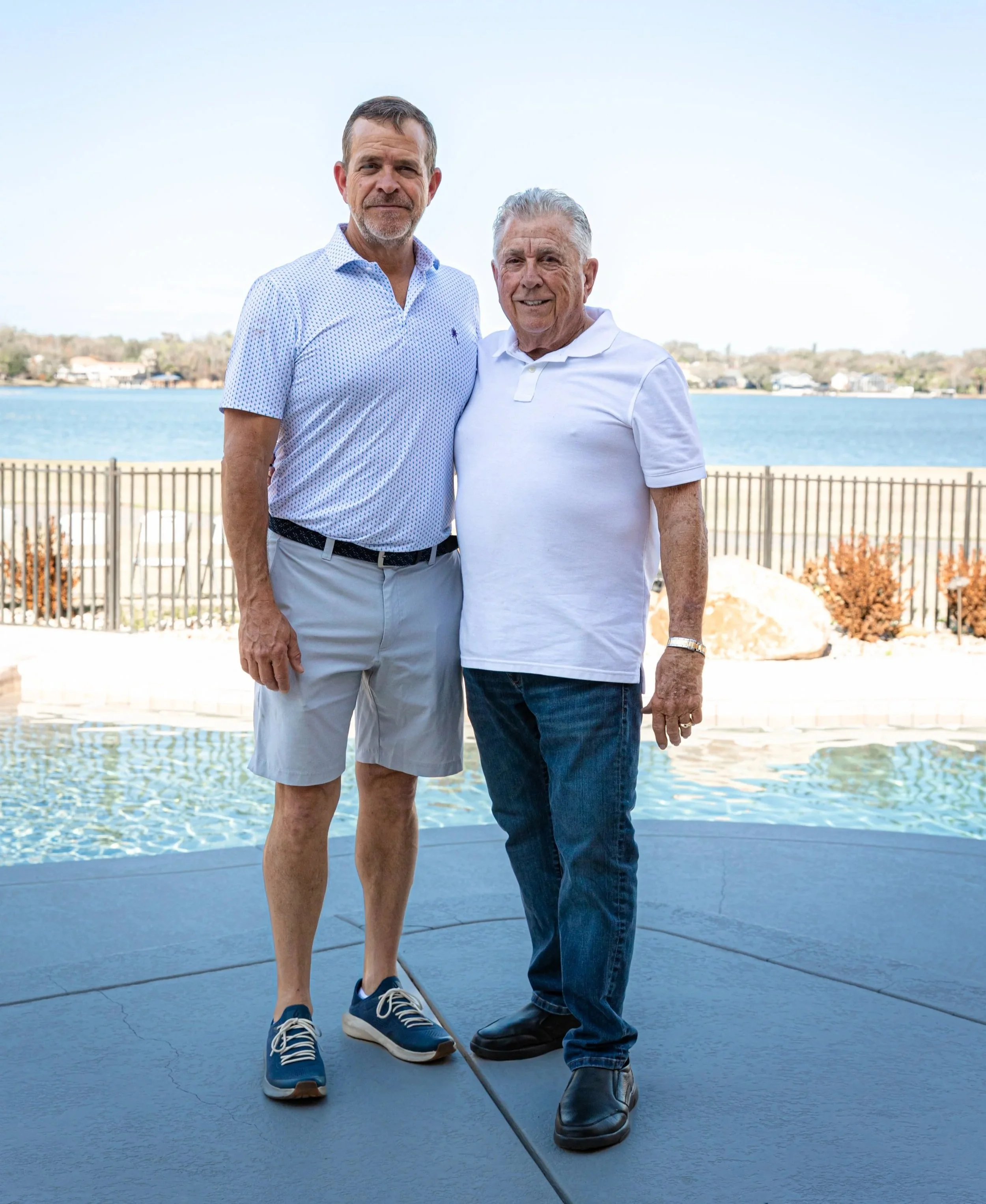
Sean Harper and Robert Harper III
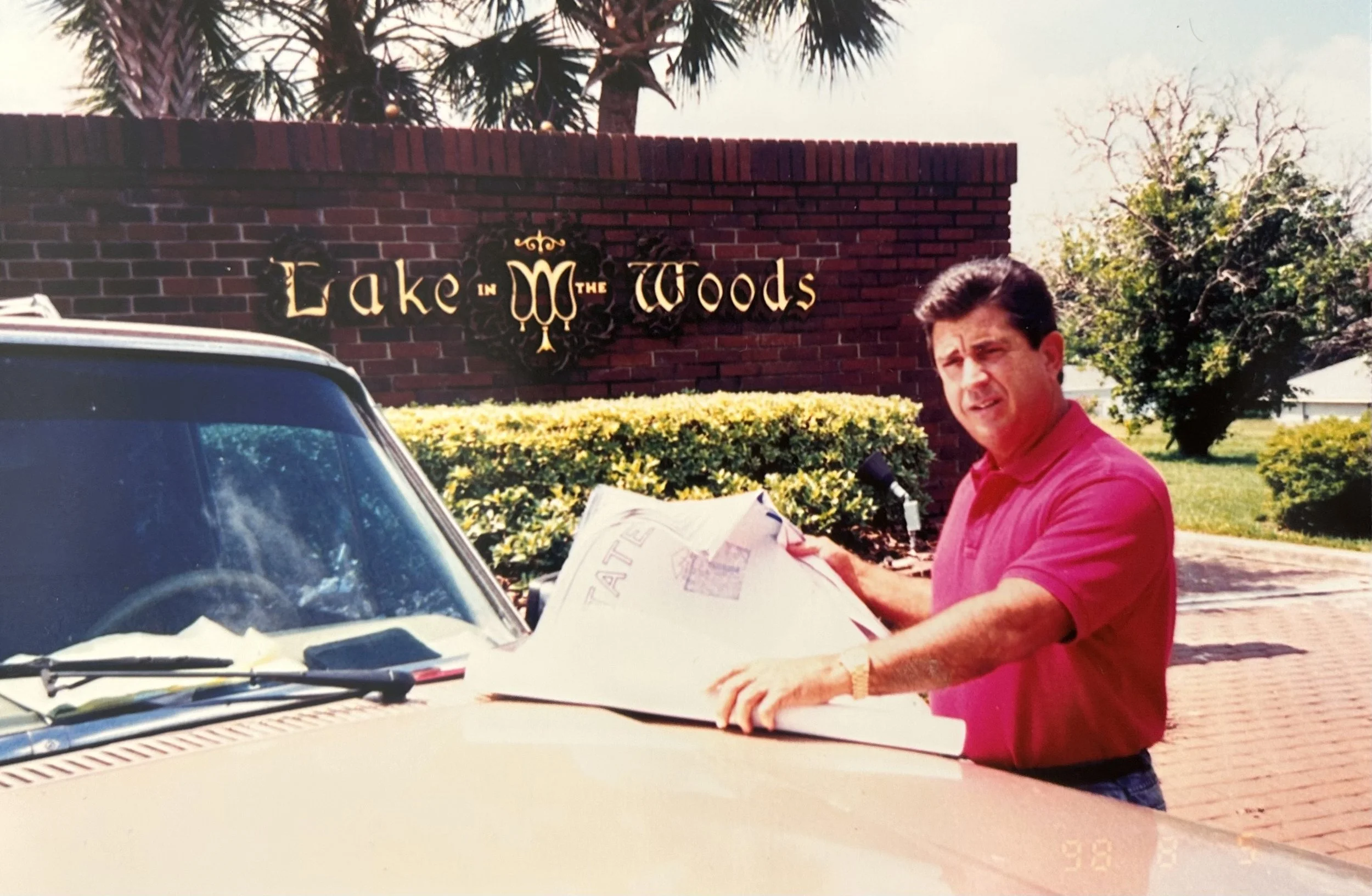
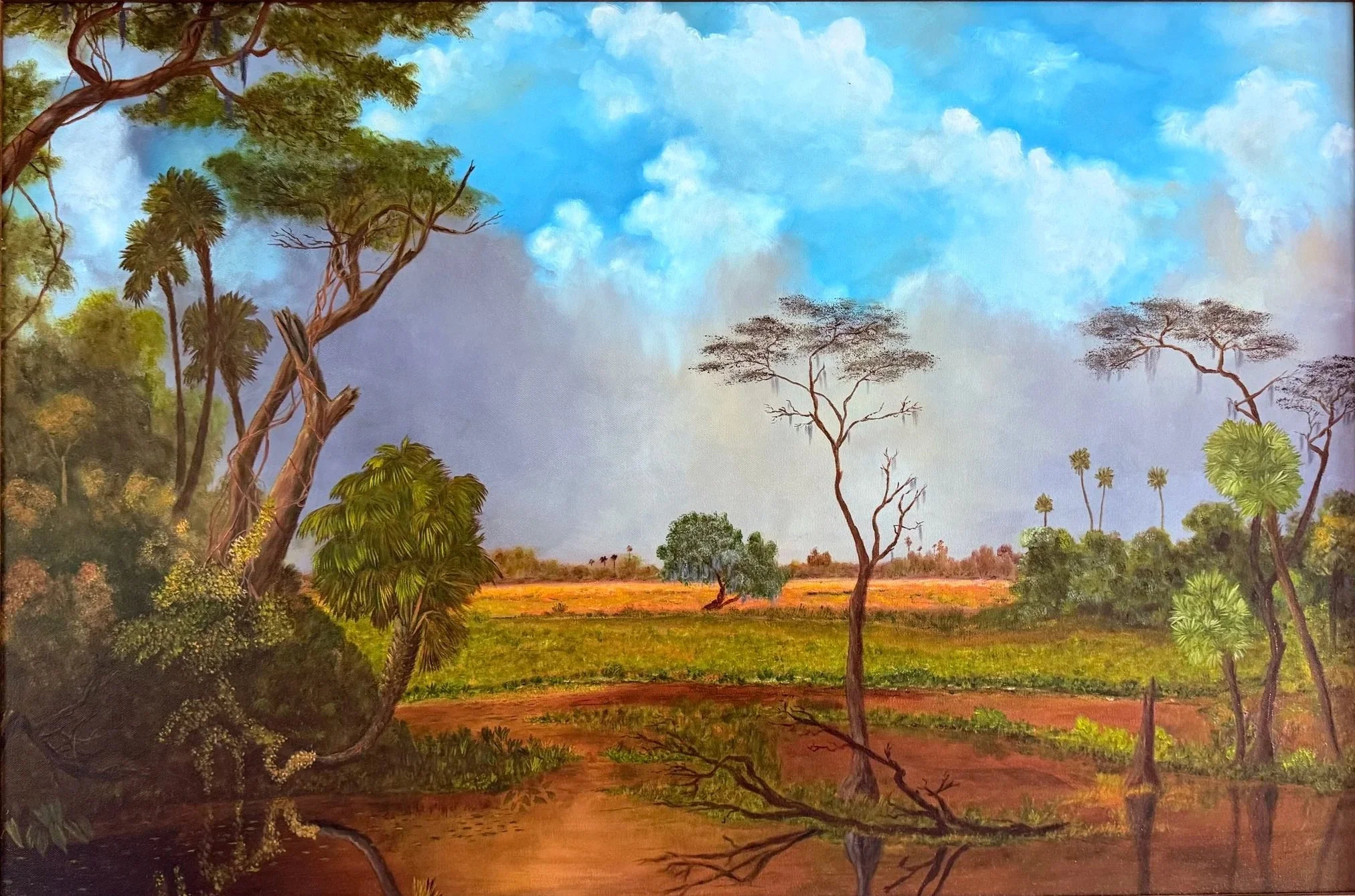
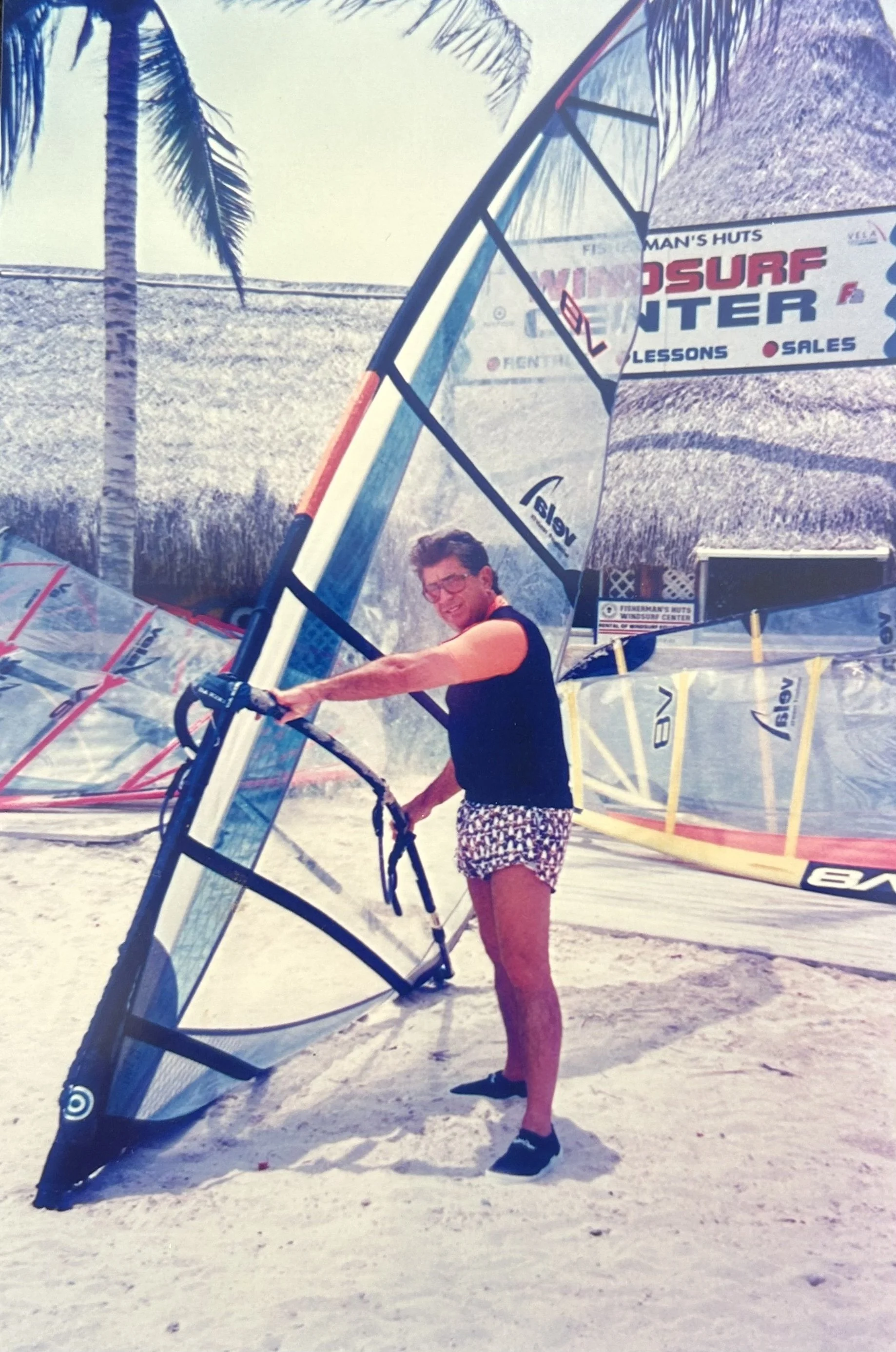
Robert Harper has developed hundreds of subdivisions over the years, including well-known communities like Lake in the Woods. When he wasn’t working, he spent much of his life with various hobbies, including oil painting and windsurfing. The painting shown is titled “Abigail’s Sky” in honor of
his granddaughter.
A Life Fully Lived
Harper’s personal life over the years has largely been marked by trying new things, scratching his creative itch and giving back to the community he loves and to initiatives close to his heart.
“I have been blessed to the hundred thousandth degree,” he states. “I cannot, whatever I give back…I can’t outgive the Lord.”
Some of his favorite hobbies over the years have included singing, windsurfing and painting—which he got really into about two decades ago and continues to enjoy, starting with acrylic painting and eventually moving onto oil painting. He started by painting wine glasses—after his late wife, Amy, and some of her friends did that as a craft one afternoon—and he has an affinity for bringing to life Florida landscapes, nature scenes and some of his favorite spots from the globe that he experienced as a windsurfer. Robert created a portfolio of his work for people to enjoy at rfharper.org.
He was longtime friends with acclaimed artist Robert Butler, of Florida Highwaymen fame, someone he credits for stoking his love of art.
Harper is the proud father to four children who have all been successful in their own right: Robert Harper IV, Cheryl Michelle Harris, Jacque Evelyn Gilliand and Sean Harper, who is a broker at Harper Realty and symbolizes the next chapter of the legacy. Recently, Harper hosted a family reunion at his family home, a special time of celebration and reflection for the grandfather of 10 and great-grandfather of 13.
He gave away more than 20 of his original paintings to family members that weekend, and if you listen to his tales from decades of business deals, political involvement and adventures, you’ll realize Harper gives away life
lessons instinctively.
If you ask him what he tries to impart on people who will listen, though, he keeps it simple: “Keep your nose clean, live life to the fullest, enjoy it. Capture opportunities that come your way, don’t be afraid to do something new and don’t put yourself in a box.
“I don’t know what ‘a box’ is, but I don’t want to get in there.”
Outside the box is where Harper has been a tireless advocate and creative problem-solver, one whose impact on the land and people will last for ages.
Real Estate | Construction | Roofing
The Harper family’s expertise encompasses all that is real estate in Central Florida.
863-687-8020