
Prodigious Hands
Celebrating the Vivid, Complex Art of a Cuban Legend
PHOTOS BY JORDAN RANDALL | DEVELOPED IN PARTNERSHIP WITH NOTTA GALLERY
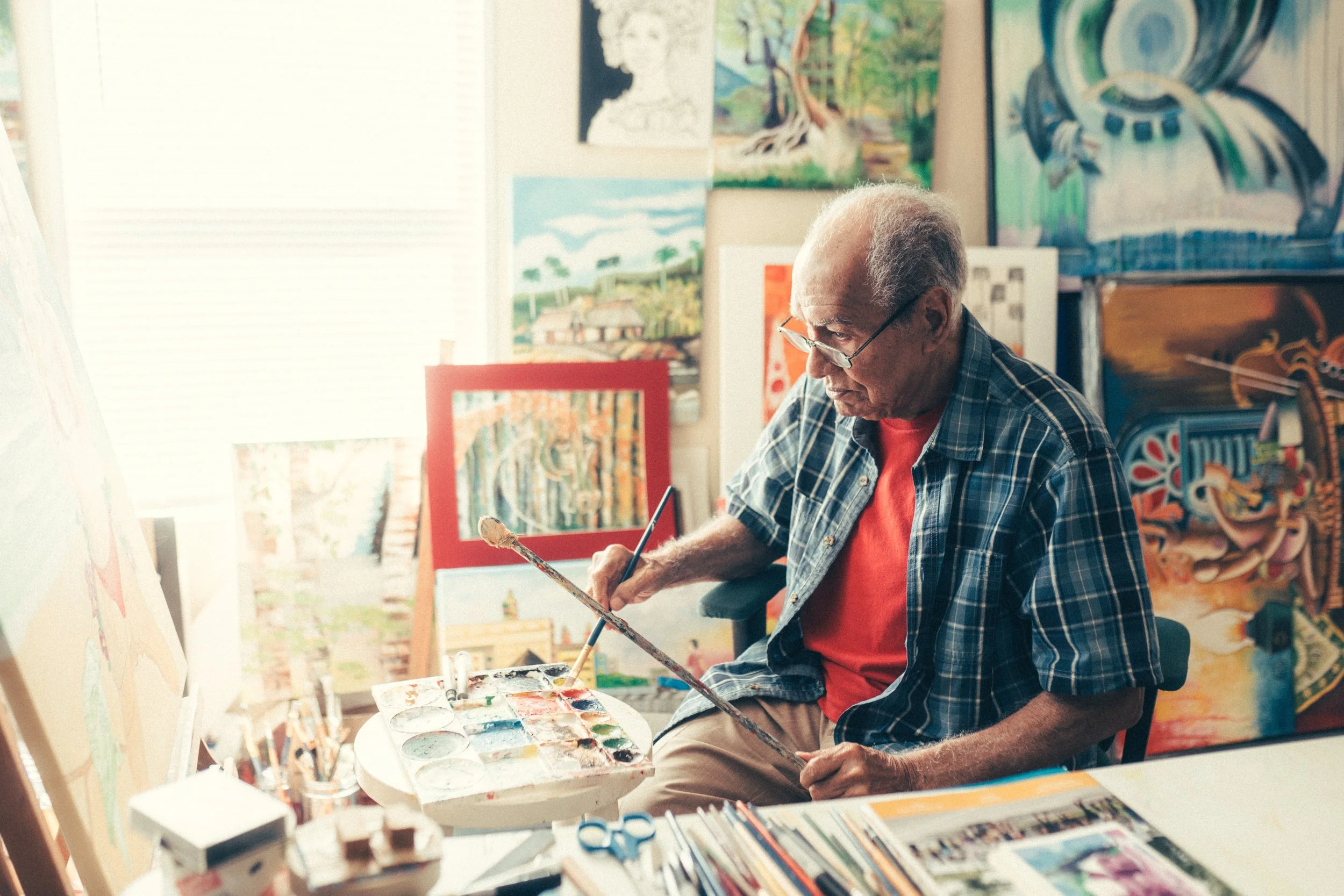
Gonzalo Borges is a simple man, content to gaze at trees across the road or simply follow much of the same routine he has for more than seven decades. His hands might be a bit shakier than they were in earlier years, but they are no less well honed compasses for bringing lines, colors and textures to life on a canvas in a fashion that is intriguing, and even mesmerizing.
Like many Cubans, his story is one of resilience and overcoming the odds, and like many of his fellow countrymen, the Havana-born 90-year-old has strong words against the oppressive regime he grew up under , while also fondly recalling the rice and beans, the palm trees, the countryside and the beautiful women that are etched in his memory.
Somehow, some way, on a journey that included a stint in New York in the 1990s—where in 1995 he was honored with a Hispanic Heritage Month award by then-mayor Rudy Giuliani—stops in Santo Domingo, Dominican Republic and many years living in Miami, he ended up in Lakeland in 2025.
Now, this April, the acclaimed painter and draftsmen will be an anchor of the inaugural Fuego Festival in Downtown Lakeland, a vibrant new cultural celebration being hosted by Notta Gallery, with the likes of Nineteen61 and Ybor City
Cigar Festival.
Notta Gallery co-owner Katie Webb and her husband, Andy, could not believe their good fortune when Borges and his partner, Josefina Montilla, unexpectedly walked into their studio earlier this year. Now, they are even more excited for the community to get to know the legend and embrace his work. At the free April 17 festival, attendees will have the opportunity to see a comprehensive retrospective exhibition of Borges’ work, while dining on tasty bites and enjoying drinks and cigars that represent Latino culture.
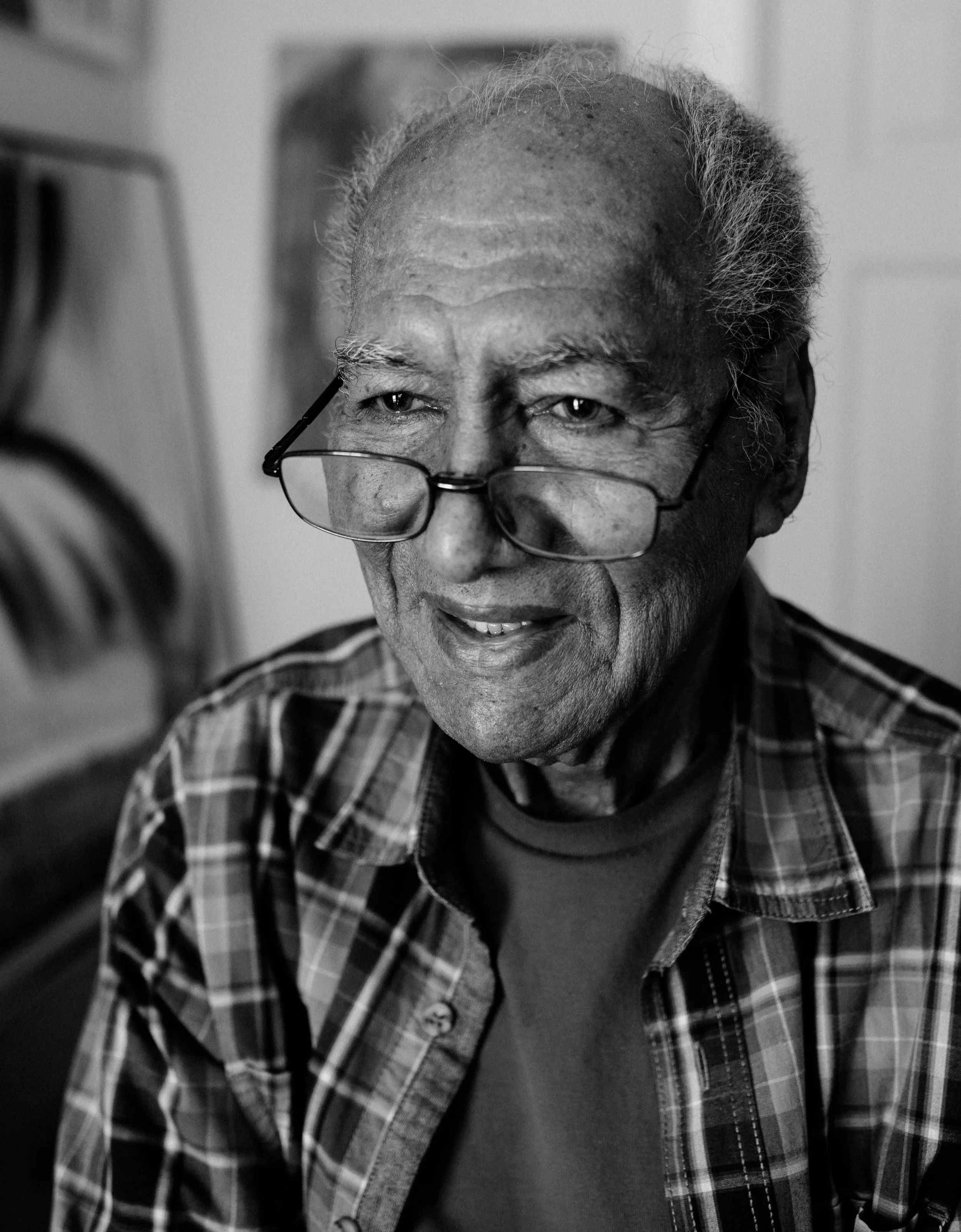
As Katie puts it, Borges work has a “soulful presence” that cannot be faked and that requires a special gift that couples deep thought and innate creativity. Andy correlates looking at a piece of Borges’ work to the experience of eating a well-composed gourmet dish or listening to a masterful symphony, in part because the amount of details that are folded into work that critics classify as simultaneously anthropological, historical, autobiographical, ontological, psychological,
and spiritual.
Sketching Serendipity
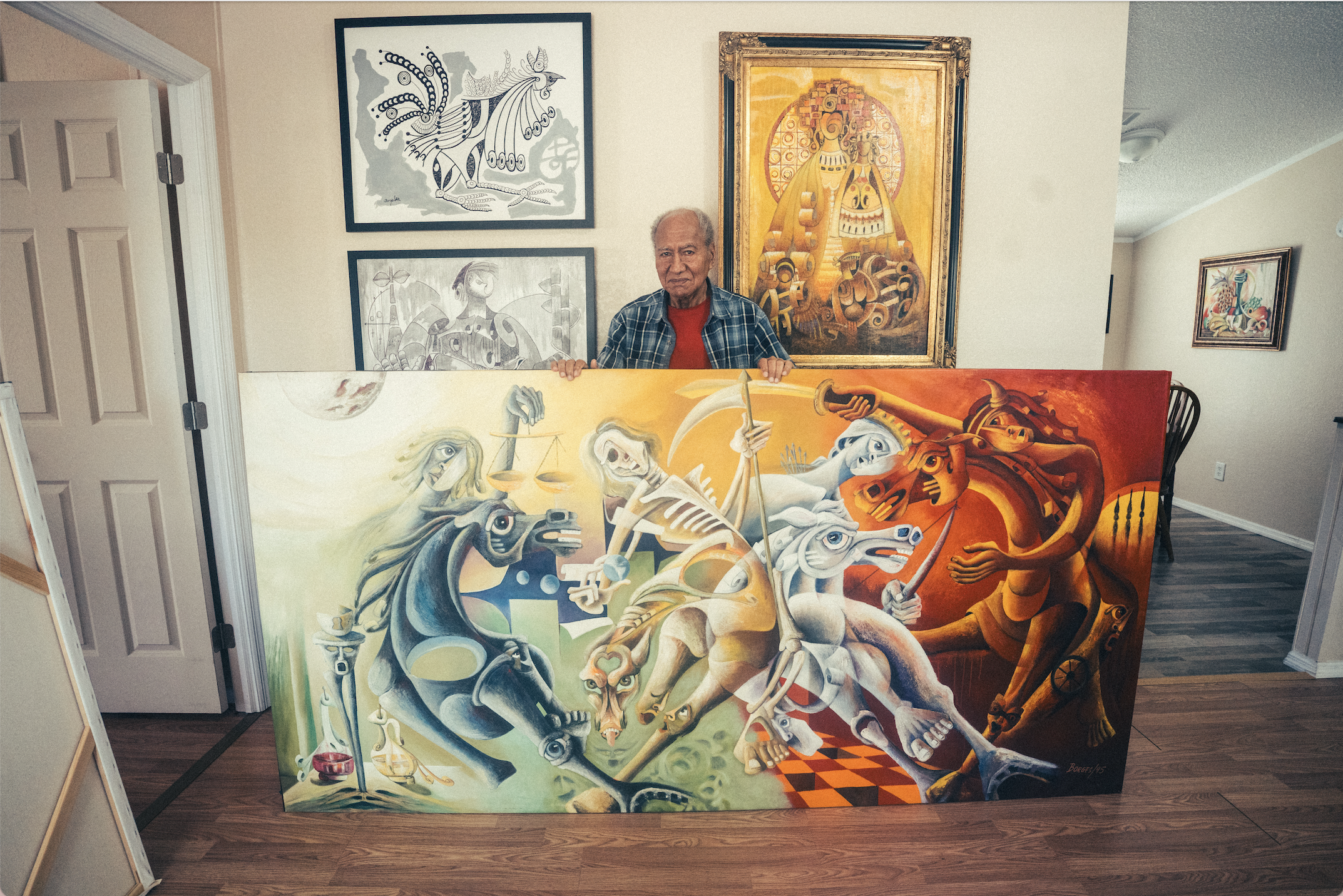
Standing behind his original 4 foot by 8 foot oil painting masterpiece “Revelation” at his North Lakeland home on a recent afternoon, Borges is quiet, but the room is filled by his warm expression and fondness toward our conversation about the painting’s symbolism fills the room.
This particular piece, crafted in 1995, features The Four Horsemen of the Apocalypse and is packed with details that are commentaries of religious and political affairs of the day.
Like many of his works, the humans in this piece of art have only one eye each.
“I have not yet understood people or humans in their totality,” Borges remarks. “There is something always hidden.”
What is not hidden is Borges’ inordinate talent, which is especially powerful to behold when you know more of his story.
Borges grew up in a family with few resources; his mother worked a grueling, low-paying job as a tobacco destemmer in the Partagas factory. After his father passed away when Borges was only eight, the responsibility of contributing fell to the young boy. He was forced to sell newspapers and magazines, utilizing public transit to traverse the city.
Yet, this humble, demanding childhood held a glorious crown. At age 11, the young newspaper vendor was drawn daily to a specific spot where he would stop to watch the work of Vincent Cremades, a master of fresco painting. One day, Cremades saw the boy’s keen interest and offered to mentor him. Borges, still a child, became part of a team restoring and creating frescoes for churches across Old Havana—including the Merced, Montserrat, and Caridad del Cobre. He worked alongside masters, soaking up the technique that would define his life.
This trajectory was cemented when, at 16, a moment of profound validation arrived. The renowned Cuban painter and teacher René Portocarrero declared to the young artist: “You have prodigious hands. Do not deviate from the course of art. At your age, it’s difficult to have the technique and skill in painting and drawing. You were born to paint and that is your destiny.”
It is a decree Borges has carried with him, never forgetting those words.
Unlocking Some
Mysteries, Creating Others
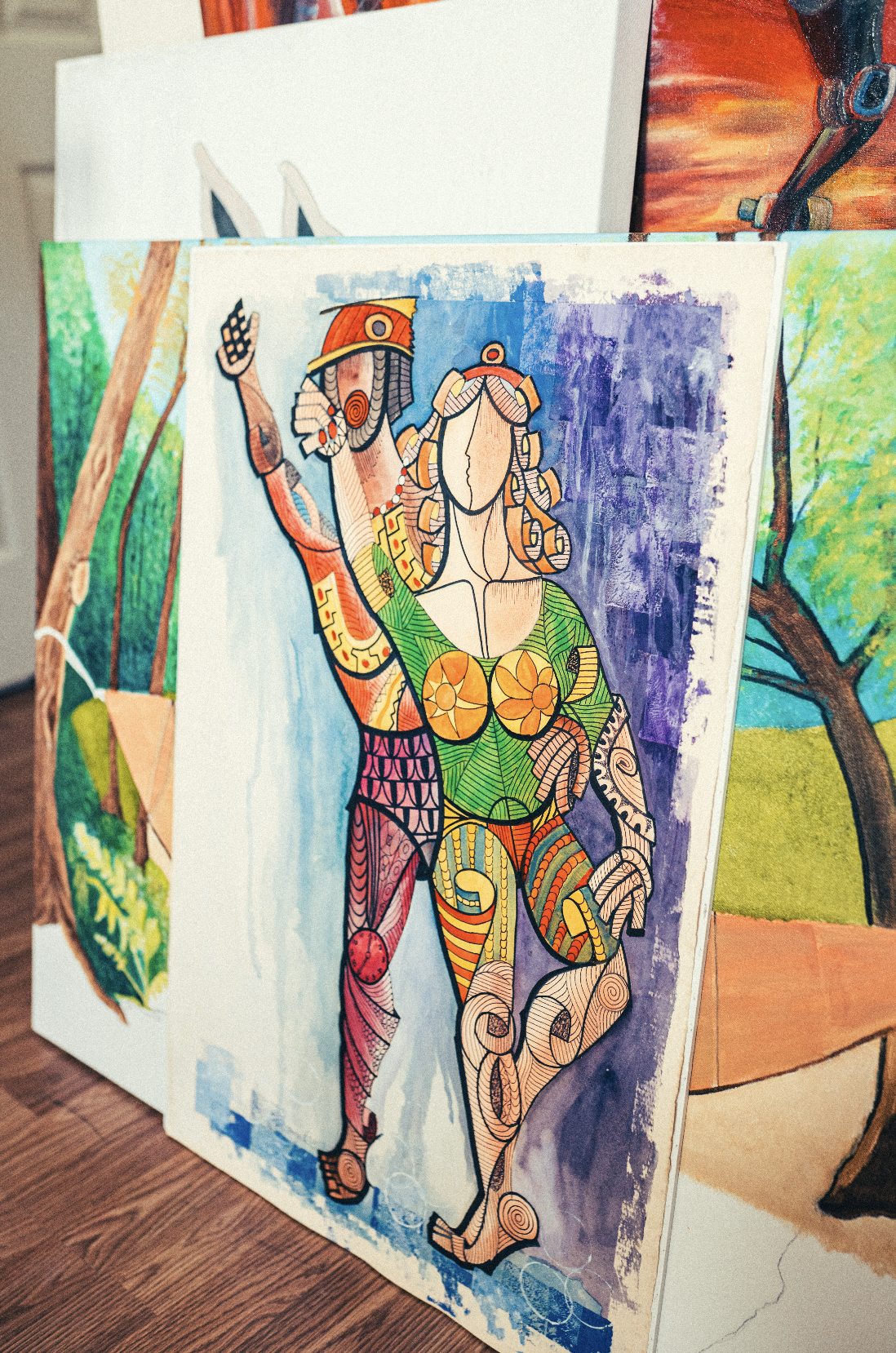
Borges’ art is, by his own admission and by the assessment of critics, a sprawling, multifaceted world. His work delves deep into myths and legends, sociopolitical issues, and the complexities of human nature, often portraying women, a love for nature, and the power of unseen forces.
Josefina describes it as surreal and semi-abstract. It is through this lens that Borges translates a world he still seeks to fully comprehend.
A significant, yet often confusing, part of his artistic and cultural background is the syncretic nature of Cuban religion, a blend of Catholicism and the West African Yoruba religion, known as Santería. It is a tradition that found a fascinating compromise after the arrival of Spanish Catholics, who merged their own saints with the orishas (deities) of the Africans. Borges, a self-avowed Catholic, who grew up immersed in this complex, magic-religious reality, explored these mystical figures and traditions extensively in his art.
You can’t look at his art without also recognizing signs of the time, often representing oppression, conflict or new ways of thinking. For a man born in 1936, it might even seem surprising that you can find references to Bitcoin, NFTs and modern idioms in some of his newer art.
As much as he loves parts of the Cuban culture, he states unequivocally that he will never go back to his home country. The oppression of the regime—which he tried to flee from in 1965, but ultimately had his visa denied to emigrate to Mexico—is a part of his story that clearly caused significant pain that he chooses to distance himself from.
In 1991, he finally emigrated, arriving in New York City with the grand, Cuban-born idea of painting huge commercial murals. What he found was the stark reality of Western commerce: enormous photographic banners plastered to skyscrapers. He recalled feeling small, realizing his masterful hand could not compete with the speed and scale of
a machine.
“I have not yet understood people or humans in their totality,” Borges remarks. “There is something always hidden.”
However, his prodigious skill quickly found a new market. His first job was painting banners for local businesses. He was hired on the spot by a man from the Dominican Republic after painting a sign for a fruit and vegetable business. The owner was so astonished by the semi-abstract yet beautiful depiction of the produce that he commissioned Borges for over the years.
Wherever he has lived, his art has made an impact. In 2004, at the age of 69, the first comprehensive exhibition of his work in the Dominican Republic took place at the Museum of the Royal Houses in the Colonial Zone.
A Final Canvas to Fill
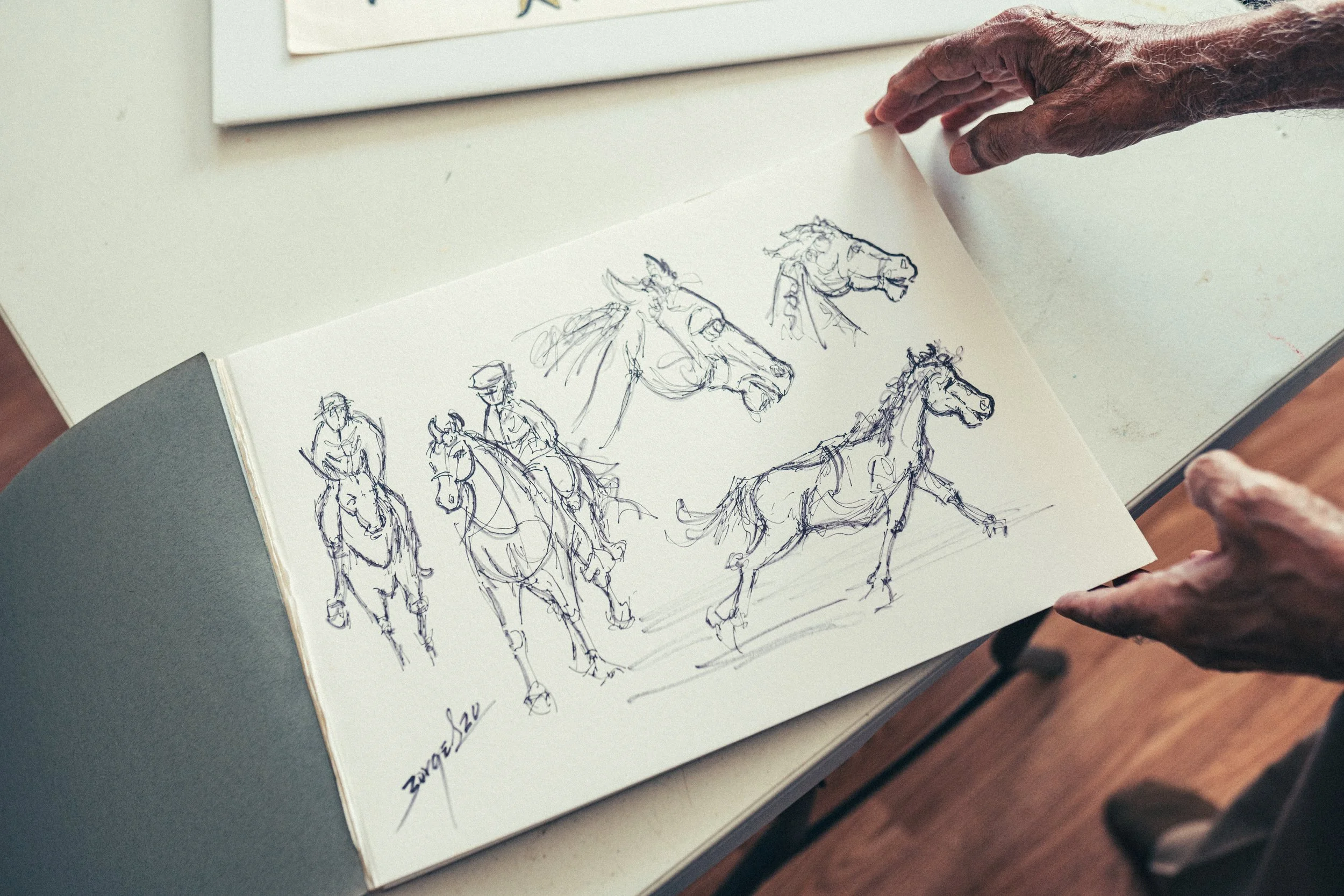
Borges still draws and paints every day, and although language barriers make communication unrefined, he enthusiastically shows off early sketches that eventually evolved into finished paintings.
He’s proud of what he’s accomplished, but asserts he’s not done.
“My career is not yet a victory achieved, it is a huge fight that I haven’t won yet,” he says. “Life transforms everything. The art of yesterday is not the art of today.”
The man, a father of five, is complex, yet simple.
When he was working alongside innercity youth in New York, he would teach children to simplify their work down to the fundamental geometric shapes—the rectangle, triangle, circle, and square—and then let them build their own world from those simple forms. Beyond technique, his guidance is moral: get away from what is harmful and lean into love.
The Fuego Festival and the exhibition of Borges’ work is more than just a celebration of Hispanic heritage; it is a momentous introduction of a global master of the canvas to the community he now calls home. It is an opportunity for a town to embrace a living legend, an artist whose vast, powerful, and intricate life story has been channeled into art for 75 years.
It’s the proof of a lifelong fight and enduring creative fire that still burns in Borges today.
Visit Gonzalo Borges at Fuego Festival - Caballo de Fuego
April 17, 6 p.m.
Downtown Lakeland
A Hispanic arts and culture festival filled with art, vendors, Hispanic food and drinks, cigars and more. The free festival is brought to you by Notta Gallery and co-sponsored by Nineteen61 and Ybor City Cigar Festival. VIP exhibition access and a collector’s VIP experience can be purchased online at nottagallery.com