Bringing the Angel Home
PHOTOS BY JORDAN RANDALL
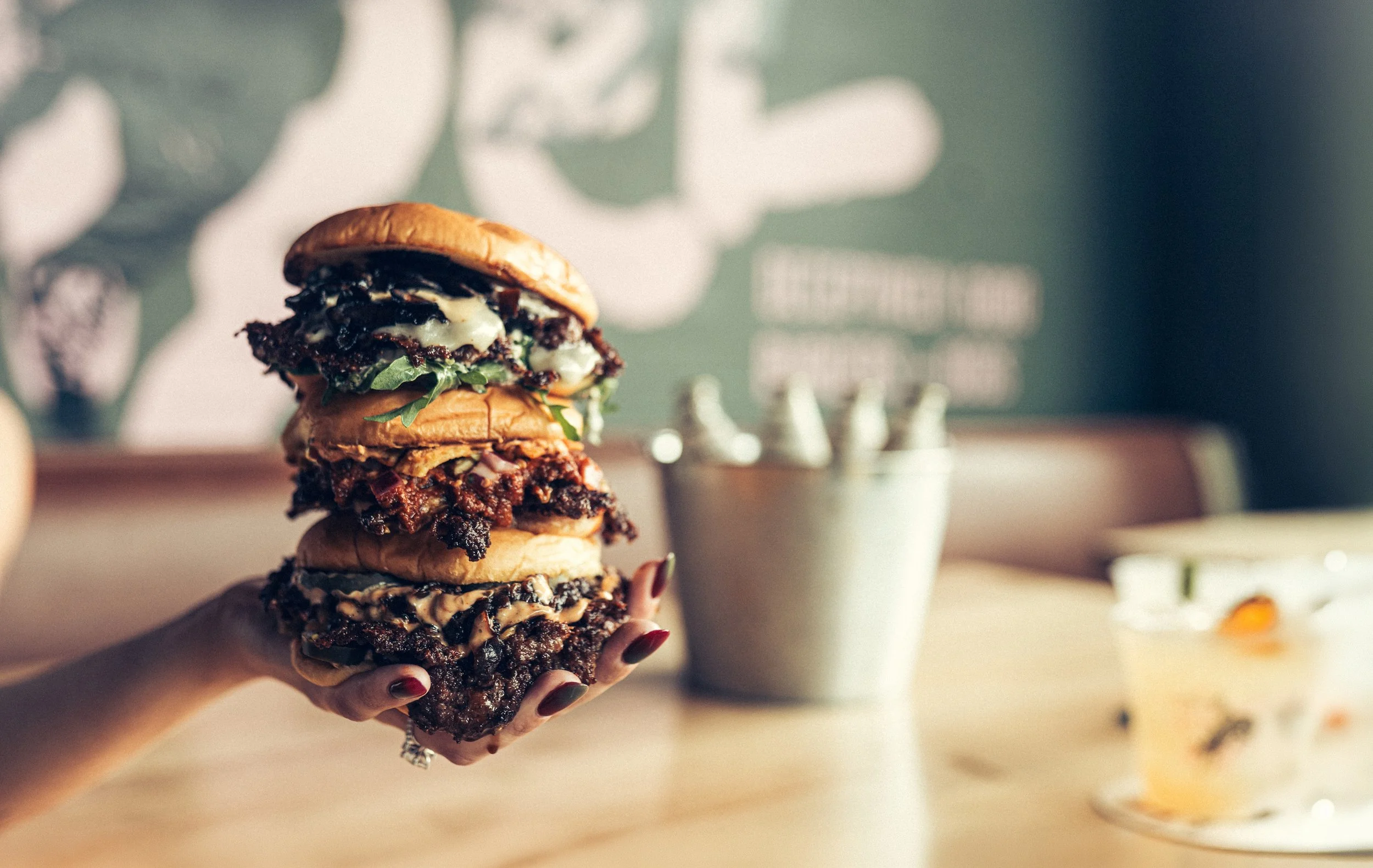
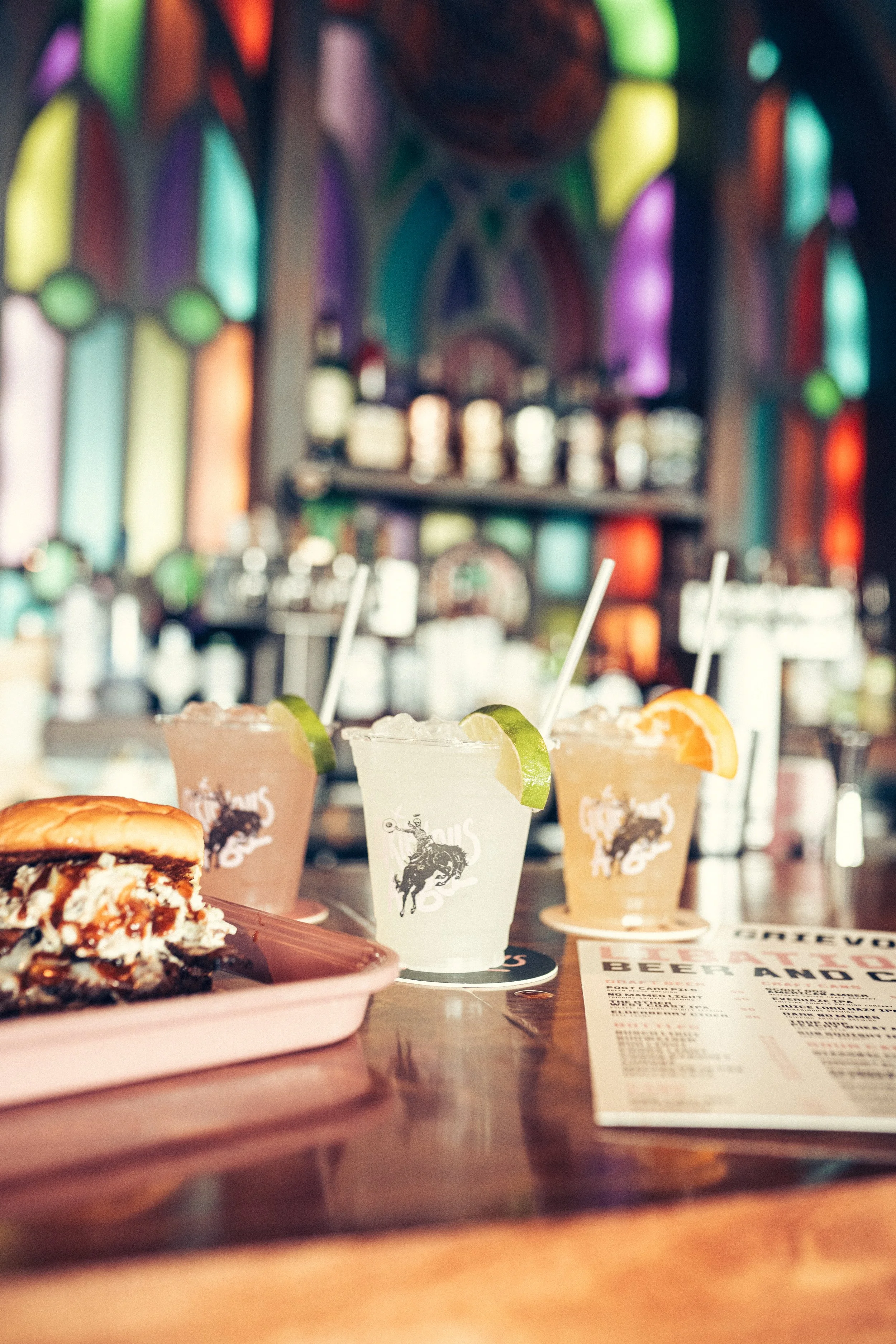
Left: Specialty drinks and a selection of beers pair well with the scrumptious main courses.
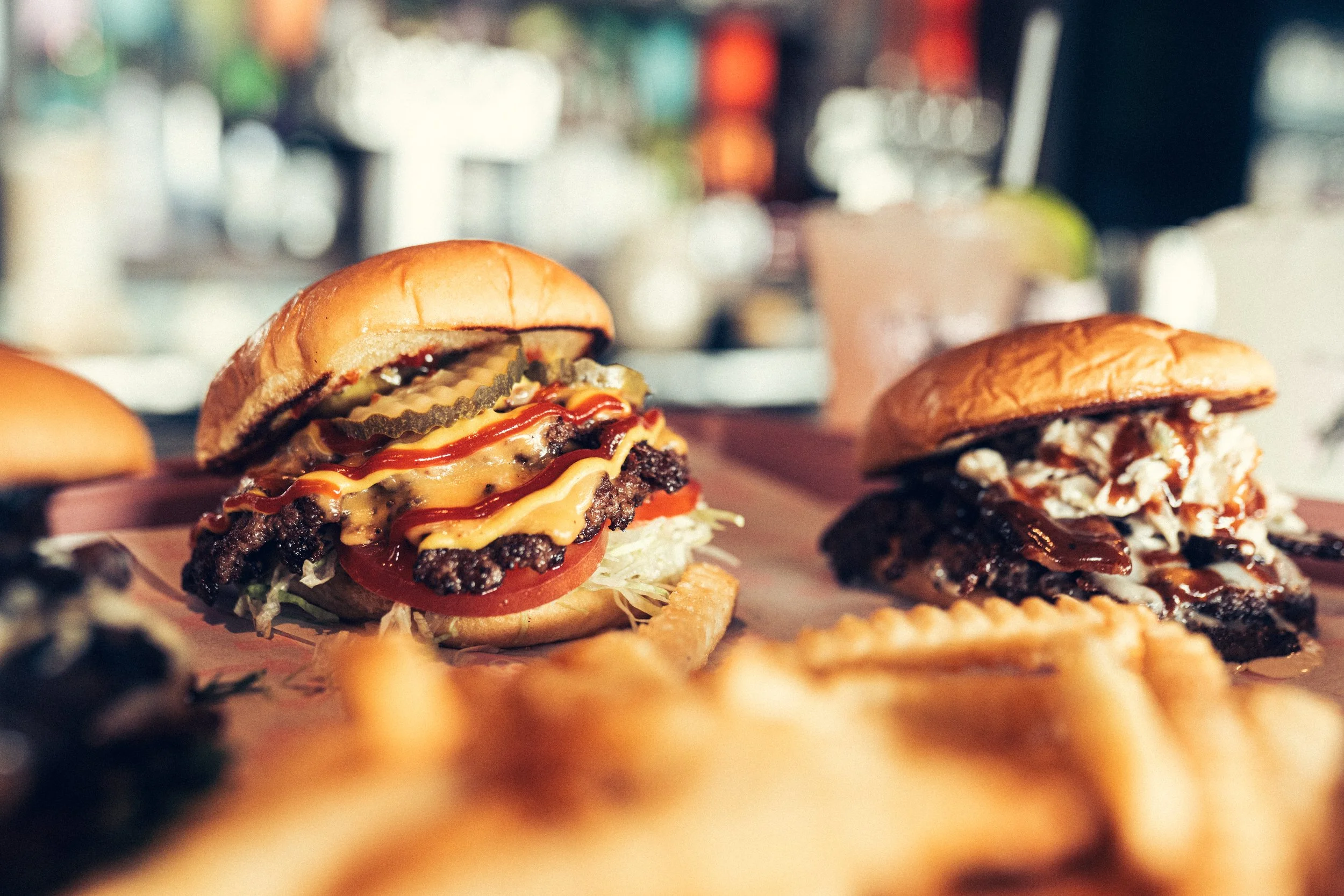
Right: The Weekend Hero is one of a handful of distinctive smashburgers
FIRST VERSE: “WELCOME ME BACK INTO TOWN…”
Most music fans who lived in Lakeland in the late ‘90s remember Woodpecker Records, and everyone knows LoveBird, currently perched in all its neon glory at the corner of Beacon and South Florida Ave. Those businesses bookended Jeremy and Leah Brumley’s professional careers for the better part of 20 years. The gap between is where they first learned to build a brand together. After Woodpecker Records closed, a pregnant Leah used leftover merchandise to launch Rockstar Moms, a successful line of rock ‘n’ roll themed maternity wear.
As Leah recalls, “People remember us for just the records and then LoveBird, but for years we did Rockstar and it was the start of us working together.”
Over the years, Jeremy and Leah’s work took them away from the local business community, as they logged years in the corporate restaurant world. They traveled back and forth throughout Central Florida and also had stints opening restaurants for other entrepreneurs sprinkled around the country. While they still worked together in some capacity, they spent most of their time building someone else’s dream.
THE BRIDGE: “I’LL TELL YOU HOW IT ALL WENT DOWN…”
Jeremy also grew tired of the to-the-cent emphasis put on every aspect of the restaurant industry. Then everything changed. It clicked with Jeremy that they should take all their restaurant intelligence, a desire to return to their roots of independent business ownership, and full control over their operations, combined with a non-negotiable vision to turn old gas stations into food service establishments. He explains, “I spent a lifetime in that world, answering to venture capitalists and investors. I didn’t want to have someone explain to me why we’re leaving a few percentage points on the table. My mission became to create great customer experiences without worrying about how much I could be making.”
That is how LoveBird — a vacated building on an abandoned Starbucks lot — became everyone’s favorite, almost-famous fried chicken. It served as the foundation for future ventures like Grievous Angel, which has been operating for about six months. Uniquely, this time the site came before the concept.
The building housing Grievous Angel wasn’t a typical buildout; it required an extensive restoration. The repurposed gas station had a complicated history, hosting multiple food businesses before sitting vacant. Where others saw a cursed lot, the Brumleys saw a diamond in the rough centered in a resurging part of town. Partnering with the landlord, they breathed new life into the structure, completely redesigning the exterior to add open-air seating alongside an indoor dining room and a brand-new kitchen.
A blank slate is what the couple prefers—a model that shapes their future endeavors. Geared toward quick-service experiences, they focus firmly on the customer’s experience before guests even step through the door.
THE CHORUS: COME OUT ON YOUR PORCH OR STEP INTO YOUR PARLOR
One of the calling cards for customers visiting any of the Brumleys’ establishments, besides how much music is intertwined in everything they build, is the inviting oases they attempt to create with features like green spaces, meticulously manicured landscaping and pristine grounds.
“Our brand starts way before you get to the front door. For us starting these businesses in a community we live in, we want to honor our community, and the neighborhood that anchors the business,” Jeremy says. “There’s a certain obligation to take seriously how the business fits with the community. And we want it to be pretty!”
This philosophy bleeds into branding and menu design, which almost caused Grievous Angel to not exist at all.
Early on, Jeremy collaborated with legendary Lakeland branding designer Mark Nielsen (a Lakelander alumnus) on a raw, unapologetic brand layout. Initial drafts featured a combination of striking tattoo culture and Western pop art-inspired drawings, mixed with a bold color scale. It was an aesthetic rooted in independent, vintage Americana. However, when they presented the idea to a close corporate confidant, they were warned that the name and imagery would ultimately destroy the good faith and Reputation they had developed with LoveBird.”
“It completely set me back,” Jeremy admits. “We went through this weird, agonizing eight-month period where we basically scrapped all the original logos, even the name. I was miserable. I started getting conservative and second guessing everything.”
However, they decided that watering down an idea to appease the corporate mindset was exactly the kind of compromise they had left corporate America to avoid. Ultimately, the Brumleys reclaimed their original concept and leaned in all the way with the energy you might find in a raucous Southwestern Honky-Tonk. Those original images can now be seen akin to an art installation, strewn across their T-shirts, walls and every inch of the property.
“I realized if this concept wasn’t going to work and I was wrong, I’d rather go out of business in three months doing exactly what I want to do,” Jeremy notes. “Our mission is only to make brands, with high-quality ingredients that create great customer experiences,” he says. It had to be Grievous Angel, and not Brumley’s Burger Barn.
THE OUTRO: BUT I REMEMBER SOMETHING YOU ONCE TOLD ME
The idea of a hamburger & hot dog shop that served beer and cocktails was always a restaurant concept the couple held in their arsenal. Because of the prime location and brisk foot traffic, the business model laid out the ability to draw in anyone walking by with just a glance. It had to be an idea drenched in Americana, and nothing speaks to that theme in food terms more than burgers, hot dogs, soft serve and beer.
“The idea behind Grievous Angel is like that of an American road trip. The exterior, the landscaping, the food, the music, the decor, the art on the wall is what we’ve collected on our own. We hope every year this place gets more seasoned. Five years from now, there (should be) more stuff on the wall and it gets more eclectic.”
Moving from fried chicken into the burger world was a massive risk. They chose to build an empire on, arguably, the two most heavily scrutinized, passionately debated, and intensely criticized staples in modern American food culture. To double down where consumers hold the most unforgiving standards was a massive risk. On top of that, many people would say there is a bit of oversaturation of both around these parts.
“People have incredibly high, very vocal opinions on how they should be done. Burgers are extremely competitive, even more than chicken, I think. And we take that challenge,” Jeremy says. Six months in, Grievous Angel is already running in stride, as Jeremy describes this venture as a “juggernaut.” Yet, they admit there is still work to do to dial in the menu and kitchen execution when frenzied crowds pile in.
Building the best product they can, one that appeals to the masses while standing up to the harshest scrutiny, requires the execution he mentions. Every item is rooted in nostalgia for American classics, right down to a subtle nod to former tenants of the property, The Poor Porker, and its once famous beignets.
The crown jewel of the menu and the most ordered item is “The Grievous Angel.” This double smashburger features a proprietary local beef blend ground twice a week and weighed exactly to 3 ounces per patty. It uses high end New School American Cheese by celebrity chef Eric Greenspan, while other burgers like the Peppercorn Saint utilize premium Cooper Sharp cheese.
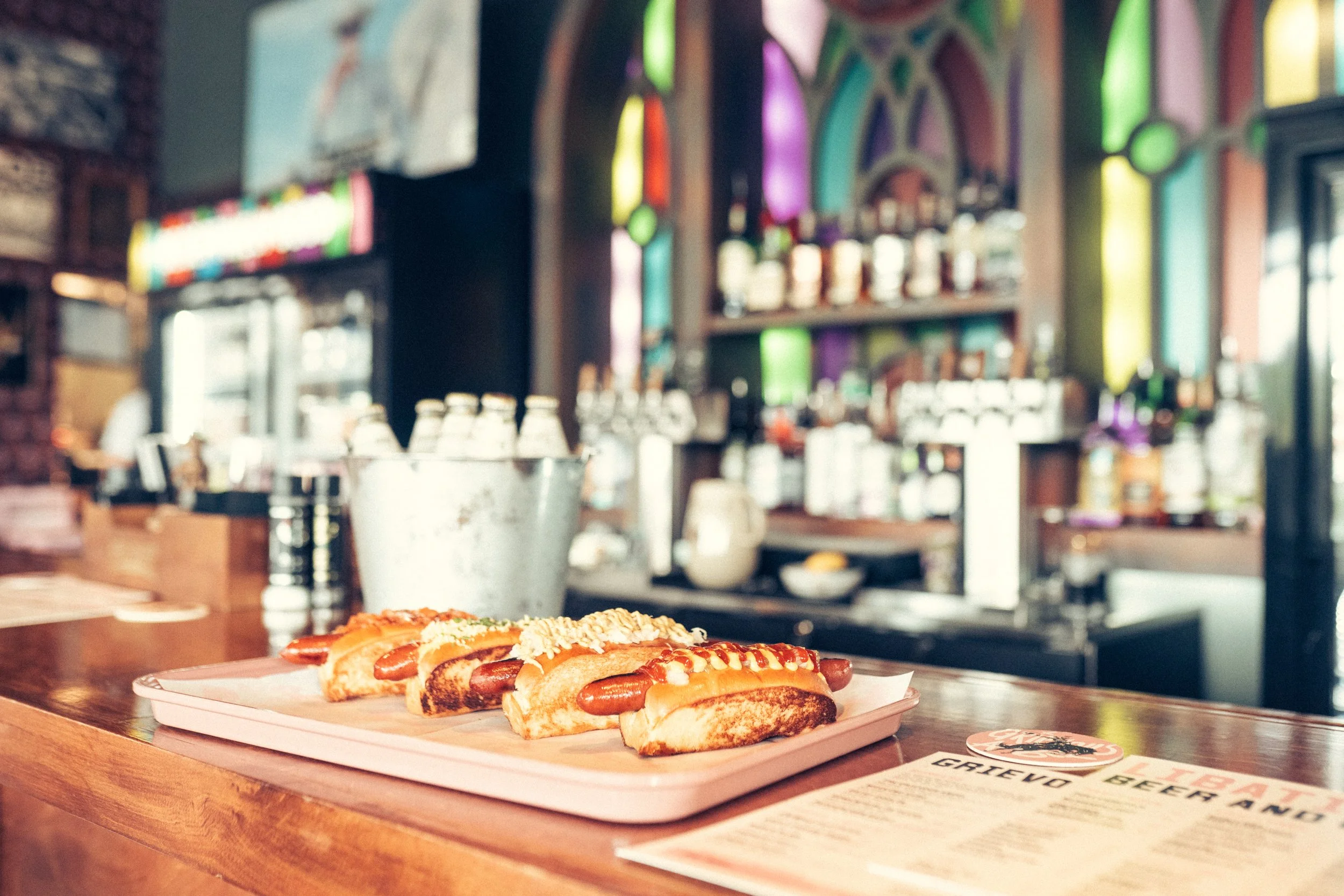
Beyond the burgers, the lineup features specialty craft hot dogs and soft serve ice cream designed for patrons who want to eat and stroll. The kitchen also serves house made chili (perfect for dipping fries), alongside an extensive, frequently rotating beer and craft cocktail menu. Upcoming menu additions are actively being developed to entice old and new patrons alike, including creative vegetarian options.
One constant hurdle for restaurant owners is traversing a landscape where rising food costs force independent shops to compete with fast-food pricing. Food margins today are pressed more aggressively than smashburgers on a hot griddle, but the Brumleys refuse to compromise on quality to protect their bottom line.
“We take it on the chin, “ Jeremy notes. “We build our recipes the way we think the product should be, where we feel good about it, and the cost is irrelevant. Our goal is don’t compromise. And in the end, we’re either making money or losing money. There’s no in between.”
“This is fun for us! But ‘fun’ is a subjective word,” says Leah. “It depends on the day, when every day counts toward success or failure.”
It’s a family business through and through, so when the business is operating smoothly, it’s likely their family is in harmony, too. They run a tight operation alongside their son in the back office, with their other children putting in hours on the grills and fry stations during major turning points.
“Every kid should have a turn in the industry. I think everybody should. It shifts how a person interacts in this world.” Leah states.
The magic of the Brumley empire mirrors the very song that inspired their restaurant’s name. In one of Winter Haven native Gram Parsons’ hit songs, “Return of the Grievous Angel,” the beauty isn’t in perfection at all; it falls just below that line as a raw, unpredictable vocal contrast between Parsons and Emmylou Harris. It’s two completely different voices coming together to create a sound far larger than themselves.
On the restaurant floor, the Brumleys’ relationship harmony lies in a delicate balance of Jeremy’s culinary intuition, bold aesthetic vision, and the willingness to drive himself right into risk for a larger success, while Leah acts as an anchor, working with balance and precision to create a structure that allows daring ideas to succeed without crashing.
It echoes the unforgettable turning point of the song itself: “But I remember something you once told me.”
For Jeremy and Leah, after traveling down what might feel like “twenty thousand roads” the realization is that the music is finally playing on their own terms and in their hometown. That music is melodic, and the food and drinks seem to have a way of hitting just the right note.